
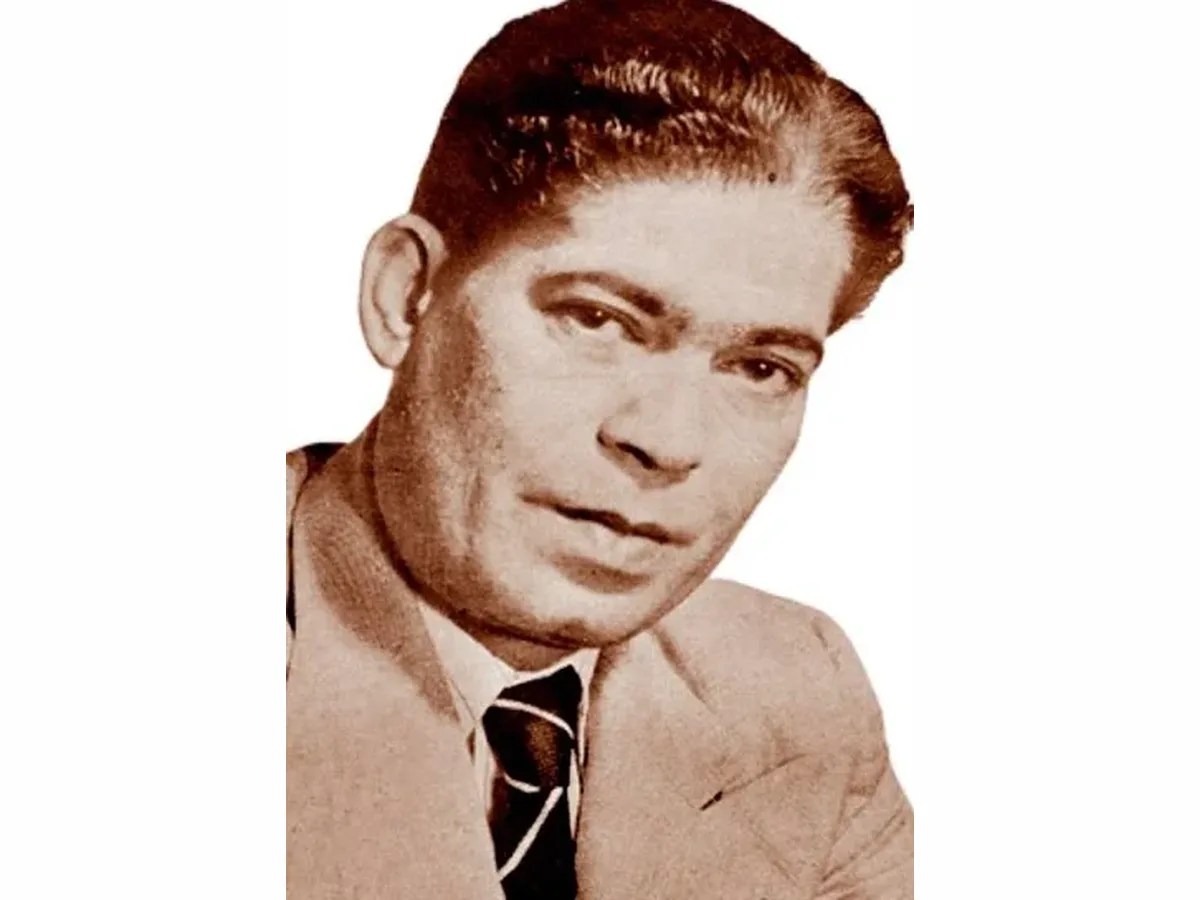
A villager from Mihintale once came to the Anuradhapura kachcheri with a complaint about his wife, and made it in two lines of verse, because he had heard that the government officer he was addressing was a poet:
Gatthe car eka den nam eya lorriyaLoriyak ellavanna mata den neta piriya
(I bought a car; it is a lorry now. I have no appetite left for driving a lorry.)
The officer answered him on the spot, also in two lines, advising the old man to jack the lorry up, pump its tyres, approach it kindly and see what happened. Both men went away satisfied. That was more or less the working method of Wimalaratne Kumaragama, Divisional Revenue Officer, who is remembered today as the poet of the Wanni.
The officer who wrote the Wanni down
He was born at Narampanawa in Pathadumbara, in the hills above Kandy — not in the Wanni at all. He was the second of seven children of Punchi Bandara Kumaragama and Bandara Menike Kumaragama. He went to school at Werapitiya, then to the bilingual school at Teldeniya and to Sri Rahula Vidyalaya, Katugastota, and finished at Dharmaraja College, Kandy, where he passed the matriculation with distinctions and was already putting poems in the school magazine.
Then he took the Government Clerical Competitive Examination and was posted as a clerk to the kachcheri at Anuradhapura. In 1942 he passed the Divisional Revenue Officer examination; in 1944 he took up duties as an Assistant Government Agent at Anamaduwa. Postings followed in Hanguranketha, Kalawana, Daladagama, Kotmale, Mahiyanganaya and Bintenna — a career spent almost entirely in the dry-zone and hill-country interior, among people whose lives were the material of the poems.
The comparison his admirers reach for is Leonard Woolf, the other colonial officer who turned the administration of a Ceylonese backwater into literature. It is a fair one as far as it goes. The difference is that Kumaragama was not an outsider taking notes; he was the man the villagers came to when they had a private problem, and he wrote in their language about their neighbours by name.
Herath Hami, who cuts the dead
The poem that makes the case for him is හේරත් හාමි Herath Hami, about a mortuary attendant at the hospital by the tank called Aliya Watunu Wewa — "the tank where the elephant fell." Herath Hami's work is to handle corpses for the Judicial Medical Officer. The poet, a gentleman and a government officer, sets himself beside him and comes off worse:
Aliya Vetunu Vewa siti Herath HamiMa veniyaku uvada mama vedagath veemiMini kapana muth e Herath HamiOhu mata vada visi this gunayen demi
(Herath Hami of the tank where the elephant fell — a man like me, and I thought myself the important one. He cuts the dead, that Herath Hami, and he is twenty or thirty times the better man.)
It is a small poem and a genuinely radical one for Sinhala verse of the 1940s: a caste-marked, ritually polluting occupation described without pity and without disgust, by someone who outranked the subject in every way that mattered administratively.
The rest of the Wanni sequence works the same seam. හරක් හොරා Harak Hora is the cattle thief; ආරච්චි රාළ Arachchi Rala is the headman, whose house the poet remembers down to the pumpkin vine on the roof, the castor hedge and the patch of shade under the kurakkan bin where the dog lies — a man with venison and pork always on the table, a good many stolen cattle in the pen, the whole riverside at his beck, and one real fear in life, which is the big sahib who bathes nearby. වන්නියේ දොස්තර Wanniye Dosthara is the doctor, ගමේ වැව Game Wewa the village tank, වළස් දඩයම Walas Dadayama a bear hunt, සිරගෙය Sirageya the prison. අය්යනායක Aiyanayake takes up the villagers' beliefs about the gods; Kumaragama does not share them and declines to mock them, which in the anti-superstition mood of mid-century Sinhala letters was itself a position. And වන්නියේ මල් Wanniye Mal, "flowers of the Wanni", gave the whole body of work its nickname.
He read English closely — Keats, Shelley, Wordsworth and Tennyson were the shared enthusiasm of his generation of Sinhala poets, which included Meemana Premathilake and Sagara Palansuriya — and he served as editor of the Colombo Young Poets' Society. He is filed, accordingly, among the Colombo-era poets, though almost nothing about the poems is urban.
Five books, or two
Here the record falls apart, and it is worth saying so plainly.
English and Sinhala Wikipedia both list five books: Nil Seenaya (1941), Oruwa (1942), Sanwega Wedana, Sapumali (both 1946) and Surathallu (1961). The Sinhala article, however, describes Sanwega Wedana — an elegy of seventy-five stanzas written after his sister's death — as his first work, composed and published in 1935, when he would have been about sixteen. And the Daily News appreciation states flatly that although he wrote a great deal, only two books were ever published: Sanvega Vedana in 1940 and Hapumali in 1946 — the second a title that appears in no other list. No two accounts agree, and none of them cites a bibliography.
The dates of his own life are hardly firmer. Both Wikipedias give 18 January 1919 and are categorised accordingly; both newspaper appreciations, by the same writer, give 1918, and one of them is explicitly pegged to a 91st birth anniversary falling on 18 January 2009, which only works from 1918. For the death, Wikipedia says 30 December 1962 and the Daily News says 29 December 1962, citing a reference book of anniversaries. He was in his early forties either way.
What became of the poems
Kumaragama is a poet, not a songwriter, and the distinction matters on a site about songs.
His verse is written in the four-line, end-rhymed sivupada shape that Sinhala folk poetry has used for centuries — the same form that Madawala S. Ratnayake and W. D. Amaradeva were mining at Radio Ceylon within a few years of his death, and the same form that makes a text easy to chant, easy to set and easy to remember. His poems are routinely described as having been taken up by singers, and they are still recited in Sri Lankan classrooms. But no recording, composer credit or record label could be verified for any of them in preparing this article, and the standard Sinhala lyric databases carry no songs under his name at all. Until someone produces a matrix number or a sleeve, the honest statement is the narrower one: the Wanni poems have lived for eighty years as poems, spoken aloud, which is how they were built to travel in the first place.