
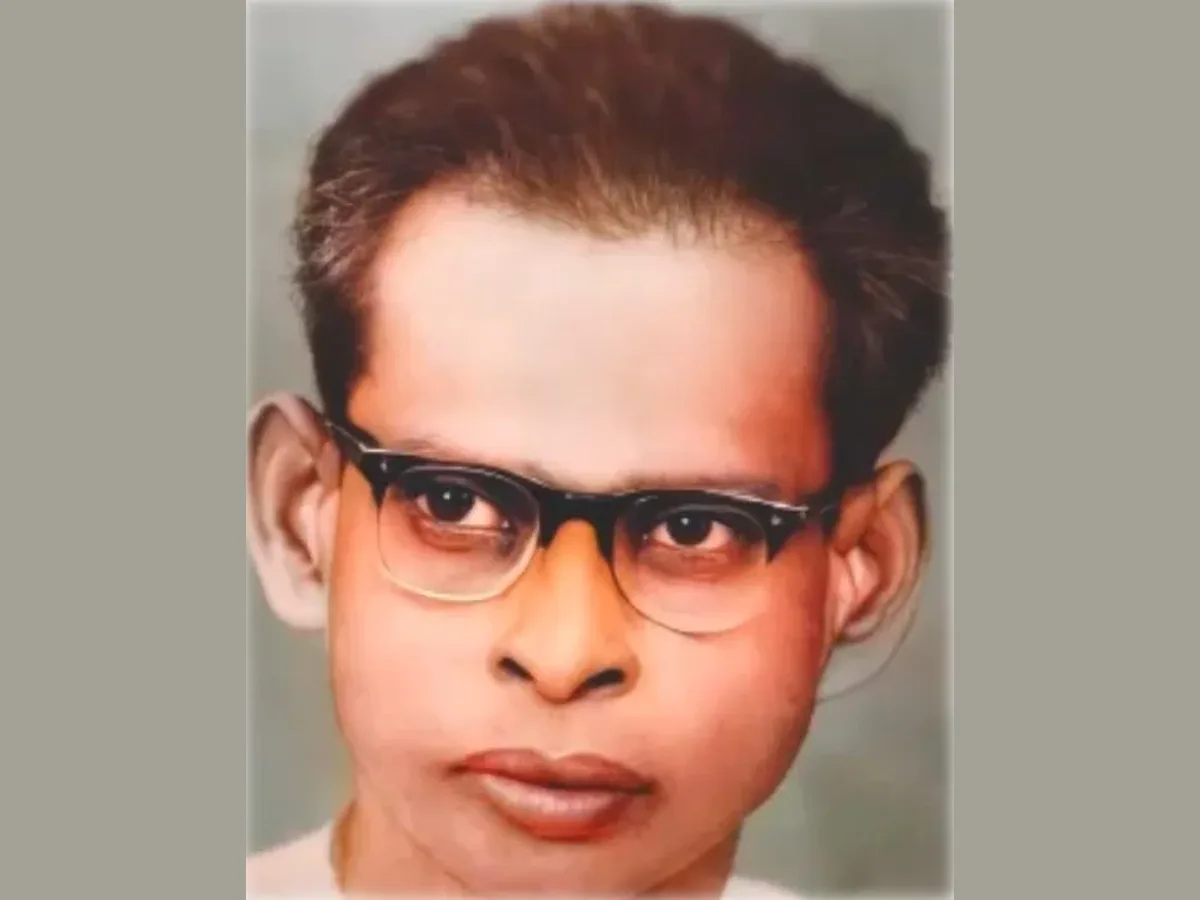
The title Sangeetha Visharada is normally earned the way a degree is earned — by examination, over years, usually in India. Vincent Somapala was given it for a book. His Geetha Kala Nidhi (ගීත කලා නිධි, "the treasury of the art of song"), published by M. D. Gunasena and now scanned into the National Digital Library, was a treatise on music theory in Sinhala; and according to the account on Wikipedia, this was the first time the title had ever been conferred on someone for a single specific work.
It is a good measure of the man. He composed, he wrote lyrics, he taught — but what he is really remembered for is having sat down and written the grammar of Sinhala music in Sinhala, at a moment when there was no such thing.
A nadagam house at Sarikkamulla
He was born on 19 May 1906 at Sarikkamulla in Panadura, the eldest son of G. Don Martelis, a veteran performer of nadagam — the sung folk-opera form that had been the island's popular theatre before the Tower Hall companies arrived. So the first music he heard was the old music, at home.
His schooling was at the Gorakana Buddhist Mixed School in Panadura, then Sri Sumangala College and St Anthony's Night School in Moratuwa, and he came out of it fluent in Sinhala, Pali, Sanskrit and English, having read with the scholar-monks Weliwitiye Sri Soratha and Palane Vajiragnana. His music teachers were J. Sadiris de Silva — Sadiris Master, the singer-actor of John de Silva's nurthi plays — and H. W. Rupasinha. Almost nobody else in Sinhala music sits so exactly on the seam between the two worlds: taught the stage repertoire by the man who sang it, and equipped by the pirivena to write about it as a scholar.
He first took a job in newspapers — Swadesha Mitraya, Lakwasiya, Lakmini Pahana, Lakmina — and then quit, having decided that journalism was in the way of the music. Kumaratunga Munidasa, P. de S. Kularatne and Jayantha Weerasekara are named as the people who encouraged him back.
Hela Miyasiya
That connection to Kumaratunga, the Hela Havula's founder and the fiercest advocate of a pure-Sinhala idiom, produced his most consequential job. Kumaratunga compiled a collection of song-verses called හෙළ මියැසිය Hela Miyasiya, intended as a foundation for a genuinely Sri Lankan music; Somapala was given the task of setting the melodies. Accounts differ on when: English Wikipedia dates the commission to 1938, while a 2014 Sarasaviya tribute puts the collaboration in 1942.
Either way it mattered. Mahagama Sekera later said that he began writing lyrics at all because he had read Kumaratunga's Hela Miyasiya — a line quoted by the lyricist Sunil Sarath Perera in a 2020 interview. The tunes Sekera was reading against were Somapala's.
The books
After Geetha Vidya in 1934 came a shelf of them: තාල ඥානය Thala Gnanaya (on rhythm), දශ තාල ලක්ෂණය Dasathala Lakshanaya, පාසැල් ගී Pasal Gee (school songs), භාවික ගීත Bhavika Geetha, and, in the Sarasaviya list, Geetha Tharangani, Shishta Geetha, Thalanama Vinishchaya and Sangeetha Padartha.
These were not ornaments. Writing in Ceylon Today in 2023, Ama H. Vanniarachchy records that W. B. Makuloluwa — the man who built the jana gee movement out of collected village song — "gained a good understanding of rhythms and customs by consulting Somapala's book, Thala Gnanaya." The textbook fed the folk revival.
He was appointed music instructor at Piliyandala Central College in 1946, making him one of the first school music teachers in the country; lecturer at Katukurunda Teachers' Training College in 1951; music inspector in 1953. He was made a Kala Suri in 1982.
The songs
He wrote for the gramophone too. ශ්රී රාහුල හිමිගේ නාමේ Sri Rahula Himige Name, මව්පියො ආදී සොඳුරු තමාගේ Mawpiyo Aadi Sonduru Thamage and ශිල්ප සතර ලෝකේ Silpa Sathara Loke were popular records of that era; Sarasaviya adds නින්දා නොමදේවි Ninda Nomadewi. The two accounts disagree about what his part in them was — English Wikipedia calls them his compositions, while the Sarasaviya tribute names him as their lyricist. He did both jobs often enough that both may be right.
One further claim should be treated carefully. Wikipedia states that the revision of නමෝ නමෝ මාතා Namo Namo Matha into Sri Lanka Matha was carried out "under his guidance", but the only citation given is a family-made video tribute. The anthem's alteration is one of the most contested episodes in Sri Lankan music history, and this particular attribution is not corroborated anywhere reachable. It is worth recording as a claim, not as a fact.
Gayatri, and the pupils
He founded the Gayatri Art Institute at Kesbewa. His son Wijesiri Govinda, for decades a violinist in the Sri Lanka Broadcasting Corporation orchestra, moved it to Piliyandala and ran it until late 2022; another son, Jayantha Aravinda, worked with Ediriweera Sarachchandra on the music of the Sinhala stage; a daughter, Neetha Mangalika, also became a musician.
The list of students is where his reach shows. Wikipedia names Premadasa Mudunkotuwa, Basil Mihiripenna, Neela Wickramasinghe and Punya Kathriarachchi. The 2014 Sarasaviya piece gives the same names and puts W. D. Amaradeva at the head of them — a claim that appears in that tribute and, as far as could be checked, not elsewhere.
Vincent Somapala died on 7 June 1989. In 2014 his son staged a children's concert at the Piliyandala town hall in his memory, sung entirely by pupils of the institute he had started: a music teacher remembered, correctly, by children singing.