
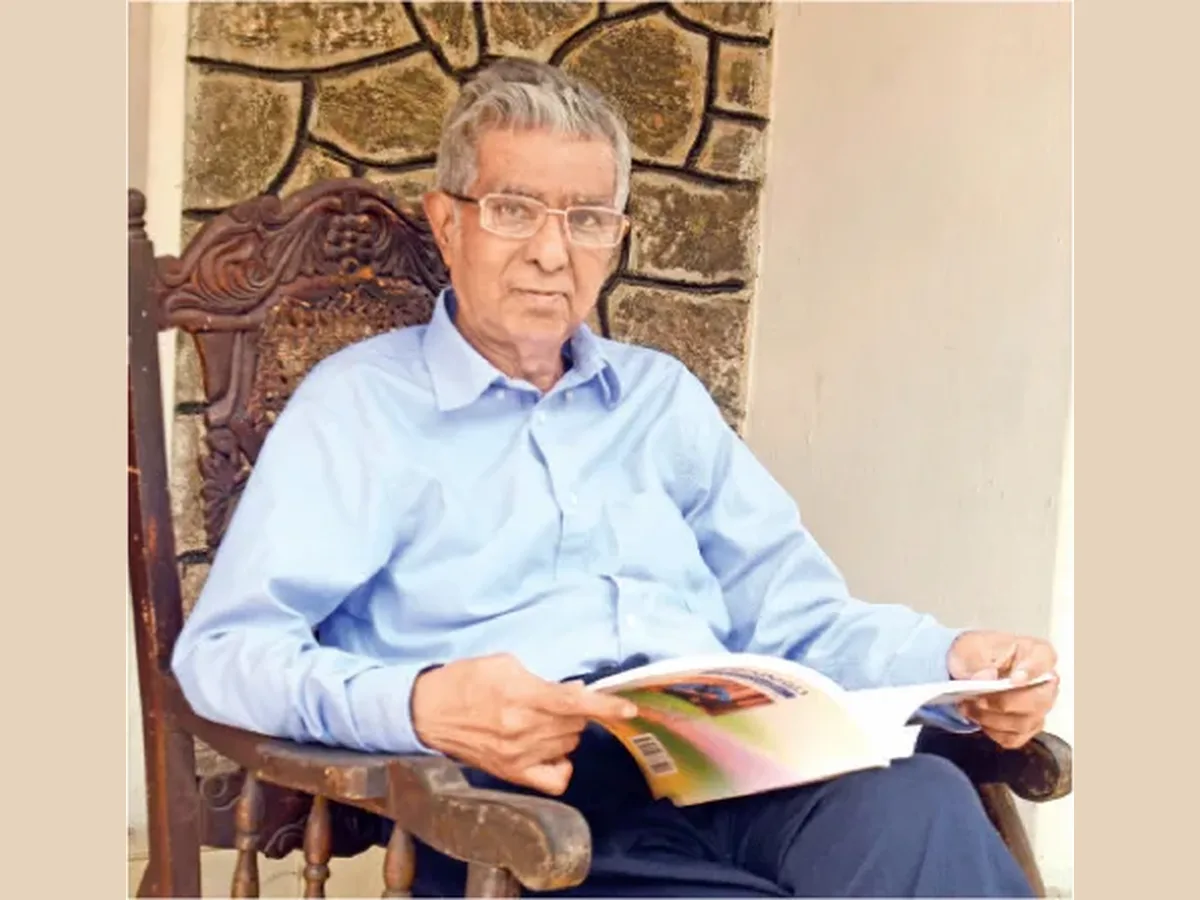
There is a lullaby that almost everyone in Sri Lanka can sing: චන්දෝමා බිළිඳේ නුඹ නාඬන් Chando Ma Bilinde Numba Nandan, "little one of the moon, do not cry", recorded by W. D. Amaradeva with his daughter. Look it up on YouTube and you will often find a lyricist's name attached to it. According to Sunil Sarath Perera, the name is wrong.
The words, he told the Sunday Observer in 2020, are not modern at all. They were written by Ambanwela Rala, a poet of the kavikara maduwa, the court poets' hall of King Rajasinghe II in the Kandyan period, and they came out of the king's marriage to a Vedda woman from Mahiyangana. The first people to record the song, he said, were Devar Surya Sena and the Bengali singer Suchitra Mitra. And then he connected the correction to the thing that actually bothers him: "There are other problems in misusing these real names. One such problem is about paying royalties for songs."
Not the Sunil Perera you are thinking of
A note before anything else, because search engines get this wrong almost every time. Sunil Sarath Perera is not Sunil Perera of the Gypsies. They are two different men: the Gypsies' Sunil Perera was a baila bandleader and singer who died in 2021; Sunil Sarath Perera is a lyricist, poet and prose writer, born in 1943, and still publishing. Pages, playlists and search results routinely merge them. They should not be merged.
Kirillapone
He was born on 5 March 1943 at Kirillapone in Colombo, and went to school at St Clare's College in Wellawatte, Arthusa College, Lumbini College and Lanka Vidyalaya in Maradana. Sinhala Wikipedia dates his working life from 1970. He also served as chairman of one of the state broadcasters, though the accounts disagree about which: the Sinhala Wikipedia article lists him as chairman of the Rupavahini Corporation, while the Sunday Observer interview has him referring to "when I was the chairman of the Sri Lanka Broadcasting Corporation."
Alongside the songs he has published a good deal of prose and verse, including the poetry collection Mal Mada Bisav and two volumes of memoir — Maya Mawatha ("Maya Avenue") and Hudakala Mathakaya ("Lonely Memory") — as well as books on Sinhala song and poetry.
The songs
His catalogue reaches the top of the sarala gee tradition. For Amaradeva he wrote පෙර දිනයක මා පෙම් කළ යුවතිය Pera Dinayaka Ma Pem Kala Yuwathiya ("the young woman I loved on a former day"), ඔබ මා සමඟ Oba Ma Samaga, අලුත් ඉරකි පායන්නේ Aluth Iraki Payanne ("a new sun is rising") and උඩහ ගෙදර රන් එතනා Udaha Gedara Ran Ethana, with Amaradeva composing as well as singing.
For Sanath Nandasiri, again as both composer and singer, came යශෝධරා Yashodhara, ඈත එපිට Atha Epita, සිනා නගන්නී Sina Naganni and the Dalada song මගේ රටට දළදා හිමි සෙවණයි Mage Ratata Dalada Himi Sewanai — whose title is also written Saranai, "refuge", rather than Sewanai, "shade", depending on where you find it.
Others reached a wider popular audience: රා රා රා බොම්බියේ Ra Ra Ra Bombiye, sung by Sunil Edirisinghe to Rohana Weerasinghe's music; මහ වරුසාවට Maha Warusawata and මනමාල ගිරව් Manamala Girawu with Somathilaka Jayamaha; ඇය යන්න ගියා මැකිලා Aya Yanna Giya Makila for Amarasiri Peiris, composed by H. M. Jayawardena; and අනෝතත්ත විල Anothaththa Vila, named after the mythical lake of the Himalayas.
An argument about what a lyric is
Perera is one of the few lyricists in Sri Lanka who argues in public about the terminology of his own trade, and he argues against the settled position. The usual Sinhala word for song lyrics is geya kavya (ගේය කාව්ය), "singable poetry", a term he attributes to Professor Sunil Ariyaratne. He rejects it. A lyric, he says, should be called artha kavya (අර්ථ කාව්ය) — meaning-centred poetry — because what defines it is not that it can be sung but that it carries a meaning, a poetic language and an emotional charge.
He is equally unimpressed by contemporary Sinhala verse. Poetry, he holds, needs a metre; he finds one in Gunadasa Amarasekara and Wimal Dissanayake, and finds a rhythm without a metre in Siri Gunasinghe, but after them, he says, what is written is atasekili kavi — "skeleton poems". His remedy is not nostalgia but reading: the classical Sinhala mukthaka, the solitary stanza of the Sigiriya graffiti, on one hand, and world literature — he names the haiku, and insists on its actual rules — on the other.
The names they don't read out
The royalty question runs through everything he says. He told the Sunday Observer that he received no royalties at all until the founding of the Sinhala lyricists' association, and that even those payments stopped during the pandemic. Of the broadcasters he was blunt: "It is a fraud. They pretend to pay, but it is not a constant process."
It is a complaint shared by nearly every lyricist of his generation, and it starts exactly where the Chando Ma Bilinde story starts — with a song going out over the air under somebody else's name.