
For decades the Sinhala music establishment had a settled opinion about baila. The Sinhala Vishwakoshaya, the national encyclopedia, defined it as a type of fast musical dance that stimulates intoxicated men and women. Radio schedulers avoided it. Critics used it as a byword for vulgarity. It was the music of Portuguese-descended Kaffir communities and of a traffic policeman from Galle, and that was held against it.
Then a professor of Sinhala at the University of Sri Jayewardenepura sat down and wrote a book about it — a proper scholarly study of baila and kaffirinha, their forms, their history and their verse — and won a State Literary Award for it. After that the argument was more or less over. Sri Lanka's most decorated Sinhala lyricist had put his name to baila as a subject worth studying, and it stopped being a thing you apologised for.
This is Sunil Ariyaratne's real double life: the man who writes the songs, and the man who writes about them.
The boy who was already published
Sunil Ariyaratne Kuruwita Bandara was born on 28 July 1949 in Nugegoda, the fourth of seven children, and educated at St. John's College there. His brothers went into law and journalism. He went into print astonishingly early: a school play, Amal Biso, then in 1961 a collection of short stories called Ahinsakayo, a book of poems called Api Okkoma in 1963, a historical novel Alakeshwara in 1964, and a verse tale Siyothunta Rekawal in 1965 — all of this while still a schoolboy. (Accounts of his exact ages at each of these differ, and his own Wikipedia entry contradicts itself on the point; the sequence is better trusted than the arithmetic.)
He read Sinhala at Vidyodaya Pirivena, which became the University of Sri Jayewardenepura, and took a first-class honours degree in 1971. Then came the academic career: temporary lecturer at Kelaniya, three years teaching Sinhala at the University of Jaffna from 1976, back to Kelaniya, and in 1985 to Sri Jayewardenepura, where he became a professor in 1994 and, in 2000, a Senior Professor of Sinhala Language and Mass Media — reportedly the youngest person in the Sri Lankan university system to reach that rank. In 1989 he went to Madras to learn Tamil, and later wrote a history of Tamil literature in Sinhala and translated Tamil folk tales. Two universities have given him doctorates in literature.
Words for other people's voices
The songs are what most Sri Lankans know him for, and the striking thing about the catalogue is how completely it crosses the country's musical divisions.
With Victor Rathnayake he wrote අපි ඔක්කොම රජවරු Api Okkoma Rajawaru ("we are all kings") and පොඩි කුමාරිහාමි Podi Kumarihami, both drawn from the landmark solo concert Sa, and අපි ඈතට ඈතට Api Athata Athata. With W. D. Amaradeva he wrote බඹර පැටික්කි Bambara Patikki and දස් කොන් සකි සඳ Das Kon Saki Sanda. With Rohana Weerasinghe he wrote for Sunil Edirisinghe (දෙවැනි බුදුන් ලෙස Dewani Budun Lesa, "like a second Buddha") and for a whole later generation. He wrote for Gunadasa Kapuge, for Nirosha Virajini, for Kasun Kalhara, and — decades on — for Bathiya and Santhush.
But the partnership that defines him is with Nanda Malini. The essayist Uditha Devapriya, writing about that collaboration, calls Ariyaratne her kivindune — her bard. Their earliest work together is often given as සකුරා මල් පිපිලා Sakura Mal Pipila, a song of cheerful impossibilities: cherry blossoms opening in the open air, the sun out at night, lions growing wings. Devapriya reports that it was kept off the air for its perceived anti-establishment tilt. Their first openly political album was Sathyaye Geethaya.
Pavana
Then came Pavana, and here the record has to be handled carefully.
What is documented is that a concert series under that name opened in June 1987 and ran 205 performances over eighteen months, with Ariyaratne's lyrics, straight through the bheeshanaya — the years of insurrection, counter-insurgency and mass killing that closed the 1980s. Sources do not agree on what Pavana primarily was: some describe an album of the mid-1980s, some the concert series, and Sinhala accounts list a Pavana song collection among Nanda Malini's releases. Both descriptions circulate.
The songs are unlike anything else in Sinhala popular music: යදමින් බැඳ විලංගුලා Yadamin Banda Wilangula ("bound in chains and shackles"), Seethala Polawa, Upasakamma, Mongoliyanuwane. Devapriya singles out Upasakamma for its irony — a song where you cannot tell on first hearing whether the singer is being sincere or savage.
A 2007 Sunday Observer profile of Nanda Malini records that after Pavana her songs were kept off the state radio and television services, that the concert itself was stopped, and that she and Ariyaratne both received death threats and left the country for a time. That is a serious claim about airtime and about personal danger, and it comes from the singer herself.
A further claim circulates very widely — that Pavana cassettes were banned outright and that owning one was an arrestable offence. No gazette notice, court record or contemporaneous news report supporting that has been found. It should be treated as something the country believes rather than something the country has proved.
Baila, and the rest of the shelf
The scholarship is the half of Ariyaratne's work that outsiders miss, and it is arguably the more important half. His Sinhala monographs are the primary sources behind a great deal of what gets written in English about Ceylonese music: Gramafon Gi Yugaya on the gramophone-record era, Ananda Samarakon Adhyayanaya on the composer of the national anthem, studies of nurthi and nadagam theatre, of Chandraratne Manawasinghe's lyrics, of Sinhala film song, and the multi-volume Gandharwa Apadana, whose second volume — six books on twelve musicians — he launched in March 2020. Almost none of it is available online, and almost none of it has been translated.
Within that shelf, the baila study is the one with a public afterlife. A 2010 Sunday Observer survey of kaffirinha and baila notes flatly that no adequate research had been done into the positive aspects of the style until Ariyaratne took it on, and quotes his argument that what baila needs is better literary quality in its lyrics, not less airtime. It is worth saying clearly what did and did not happen here: baila was condemned by the music elite, not banned by anyone. What Ariyaratne changed was the condemnation.
Cinema
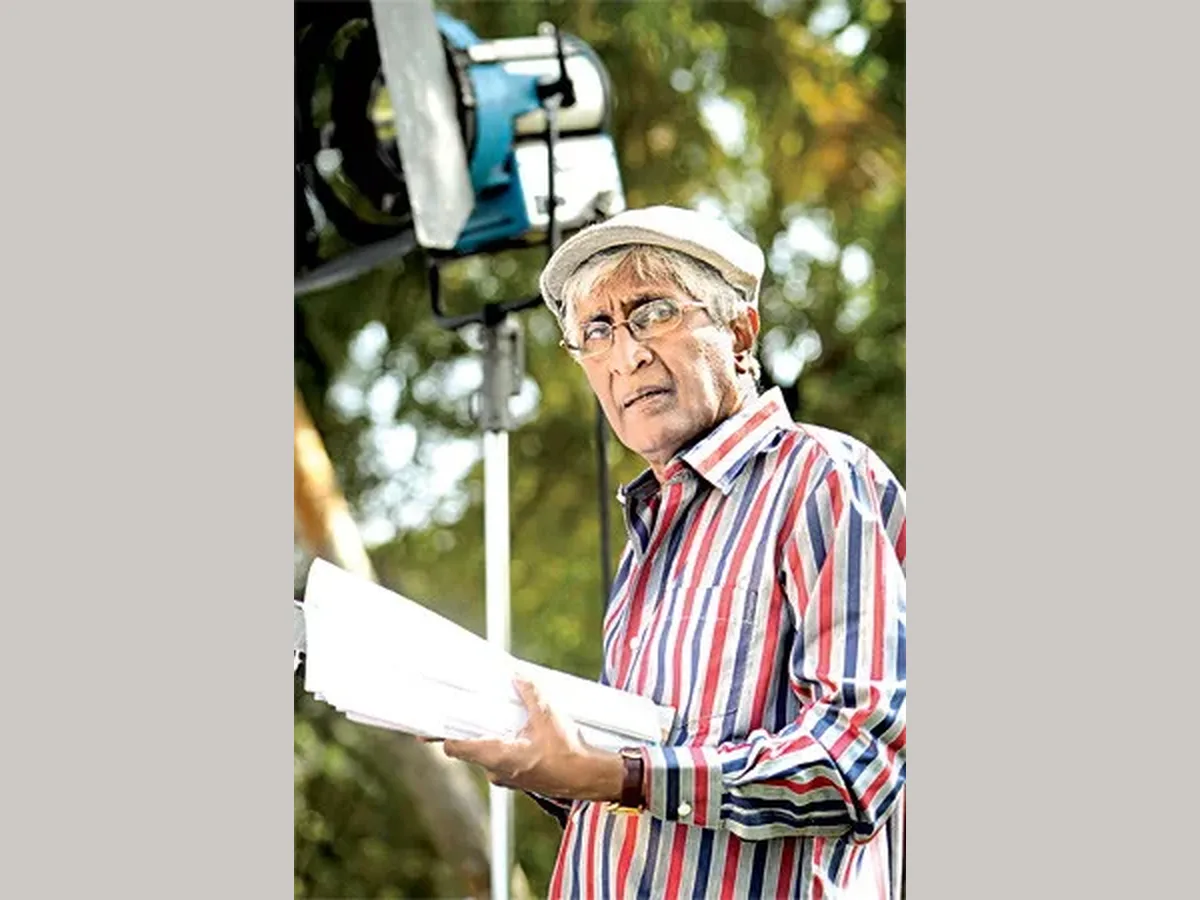
He has directed films since 1978, when Anupama was released, and has kept at it for nearly fifty years — Sarungale (1979), Siribo Aiya (1980), Christhu Charithaya (1990), Sudu Sewaneli (2002, which took the Sarasaviya award for Best Film), Uppalawanna, Kusa Pabha, Paththini, Bimba Devi Alias Yashodhara and Vijayaba Kollaya. He has usually written the songs for his own pictures, and he wrote lyrics for scores of other people's, from Madol Duwa and Gehenu Lamai in the 1970s to Aba and Mahindagamanaya decades later. His awards run to six Sarasaviya awards and four Presidential awards as a film lyricist, plus Sumathi and Raigam awards for television lyrics.
Both careers point the same way. A country that produces a first-rank songwriter is lucky. A country whose first-rank songwriter also builds the archive, argues for the despised genre and writes the footnotes is luckier still.