
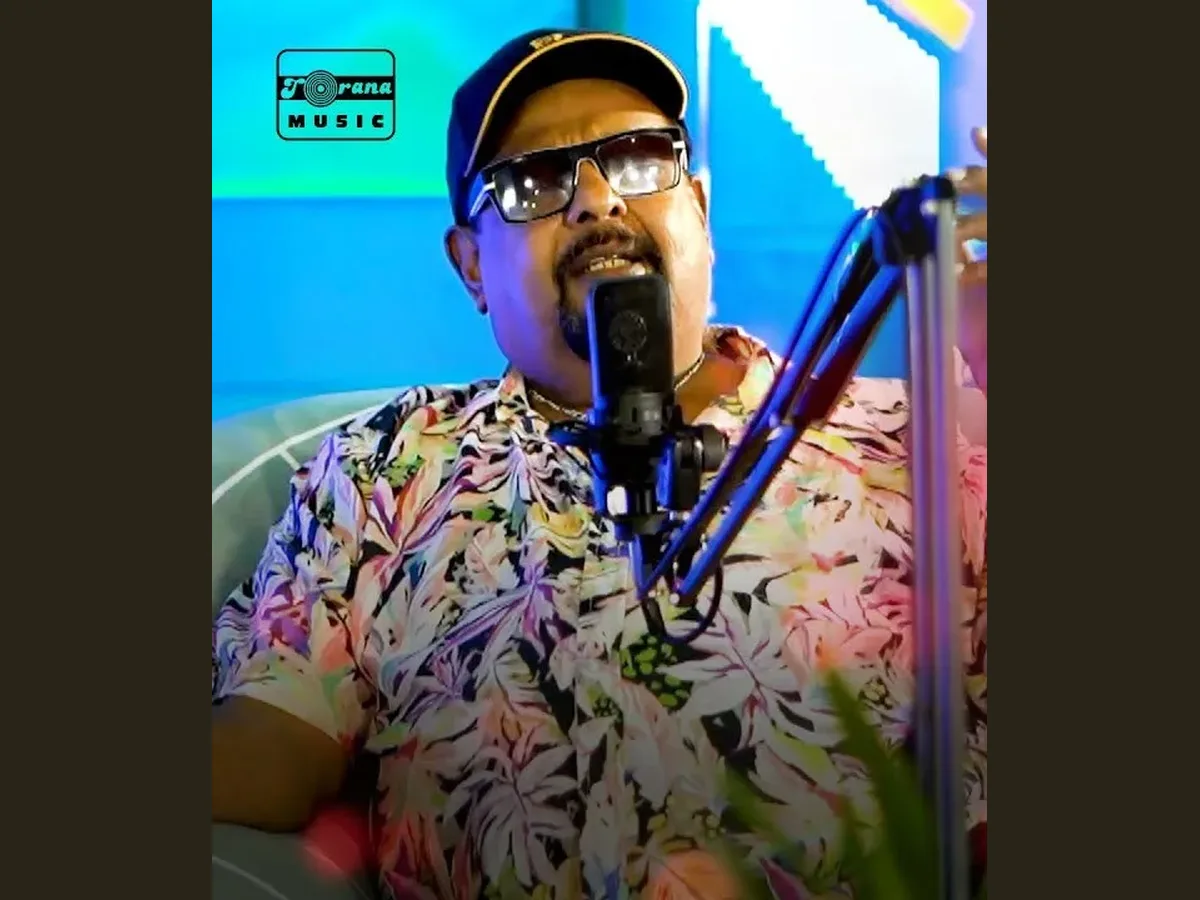
In 1974 a Colombo bandleader called Marsi Perera sold his two-year-old group, The X-periments, to a young man who had just qualified as a lawyer. It was, on the face of it, an odd purchase. Sri Lanka's band scene in the mid-1970s ran on borrowed equipment and goodwill: no multi-channel mixers, no way to look up a lyric except by listening to a record over and over, and vans the musicians of the period still joke about as "wind-conditioned". The buyer gave up the legal career anyway. Fifty years later the band's name and his are the same thing.
A band changes hands
Accounts of exactly how Sohan Weerasinghe came to lead the X-Periments differ, and the difference is worth flagging rather than smoothing over. The Sunday Times, interviewing him in 2011, describes a straightforward transfer: Marsi Perera sold the two-year-old band to him in 1974. The Island's profile tells it as a founding — that after winning the Observer talent contest in the mid-seventies he formed his own band, Sohan & The X'Periments. Both may be partly true, since a band that changes owner and direction can reasonably be described either way, but no source reconciles them.
What is not disputed is the trajectory. Weerasinghe is an attorney-at-law who chose the entertainment industry instead, and the band he led became the fixture of Colombo's live-music economy for decades.
The circuit
The venues he names when he talks about the early years are the map of a vanished Colombo: the Akasa Kade, the Blue Leopard, the Coconut Grove, and the institution of the sundown dance — an afternoon-into-evening event that let a whole generation go dancing and still be home at a respectable hour. This was the circuit that the Sri Lankan band era ran on: hotel ballrooms, nightclubs and private functions rather than record sales, with the repertoire mixing Western covers, English originals and Sinhala songs in a single set.
The circuit also went abroad. The band did a five-year residency at the Hotel Muscat InterContinental in Oman, and Weerasinghe has since performed across the Sri Lankan diaspora — Australia, Canada, the United States and the Gulf. In 1993 the X-Periments and the Gypsies, then the two biggest bands in the country, were persuaded to play a New Year's Eve dinner dance at the BMICH without a fixed fee, on a profit share — an indication of how large both acts had become.
Whispers in the Sand
His first English original, "Whispers in the Sand", won song of the year at the 1993 Island Music Awards, and it remains the song most often named first in any account of his career. It sits alongside ඔබ මුලින් දුටුව දින මා Oba Mulin Dutuwa Dina Ma ("the day I first saw you"), universally known simply as Adare — "love" — which is the Sinhala song audiences ask for.
The band's 2001 album for Torana Music Box took that song for its title. Adare runs to sixteen tracks and works as a snapshot of the Colombo band world at the turn of the century: guest vocals from Nirosha Virajini, Corrine Almeida, Sureshini Wanigasooriya, Ronnie Leitch, Iona de Silva and Rajiv Sebastian, with Shobhi Perera as music director, and tracks including Lankave Kollo ("boys of Lanka"), Maha Muhuda ("the great ocean") and Rala Bindu. Weerasinghe wrote both words and music for several of them.
More recently he has appeared in Sri Lanka's televised heritage-music formats, and he sang නැගිටිමු ශ්රී ලංකා Nagitimu Sri Lanka ("let us rise, Sri Lanka"), the theme song of the Gammadda rural development campaign, to words by Sydney Chandrasekara.
What is not on the record
This is a short article because the sourcing is short. Sohan Weerasinghe has no Wikipedia entry in any language, no published biography, and no birth year that could be confirmed from any reachable source — which is a common condition for Sri Lankan band-era musicians, whose careers happened in hotel ballrooms rather than in newspapers, and whose recordings were released on cassette by small labels that kept no archive.
That is a gap worth naming rather than filling with guesses. The 1970s and 1980s Colombo band circuit is one of the least-documented chapters in Sri Lankan popular music, and Weerasinghe — who was in the middle of it from the beginning and is still working — is one of the few people who could still put it on the record.