
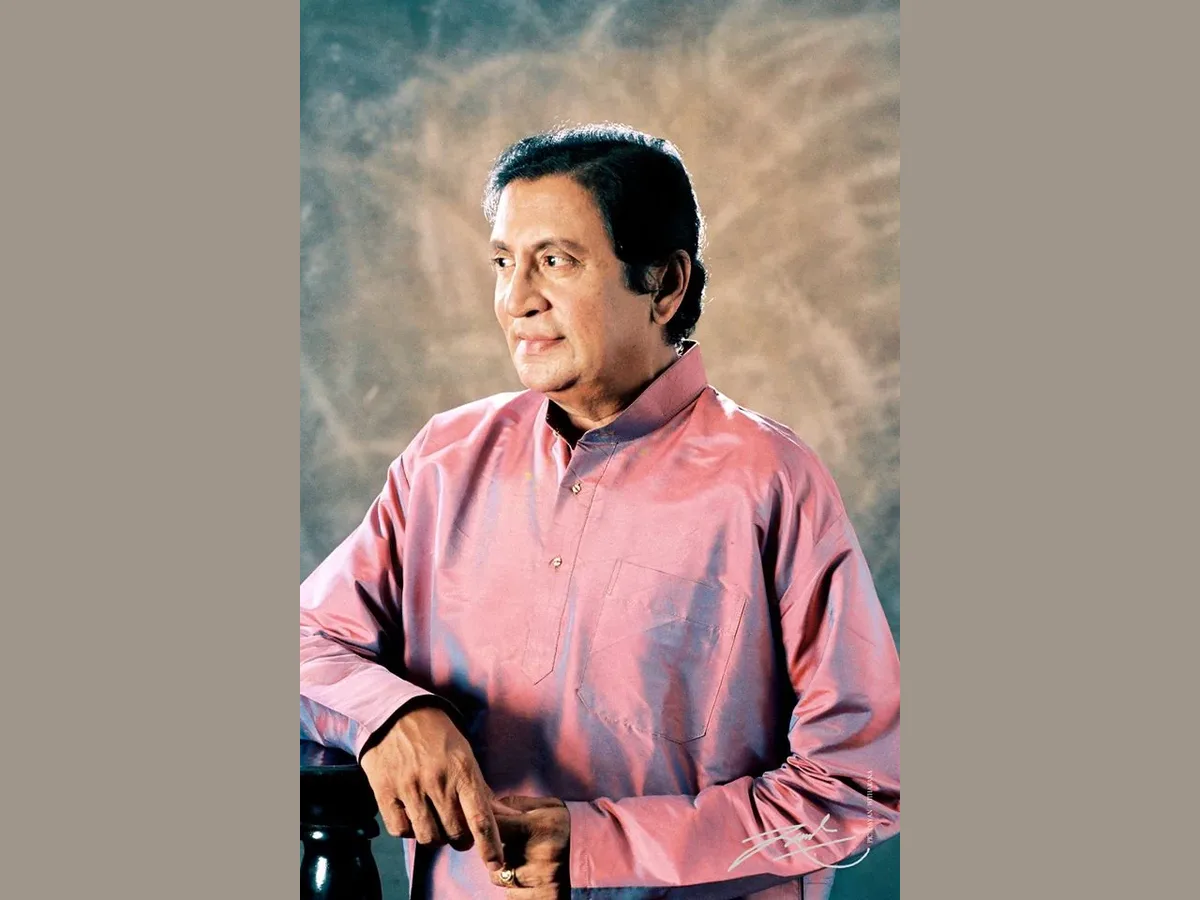
Sri Lankan schoolchildren in the early 1950s went to the cinema and heard Sinhala films sung in Sinhala by Indian singers — Jikki, A. M. Raja, P. Susheela — who could not always pronounce the words. The films were made in Madras because Ceylon had no studio of its own, and the songs came with Hindi and Tamil melodies attached. Somewhere in that audience was a Chilaw boy who had already written his first tune at the age of twelve. Sisira Senaratne's contribution to Sinhala music can be stated in one sentence: he wrote his own.
A boy who sang the scale in year four
He was born on 29 March 1935 in Chilaw. His mother, Leelawathi Mallikaarachchi, died when he was three months old and his father, Henry Solomon Senaratne, married again, so he was brought up by his grandfather, an Ayurvedic physician. He was schooled at St Mary's College, Chilaw, then Maradana Central College and Nalanda College, Colombo.
Sinhala accounts of his childhood all repeat the same detail: that in his fourth year at school he could sing the seven notes of the scale accurately in pitch, and that this was how his ear was discovered. He wanted to be a short-story writer and an actor. The voice got in the way. He entered the Government College of Music, sang on the radio, and at twelve wrote and composed his first song — for someone else's voice, that of Dharmadasa Walpola.
At fourteen, through T. F. Latheef and the film-maker Sirisena Wimalaweera, he was introduced to Lester James Peries. That introduction decided the next sixty years.
Podi Putha, and then Rekava
His first film song was මේ ලෝකේ නවාතැනවේ Me Loke Nawathanawe ("this world is a lodging house") for Podi Putha in 1955. The following year Peries took a crew out of the studio and into a village to shoot Rekava, the film usually treated as the beginning of a Sinhala cinema that looked like Sri Lanka, and Senaratne sang ඕළු නෙළුම් නෙරිය රඟාලා Olu Nelum Neriya Rangala — water lilies and lotuses dancing at the hem of a cloth. It is still the song his name is attached to.
He kept singing for films through the 1950s and 1960s — Sirakaruwa (1957), Ekamath Eka Rataka (1958), Ma Alaya Kala Tharuniya, Gehanu Geta and Hadisi Vivahaya (1959), Wana Mala (1960), Jeewitha Poojawa (1961), Daskon (1962), on to Golu Hadawatha in 1969. From Sirakaruwa came the nursery-perfect ටිකිරි ටිකිරි ටිකිරි ලියා Tikiri Tikiri Tikiri Liya; from Gehanu Geta, the cradle song රන්වලා තොටිල්ලේ Ranwala Thotille.
He never sang many songs — the Sunday Observer's reviewer noted that the total is small and that this has not stopped any of them staying fresh. He is also said by Sri Lankan reports to have sung duets with only one partner in his whole career.
Original tunes
That partner was Indrani Wijebandara. They met at the moment of departure, on an Air Ceylon flight to Madras — both were flying out to record the music for Rekava — and married on 31 May 1962. From 1957 onwards, he composed the melody for essentially everything she sang.
Their joint achievement is the reason both of them are remembered. Sri Lankan writers describe the Sisira–Indrani partnership as ushering in a new era in Sinhala music in the 1950s, and the mechanism was simple: original Sinhala melodies, written for Sinhala words, sung by Sinhala voices, at a moment when the industry standard was a borrowed tune with new words laid over it. Out of that came ගයා ගීතයන් ගමේ වෙල් එළියේ Gaya Geethayan Game Wel Eliye ("singing songs in the village paddy fields"), for which he wrote the words as well as the tune; නුහුරු නුපුරුදු රහස Nuhuru Nupurudu Rahasa ("a strange, unfamiliar secret") to a lyric by Karunasena Jayalath, whose novel Golu Hadawatha was capturing the same young readership at the same moment; පිදුරු සෙවිලි කළ පැල්පතේ Piduru Sewili Kala Pelpathe ("in the straw-thatched hut"); නීල ජලාසේ රඟනා Neela Jalase Rangana ("dancing on the blue lake") to a Karunaratne Abeysekara lyric; ආලෝකේ පතුරා Aloke Pathura ("spreading light"); ඈත අහසේ Atha Ahase ("in the far sky"); හඳපානේ මල් පිපුණා Handapane Mal Pipuna ("flowers bloomed in the moonlight"); සල් සපු මල් Sal Sapu Mal; and මංගල මල් දම Mangala Mal Dama ("the wedding garland").
A large part of that repertoire ended up being sung by and to children, and the pair are routinely credited with building the modern Sinhala children's-song tradition — a body of work that had been thin before them and became a school staple afterwards.
He also wrote lyrics for other singers, among them H. R. Jothipala and Angeline Gunathilake.
Handapana and the awards
In 1965 he moved to the other side of the glass. Handapana, released that June, was his first film as music director, and it won him the Sarasaviya award for best music direction at the festival held in 1966. He directed the music for about ten more films — Hithata Hitha (1965), Punchi Baba (1968), Senehasa and Kauda Hari (1969), Mage Ran Putha and Deepanjali (1978), Ran Ethana (1981), Gajamuthu, and as late as Punaruthpaththiya in 1997 — and then went back to singing, which he preferred.
At the first Guvan Viduli (radio) awards in 1970 he won best male singer for මාගෙ පුතුට මල් Mage Puthuta Mal ("flowers for my son") from Punchi Baba, to words by Dharmasiri Gamage. In 1997 he received the Swarna Jayanthi award at the eleventh Presidential Film Festival.
Sisindra, and a life kept alongside a day job
None of this was his job. Senaratne worked for Sri Lanka Customs, rising to assistant superintendent, and his colleagues there put on a concert for him called Sisirasa; the Customs Welfare Association also published his felicitation volume, Sisiraesa, edited by Vijitha Gunaratne, which contains George Robinson de Silva's Sisira Senaratne Gee Mina — described at the time as the only reliable catalogue of the couple's songs.
With Indrani he took a concert programme called සිසින්ද්රා Sisindra around the Sri Lankan diaspora for years — Canada, Britain, the United States, Dubai, Australia, Germany, Switzerland, Italy — and finally staged its Sri Lankan edition at the Kularatne Hall of Ananda College, Colombo, launching Indrani's autobiography Ranpiyawara and an album of their duets, Iresha, on the same night. The book covers fifty-five years of a shared working life.
Professor Sunil Ariyaratne, assessing him after his death, put the durability down to a voice and a stage personality that belonged to nobody else. He had been ill for some time when he died at the National Hospital of Sri Lanka on 4 February 2015, aged seventy-nine; the funeral was at Borella cemetery three days later. Indrani outlived him by four years.
A note on the name
Anyone searching Sinhala sources for him should know that the romanisation is unstable — Senaratne, Senarathne and Senarathna all appear, sometimes for the same recording — and that Sisira Senevirathna, who also sang in this period, is a different person entirely. The Sinhala form is settled: සිසිර සේනාරත්න.