
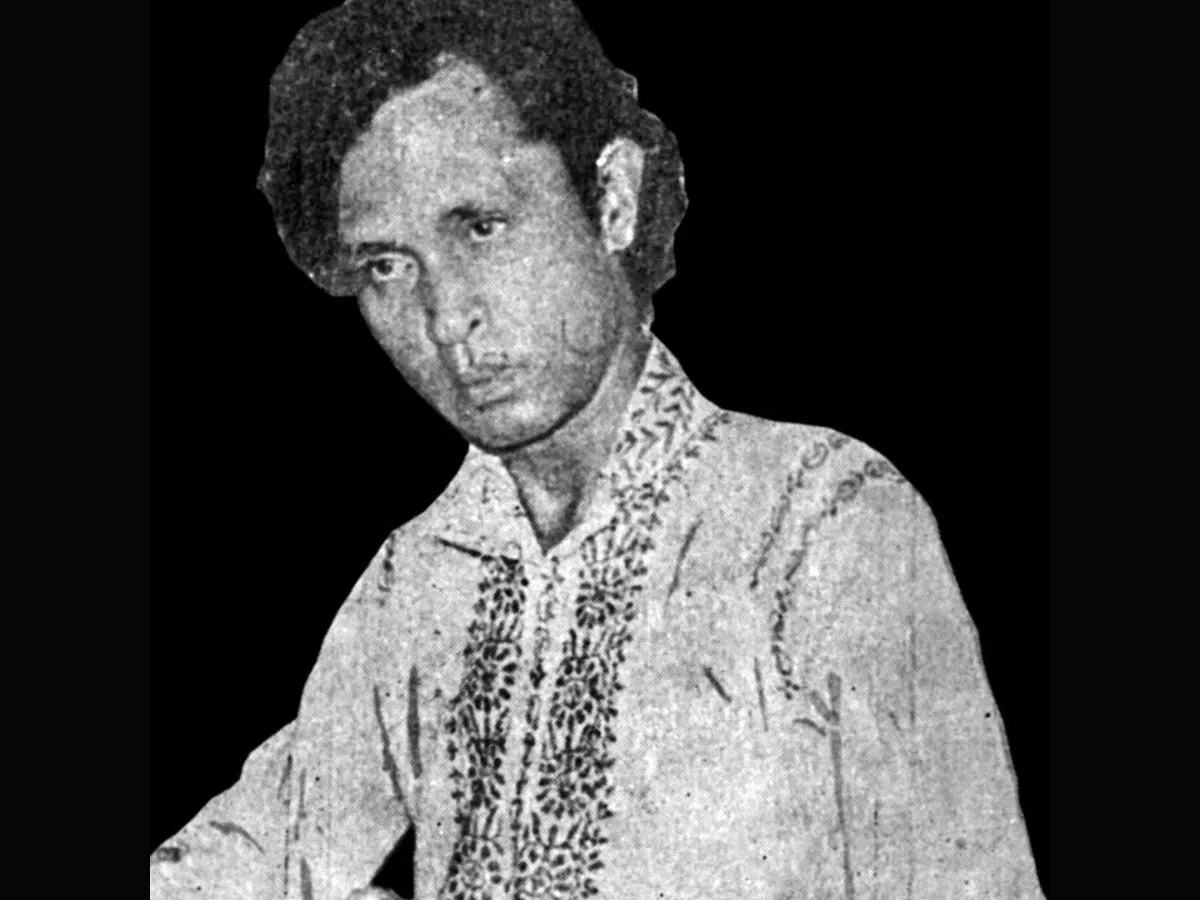
Somewhere in a Bombay recording studio in the mid-1960s, a young man from Colombo was sitting behind a pair of tabla with a Hindi film score in front of him. Sri Lankan accounts of Shelton Perera's life all pause at this point, because they all make the same claim: that he is the only Sri Lankan ever to have played tabla on Bollywood film sessions, under music directors of the rank of Naushad, Shankar–Jaikishan, Salil Chowdhury and S. D. Burman. Nobody has published the session sheets that would prove it. What is not in doubt is that he got there, and that he came home again — and that when he did, the drummer turned out to be a singer.
A Tower Hall family
He was born Thotagamage Shelton Perera on 20 March 1939 in Colombo, into a household where performing was simply the family trade. His father, Thotagamage Wilbert Perera, was a Tower Hall actor and an A-grade singer at Radio Ceylon — a man whose stage career began with a touring dance company and continued with the Tower Hall Ariya Sinhala Drama Council, and who won gold medals for his Othello and for the character of "Victor Hamu" in Heladiva Puragana. His mother, L. A. K. Somakantha, was a stage actress and an A-grade nadagam and noorthi singer, decorated for playing Princess Chintamani in Chintamani in 1935 and Kumarihami in Ehelepola in 1937. Her own parents had been dancers and circus performers.
Two of Shelton's sisters made careers of their own. Suriya Rani became a film and stage actress; Kumari Perera was an actress, one of the first presenters on Sri Lankan national television, and a radio presenter for nearly five decades. It is a useful reminder that the Sinhala performing arts of the twentieth century were often, quite literally, a family business, handed down the way a craft is.
Shelton's first music teacher was W. W. Rupasinghe. In 1954 and 1955 he studied at the Government Conservatory under its principal, Lionel Edirisinghe — the first Sri Lankan to take the Sangeet Visharada at Lucknow, and by then the most powerful musical gatekeeper in the country. It was the tabla that took hold.
Lucknow
In 1962 he went to India. The destination was Marris College of Music at Lucknow — later renamed Bhatkhande Sanskriti Vishwavidyalaya — the same institution that had trained Edirisinghe, Sunil Santha and P. Dunstan de Silva before him, and the intellectual source of a great deal of what Ceylon called classical music. Perera studied tabla there under the great Ahmed Jan Thirakwa and under Harishankar Mishra, took a master's degree in music and orchestration, and became a tabla player for All India Radio, accompanying Indian vocalists on air.
He also met his wife there: Kumari Shashi, who had come to Bhatkhande to study dance, and who later became a Hindi presenter at Radio Ceylon after returning to the island with him.
The move to Bombay came through Madan Mohan, who had travelled to Lucknow Radio for the national programme Akhila Bharati and used Perera on tabla. From there he went into the film studios. The Bombay years ended abruptly in 1966, when a friend brought him the news that his father had died. He went home, and — as one Sinhala account of his life puts it — that broke the thread between him and India for good.
Composer, announcer, singer
Back in Ceylon he took a government music-teaching post at Uhana Maha Vidyalaya in Ampara, a long way from a Bombay session floor. He was then appointed the first Hindi-language announcer at what became the Sri Lanka Broadcasting Corporation — an appointment that made complete sense in a station whose Hindi commercial service was, at that moment, the most listened-to radio in South Asia.
His film work began in 1967 with Dommie Jayawardena's first picture, Daru Duka, for which he composed three songs to words by Karunaratne Abeysekara. He scored Sarubima and Iwasana Danaa in the same year, Thewatha in 1970, Singapore Charlie in 1972 with Premalal Danwatte, Hadawath Naththo in 1974 jointly with Mohammed Sally, Jeewana Geethaya in 1975 and Deviyangen Kandulu in 1976. Among the songs that carry his name as composer are ගුවන් තොටිල්ලේ Guwan Thotille ("in the sky-cradle"), sung by Sujatha Attanayake to an Abeysekara lyric, and මහ මුහුදු විමානේ Maha Muhudu Wimane ("in the palace of the great ocean").
And then, past the age of thirty, he became a singer. The songs that made his reputation were unhurried, low-voiced and classical in bearing: එගොඩහ යන්නෝ Egodaha Yanno ("you who cross to the far bank"), අවසන් ලියුමයි Awasan Liyumai ("this is the last letter"), මිහිරැති වසන්ත Mihirathi Wasantha ("sweet spring"), මිලාන මලකි Milana Malaki ("a withered flower"), Himidiri Eliye and Kandulak Una. He also kept up the noorthi repertoire his parents had sung on the Tower Hall stage — Seetha Ma Siriya Inne, Agana Baduya Mewa, Lankendra Swami, Punyawantha — which is a rarer thing than it sounds, because by the 1970s almost nobody under fifty was still singing it.
On 20 May 1980 he put on a concert of his own at the Tower Theatre, named after one of his songs: Mihirathi Wasantha. Four years later he sang බුදුනේ Budune for Malini Fonseka's film Sasara Chethana, to a lyric by Sunil Ariyaratne with music by Sarath Dassanayake. It won him the Sarasaviya award for best male singer at the 1985 festival — the recognition of a man who had spent twenty years accompanying other people.
A short last act
He died on 18 September 1986, aged forty-seven. The catalogue he left is not large — a few dozen songs, a handful of film scores, a lot of uncredited percussion — but it stayed in circulation, mostly because his family kept singing it. His son Sathish Perera began recording in 1989 with the explicit intention of continuing his father's work, and his two albums, Pem Hasun and Egodaha Yanno, mixed his own songs with his father's; Sathish died of leukaemia on 23 April 2012, aged forty-two. Shelton's daughter Anuradha Perera is also a singer.
Not the other Shelton
Two men named Shelton shaped Sinhala music in the same decades, and search engines cheerfully confuse them. Shelton Premaratne (1931–2024) was a composer and music director — the arranger behind a large part of the sarala gee repertoire, music director for twenty-one films and more than thirty stage productions including Henry Jayasena's Hunuwataye Kathawa, and a man who never made his name as a performer. Shelton Perera was a percussionist who became a singer, a generation younger, dead in 1986 at forty-seven. Song databases in Sri Lanka — including the one behind this site — sometimes file a Premaratne composition under Perera's name. If a credit involves a stage play or a sarala gee classic, it almost certainly belongs to Premaratne; if it involves a tabla, it is probably Perera.