
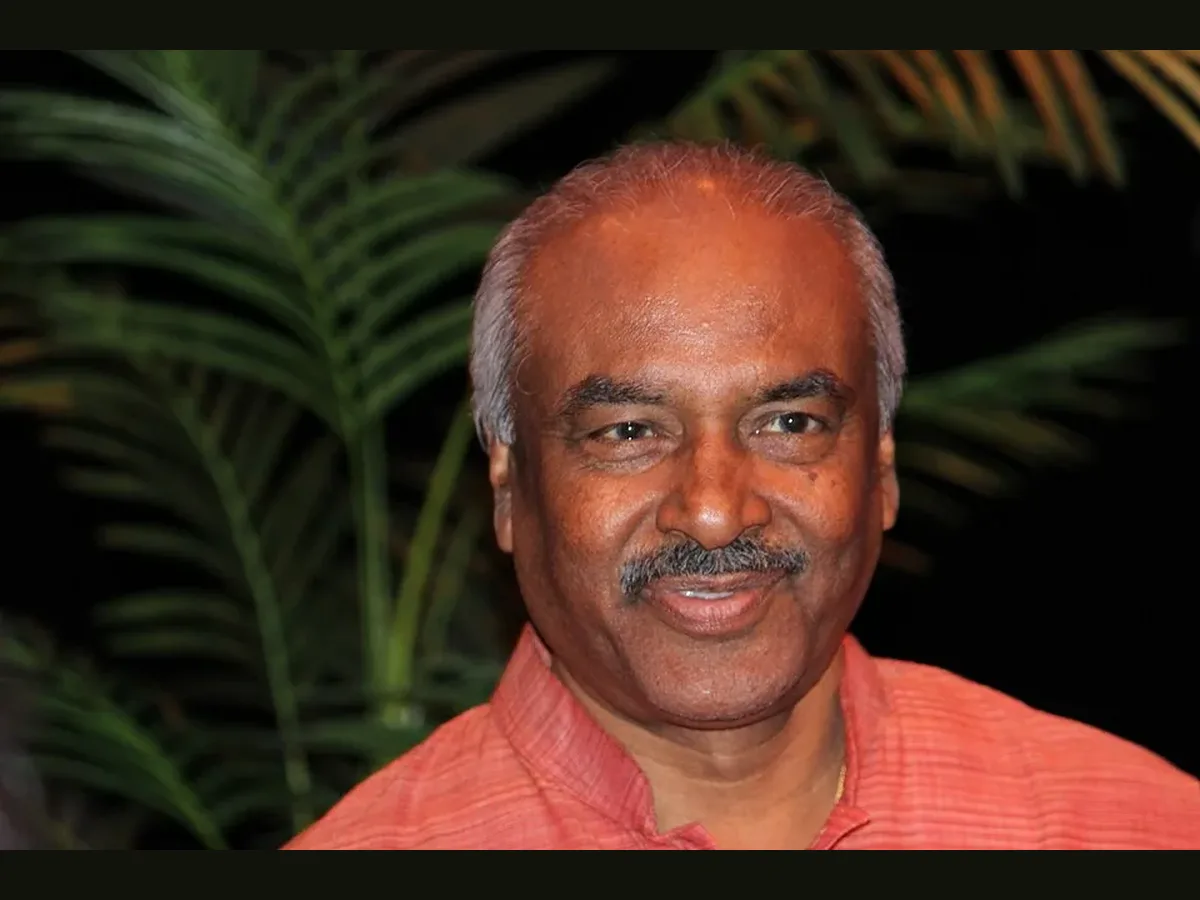
For most of the 1970s the man who would write more Sinhala melodies than almost anyone alive was sitting at the side of somebody else's stage with a sitar across his lap. When Victor Rathnayake stood alone at the Lumbini Theatre and sang Sa, the sitar was Rohana Weerasinghe's. When Nanda Malini performed Shrawana Aradhana, and when Sanath Nandasiri performed Swarna Kundala, it was his sitar again. He had come to those stages out of Premasiri Khemadasa's orchestra, where he was hired as a sitar player, and Khemadasa's orchestra was the hardest school in the country.
Algiriya to the College of Music
Rohana Weerasinghe — Dickmadugodage Rohana Chithrakumara Weerasinghe — was born on 18 February 1949 at Algiriya near Matara, in the deep south, the youngest child of Henry and Sepalin Weerasinghe. His schooling moved around a good deal: a convent in Nuwara Eliya, then a Buddhist school at Ruwan Eliya, then Welimada, then Dharmapala Vidyalaya at Pannipitiya, then Gamini Maha Vidyalaya back in Nuwara Eliya. He learned the rudiments of music from K. V. S. Perera and Kithsiri Aluthge, and got into the Government College of Music — the institution that is now the University of the Visual and Performing Arts — on the strength of his sitar.
Like most Sri Lankan musicians of his generation he then took a government post, teaching music at D. S. Senanayake College in Colombo, at Senananda Maha Vidyalaya in Meepilimanna and at Ananda Sastralaya in Kotte. The playing continued alongside it.
1982: into the control room
The turn came in 1982, when he joined the Sing Lanka studio as a sound engineer. Sitting on the other side of the glass changed what he could do, and the songs that came out of that year and the next are the ones that made his name: එක සිත දෙතැනක Eka Sitha Dethanaka ("one heart in two places") and හිරුට හොරෙන් Hiruta Horen ("hidden from the sun") for T. M. Jayaratne, and Punchi Sithe Punchi Sina for Neela Wickramasinghe. In the same year the Sarasaviya awards gave him best music director for the film Aradhana, and the Vijaya Rupavahini awards gave him best music director for the teledrama Rekha. He had arrived in cinema and television in the same season, which turned out to be the shape of his whole career.
What he built after that is less a run of hits than a working method: a melody line that sits close to the natural rise and fall of a Sinhala sentence, orchestrated with restraint, and then handed to whichever voice suits it. He composed heavily for Sunil Edirisinghe — ලෙන්චිනා මගෙ නංගියේ Lenchina Mage Nangiye, මා ඉතින් යන්න යනවා Ma Ithin Yanna Yanawa, මිනිසා සුවඳයි මල සේ Minisa Suwandai Mala Se ("a man is fragrant like a flower"), වන්නි වනපෙතේ Wanni Wanapethe — and above all for the Rathna Sri Wijesinghe lyric චන්ද්ර මණ්ඩලේ සැතපුණ පුංචි සාවියේ Chandra Mandale Sathapuna Punchi Saviye ("little hare asleep on the face of the moon"), which is one of the most quoted songs in the language.
He wrote ජීවිතයේ තනි මංසල Jeewithaye Thani Mansala for W. D. Amaradeva, සීත අරණේ Seetha Arane for Malani Bulathsinhala and Milton Mallawarachchi, දොඹ මලින් Domba Malin and අකුරු මැකී නෑ Akuru Makee Na for Edward Jayakody, සඳ දිය උතුරා Sanda Diya Uthura and රෝස මල් පොහොට්ටු Rosa Mal Pohottu for Nirosha Virajini, මට මුළු ලොවම ඔබයි Mata Mulu Lowama Obai for Rookantha Gunathilake and Chandralekha Perera, and හඳ පානක් සේ ඇවිදින් Hada Panak Se Awidin and කොලොම්පුරේ නුඹ ඉන්නා Kolompure Numba Inna for the Athula Adikari–Samitha Mudunkotuwa partnership. ආජු තපර ලාහිලා Aaju Thapara Lahila, which introduced the schoolgirl Deepika Priyadarshani in 1987, is his; so is the Kasun Kalhara song මධු චන්ද්රයාමේ මෝදුවේ Madhu Chandra Yame Moduwe, made a generation later.
The other Rohana: the singer
He also sings, in an unforced, conversational voice that has become the sound of Sri Lankan television. මුතු කුඩ ඉහලන Muthu Kuda Ihalana ("raising a pearl parasol"), හෙළ කුල සිරිතට Hela Kula Sirithata, හැන්දෑකරේ Handekare ("at evening"), මොනවද මුත්තේ Monawada Muththe ("what is it, grandfather?") and ගමන් මගක් තිබුණාද Gaman Magak Thibunada ("was there ever a road?") are his own performances. රත්තරන් දුවේ අපේ රත්තරන් දුවේ Raththaran Duwe — a father's song to a daughter, words by the physician and public figure Carlo Fonseka — he recorded as a duet with Nanda Malini, and it has been sung at Sri Lankan weddings and farewells ever since.
Teledrama themes are a large and under-counted part of the catalogue. From Rekha and Sudu saha Kalu in the early 1980s to Dunhinda Addara, Sankranthi Samaya, Vilambeetha, Gajaman Nona and Rala Bindena Thena, he has been the composer television reached for; the SIGNIS, Sumathi and Raigam awards for those productions run from 1992 to 2008. In cinema the Sarasaviya named him best music director again for Aadara Hasuna (1987), Saharave Sihinaya (1991), Madara Parasathu (1994), Seilama (1998) and Veesidela (1999), and the Presidential film awards for Saptha Kanya and Madara Parasathu (1994), Me Mage Sandai (2003) and Anjalika (2007).
How many songs is an open question, and the honest answer is that nobody has counted. A newspaper profile has credited him with melodies for more than eight thousand songs; figures of that size circulate freely in Sri Lankan music writing and should be read as "an enormous number" rather than as a total.
Taking the orchestra abroad
From the 2000s he built large concert productions and toured them. Ran Swara Dhara was staged at the Arts Centre in Melbourne in 2004; Rohana Ransara was performed at the Sydney Opera House in 2006, which the Sri Lankan press treated, reasonably enough, as a landmark for Sinhala music; a further concert followed at the Millennium Dome in London in 2008. He has served as adviser to the President of Sri Lanka on cultural and aesthetic affairs since 2006. A biography, Gaman Magak — "along a winding path" — appeared in 2009, and an earlier collection of essays on his work, Lankika Sangeethayei Rohana Lakuna, in 2002. In December 2024 he filled the BMICH with a concert called Adaraneeya Rohana.
Why the melodies last
The thing that keeps his songs in circulation is not novelty. Weerasinghe came up through the sitar and through Khemadasa's arranging desk, and he learned there that the tune is the servant of the words. Ask a Sri Lankan to hum Chandra Mandale or Raththaran Duwe and the melody arrives with the lyric attached, inseparable — which is exactly what a composer of sarala gee is supposed to achieve and what very few manage across four decades, two media and three generations of singers.