
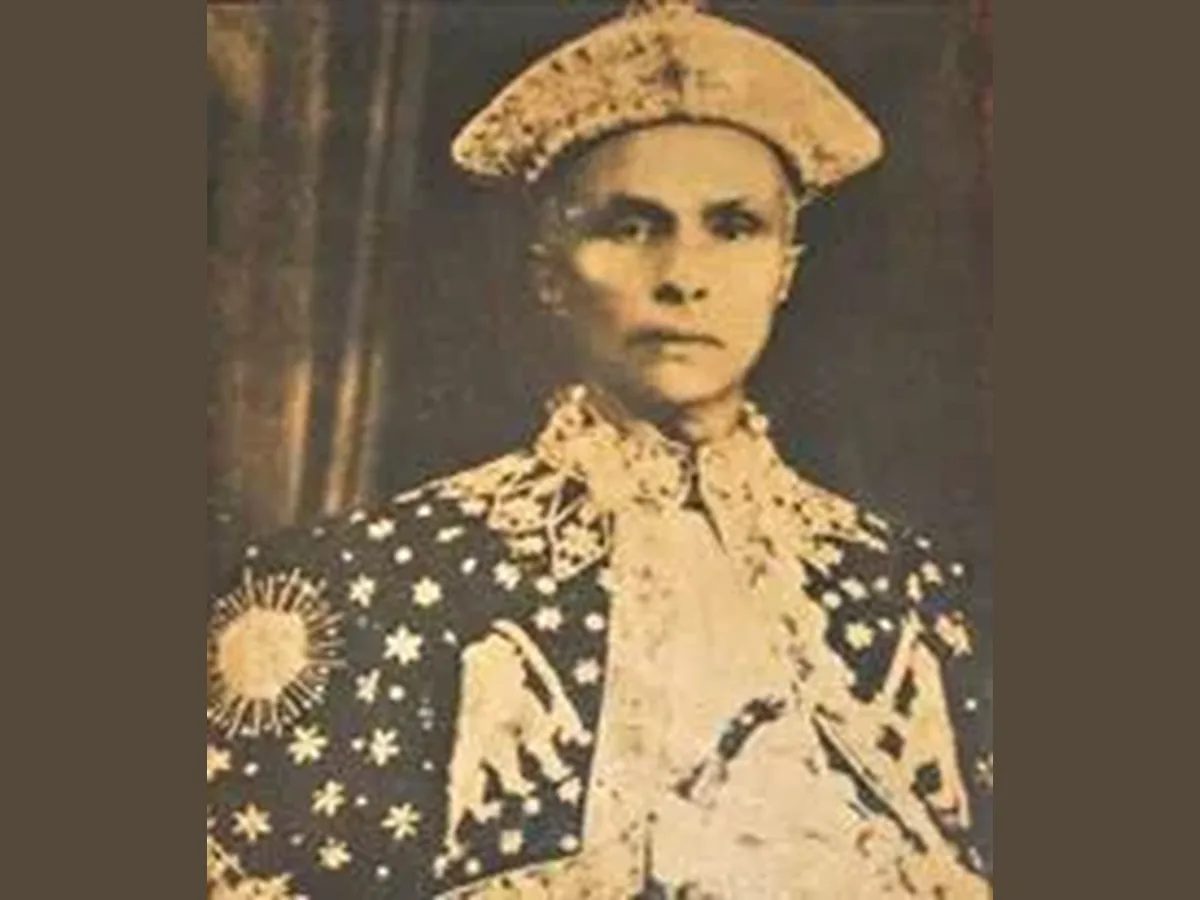
On the morning of 4 February 1948, Radio Ceylon broadcast a national anthem for a country that had existed for a few hours. The song was called "Sri Lanka Matha Pala Yasa Mahima Jaya Jaya." The music was by Lionel Edirisinghe, principal of the government college of music and dance. The words were by a notary public from Gampola named Punchi Banda Illangasinghe, who also treated eye disease, read horoscopes, and had spent much of his life teaching children to sing.
By the time the official Freedom Day ceremony began later that day, the song had quietly disappeared from the programme. Ceylon marked its independence singing "God Save the King."
The notary from Gampola
He was born on 6 April 1888 at Pahala Walluwa in Illawathura, near Gampola, and went to the Buddhist Mixed School in the town and then to St. Thomas' College, Matara. He trained as a teacher at St. Thomas' Teachers Training School and was appointed headmaster of the Waebada Buddhist School.
None of that describes what he actually did with his life, which was several things at once. He qualified as a notary public — the profession his Wikipedia infobox still lists first. He practised as a traditional eye doctor and founded the Samastha Lanka As Weda Sangamaya, the All-Island Society of Traditional Eye Doctors, and served as its president. He did the same for the Samastha Lanka Sarpa Visha Veda Sangamaya, the island's society of traditional snake-venom physicians. He was an astrologer. He was a member of the Ceylon branch of the Royal Asiatic Society, and his name appears in its published membership list for 1957.
This combination — indigenous medicine, astrology, law, and music — is not eccentric for a Kandyan village gentleman of his generation. It is closer to what the word pandit used to mean before it narrowed. Learning was one thing with several branches, and a man of standing in a provincial town was expected to be useful in all of them.
The government eventually recognised the whole of it. He was granted the honorific title Rate Mahatmaya, gazetted in June 1949 — an old Kandyan office name given, by then, as an honour for public service.
Carols in the front room
The music was not a hobby he kept to one side. Students came to his house to be trained to sing Buddhist carols he had composed for the annual ceremonies — an unfamiliar-sounding idea now, but the Buddhist revival of the early twentieth century deliberately borrowed the carol form, along with the Sunday school and the flag, from the missionary schools it was competing against.
He served the Jathika Gandharva Sabha — the national association of musicians — as a music director and as an inspector of its music examinations. In the 1940s that body was one of the few institutions in the country with any authority over what counted as Sinhala music, and being one of its examiners put him inside a very small circle of people who set standards for everyone else.
He wrote school anthems, and this is the part of his work that has outlasted everything else. The anthems of Dharmaraja College in Kandy, Rahula College in Matara and Hillwood College in Kandy are his. Every school day for the better part of a century, thousands of children have sung words written by a man almost none of them could name.
The competition, and the judges
Ceylon approached independence without an anthem. To find one, the Lanka Gandharva Sabha ran a competition, and appointed a panel to judge it: Illangasinghe himself, S. L. B. Kapukotuwa, Dr O. H. D. Wijesekera, Lionel Edirisinghe, Mudliyar E. A. Abeysekera and L. L. K. Gunatunga.
Among the entries was Ananda Samarakoon's නමෝ නමෝ මාතා Namo Namo Matha ("Salute, salute, Motherland"), a song he had written for schoolboys in Galle in 1940 and which by 1948 was already widely known. Samarakoon was in India at the time; his wife entered it on his behalf.
The winner was "Sri Lanka Matha Pala Yasa Mahima Jaya Jaya" — words by Illangasinghe, music by Edirisinghe. Two members of the judging panel had submitted the winning entry, and the panel they sat on had chosen it.
The reaction was immediate and it was not about the song. Professor Sunil Ariyaratne, who has done more archival work on this episode than anyone, put it plainly to the Sunday Times: "The euphoria was short-lived as many challenged the validity of Illangasinghe's anthem since he too was one of the judges of the selection committee." Later accounts make the same distinction — that the composition itself was above reproach, and that what sank it was the appearance of favouritism.
So the anthem went out over Radio Ceylon on independence morning and was not sung at the ceremony. A year later, at the inauguration of the Independence Memorial Building at Torrington Square on 4 February 1949, the Illangasinghe–Edirisinghe song and Namo Namo Matha were both performed, in Sinhala and Tamil. The government's own printed notice for the occasion called them "National Songs" — not the national anthem. The distinction was doing a lot of work.
Namo Namo Matha was the one people had already chosen for themselves. A cabinet decision in favour of it was announced in the newspapers in 1952, and Illangasinghe's anthem passed out of use so completely that most Sri Lankans today have never heard it.
What his name actually was
Even that is unsettled. English Wikipedia files him as P. B. Illangasinghe but calls him Elangasinha throughout its own text and in its infobox. The Sunday Times, reviewing a 1999 Rupavahini documentary on the anthem, wrote of "P. B. Elangasinghe (well known notary from Gampola)." The Sinhala given on Wikipedia is පුංචි බණ්ඩා ඉලන්ගසිංහ. Three spellings of one surname, in the sources that exist, for a man who has been dead since 1960.
It is a small thing that says something larger. Beyond the anthem episode, the record of his life is thin: a handful of newspaper paragraphs, a Royal Asiatic Society membership list, a gazette notice, a school old boys' newsletter. He wrote music criticism and taught examiners; almost none of it survives in an accessible form. He died on 22 September 1960, aged seventy-two.
The fairest way to put it
There is a version of this story where Illangasinghe is simply the man who rigged the national anthem, and it is not quite right. Ceylon in 1948 had perhaps two dozen people qualified to judge such a competition, and asking them all to abstain from entering would have emptied the field. Nothing in the record suggests he concealed his authorship or that the panel voted in secret. The problem was structural, and it was foreseeable, and nobody foresaw it.
What followed is genuinely strange. His song was broadcast to the nation as its anthem and then never sung in public again in any official capacity, while the school anthems he wrote — much smaller commissions, no committees involved — are still sung by children in Kandy and Matara every week of the school year. The work that was supposed to make him permanent lasted a morning. The work nobody argued about is the work that lasted.