
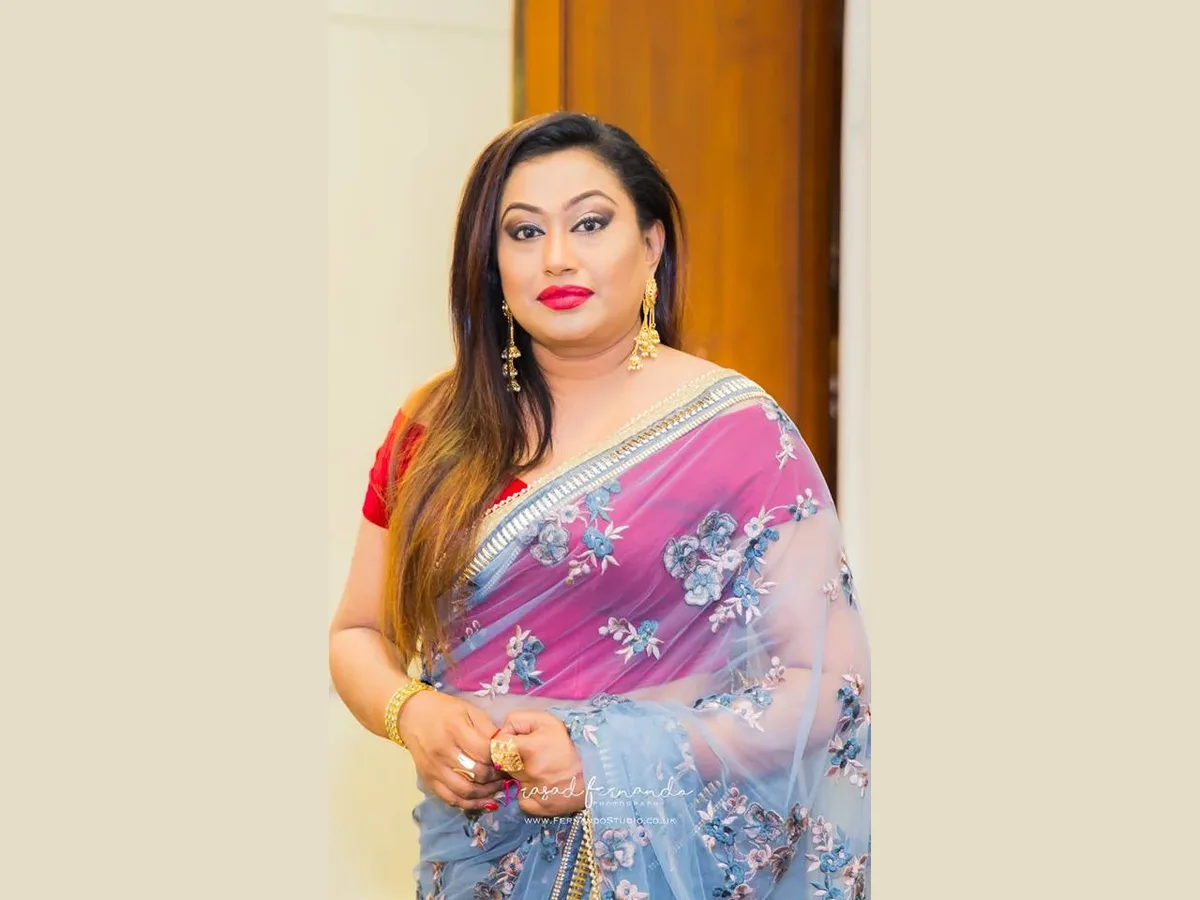
Almost every profile of her opens the same way: born Nirosha Virajini in Kandy on 13 January 1973. The first half of that is wrong. Her name is Virajini Lalithya de Silva; "Nirosha Virajini" is what she has recorded under since the early 1990s. It is a small error, but it has been copied from database to database until it looks like a fact, and it is a useful reminder of how thinly documented one of the most heard voices in modern Sinhala music actually is.
Her singing is everywhere. She has sung in Sinhala, Tamil, Hindi and Malayalam. Her voice has opened teledramas that ran for years and carried film songs that won her the two biggest awards in the country. And there is remarkably little in print about how any of it happened.
A house with music in it
What is known about the beginning comes mostly from a single Sunday Observer profile published in May 2005, when she was twelve years into her professional career. She grew up in a Kandy household where her father sang a good deal and her mother had music playing constantly, and where her parents took it as given that she would end up on a stage.
She arrived in the mid-1990s from an unusual direction. She did not come up through the SLBC grading panel singing sarala gee, which is how most Sinhala vocalists of the previous generation had arrived. She came in, as the Observer put it, "singing Tamil and Hindi songs" — a repertoire that in Sri Lanka has always sat slightly outside the respectable centre and that gave her, from the start, the flexible, ornamented delivery that would make her so useful to composers writing for television.
Her debut solo concert and her first album, Hitha Handai, were launched together at the Elphinstone Theatre in Maradana to a full house. She has consistently credited the veteran broadcaster B. H. Abdul Hameed with giving her the nerve and the backing to attempt a solo concert that early.
The composer's singer
Once she was established she recorded at a pace matched by very few. The Sinhala song databases carry dozens of her titles, and the names attached to them read as a list of who was making Sinhala popular music in the 1990s and 2000s. Rohana Weerasinghe wrote a great deal for her — සඳ දිය උතුරා Sanda Diya Uthura ("moonlight brimming over") and පුංචි සමනළී Punchi Samanali ("little butterfly") to Sunil Ariyaratne's words, ඉගිලෙන්න තහනම් නම් Igilenna Thahanam Nam ("if flying is forbidden") to Channa Jayanath's, and ඔබ ගියාම දුක මට දී Oba Giyama Duka Mata Di ("when you left, leaving me the grief") to Nilar N. Cassim's.
Suresh Maliyadda was the other constant. Ajantha Ranasinghe gave her රෑ දොළොස් පැයේ Ra Dolos Paye ("in the twelve hours of the night"), set by Anthony Surendra; Rathna Sri Wijesinghe gave her පුන්සඳ රෑට ඇවිදින් හේනේ Punsanda Reta Awidin Hene ("the full moon comes at night to the chena"), set by Austin Munasinghe. The songs the 2005 profile picked out as the ones listeners already knew by heart were සිනාතොටක් විය Sina Thotak Wiya, Punsanda Reta, සීගිරි ගීයක් Sigiri Geeyak ("a Sigiriya song"), Duhul Malaka, සිත ඔබට මුවා වී Sitha Obata Muwa Wela and Ven Purawe.
Tharu Es Dahasak ("a thousand starry eyes"), her sixth album, came out in 2005 with music by Weerasinghe and Maliyadda. The launch concert at the BMICH says a lot about where she stood by then: Bathiya and Santhush shared the bill, Sanath Gunatilleke compered, and Ravindra Randeniya, Malani Fonseka and Anoja Weerasinghe introduced the songs, with the filmmaker Tissa Abeysekera handling the English introductions. Very few singers of her generation could assemble that room.
Television
Her real territory, though, was the teledrama theme song — the thirty seconds to two minutes that open a serial and then, if the serial runs, become a piece of national furniture. She has sung a great many of them, including the themes for Oba Nisa and for the third series of Prema Dadayama. It is a form Sri Lankan criticism tends to ignore and Sri Lankan audiences know by heart, and for a stretch of two decades she was its default voice, alongside a parallel career as a playback singer in film.
She has also worked as a music director, though her production credits are much harder to trace than her vocals — another gap in the record rather than an absence of work.
The awards, and what is not settled
English and Sinhala Wikipedia both report that she was named best female vocalist at the Presidential Film Awards and at the Sarasaviya Awards in 2000, 2002 and 2016, for playback singing in Rajya Sevaya Pinisai, Kinihiriya Mal and Sinahawa Atharin respectively. Neither article separates out which ceremony gave which award in which year, and the underlying source is a single 2005 newspaper piece, so the three years and three films are solid while the precise allocation between the two award schemes is not. The 2005 Observer profile also describes her as a Sumathi Award winner, without naming the year.
Three best-vocalist wins spread across sixteen years is the fact worth holding onto. It puts her in the very small group of Sri Lankan singers who were at the top of the industry in the year 2000 and still there in 2016, through the arrival of television reality contests, digital distribution and an entirely new generation of voices.
The record that hasn't been written
This is a short article because the sources are short. For a singer of her reach — four languages, hundreds of recordings, three decades of continuous work — the reachable documentation amounts to one 2005 newspaper feature, two brief encyclopedia entries and a very long list of song credits. There is almost certainly a fuller record in the Sinhala-language press, in Sarasaviya and Lankadeepa features and in radio interviews, and it has not been gathered anywhere a reader can get at it. Until it is, the honest thing is to name the songs, name the collaborators, get the legal name right, and say plainly what is missing.