
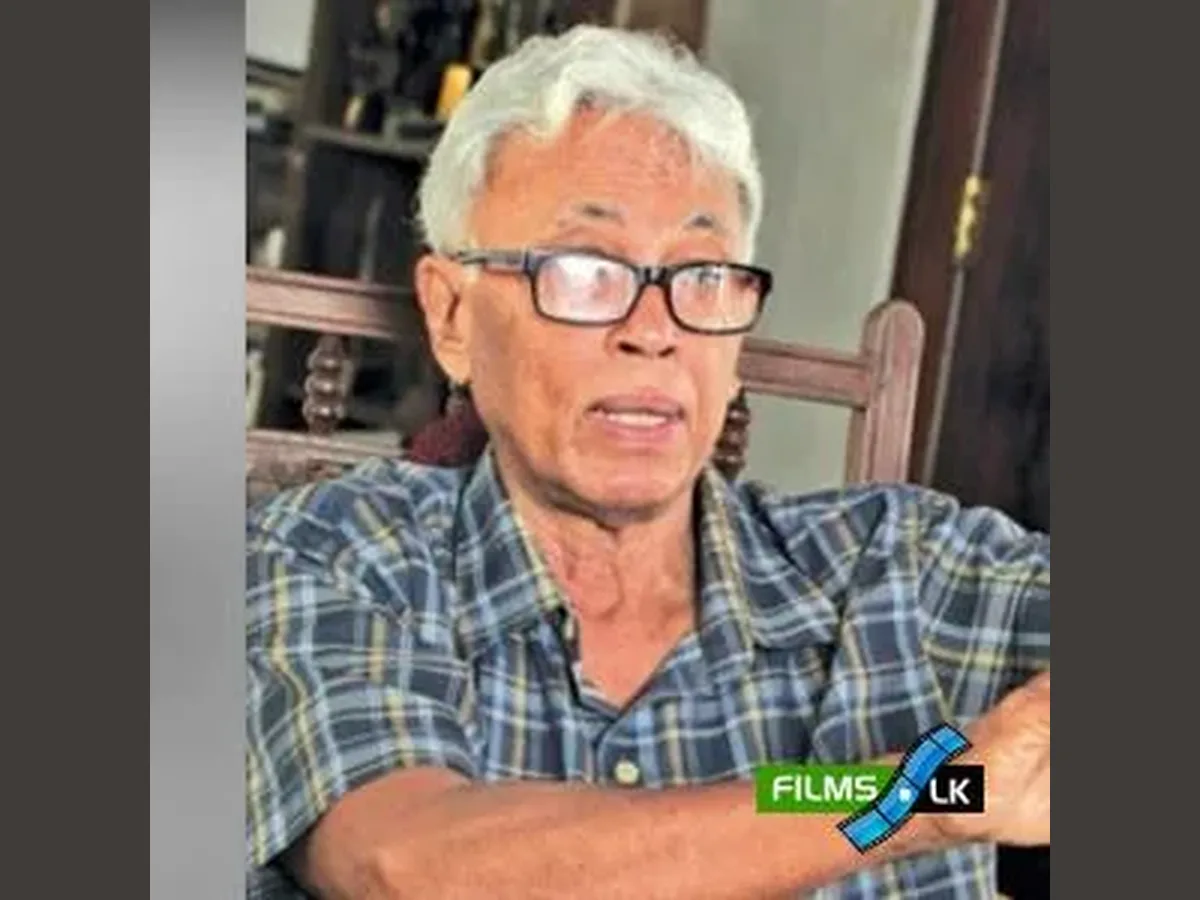
When Tharavo Igilethi — තාරාවෝ ඉගිලෙති, "the ducks are flying" — opened at the Lumbini Theatre on 24 July 1981, part of the audience already knew the songs. Its author was working at the radio station at the time, and the radio had been playing the numbers for weeks before anyone saw the play. Gunadasa Kapuge's orchestra was in the pit. Vijaya Nandasiri, Jayalath Manoratne, Anula Bulathsinhala and Devika Mihirani were on the stage. Within days, organisers in provincial towns were fighting each other for the first available date. The make-up artist who travelled with the company later wrote that the title was wrong: the ducks did not fly, they bolted.
Wedikanda, and a name that will not settle
Raigama Bulathsinhalage Lucien Perera was born in the coastal village of Wedikanda in Ratmalana. His father, Martin Perera, was a committed socialist; his mother, Senarath Godage Jane Nona, kept the house. He was one of six children.
Even his name resists tidying. English sources spell the first name Lucien and Lucian about equally often, and the surname Bulathsinhala and Bulathsinghala; the English Wikipedia article sits at "Lucien Bulathsinhala" while its own text says "Lucian Bulathsinghala", and the frequently cited URL with the g is a dead link. The Sinhala form is settled: ලූෂන් බුලත්සිංහල. The birth date is less settled still — most accounts give 30 May 1942, the Sinhala Wikipedia infobox gives 30 May 1943, and its opening line gives 25 December 1942. This article follows the commonest form without pretending the question is closed.
He was schooled at Sri Dharmaloka College in Ratmalana and at Dehiwala Central College, passed his A/Ls in 1963, and took an arts degree at the University of Peradeniya. He also passed the clerical service examination, and his first posting was as the sole clerk at the government farm at Ambewela — about as far from the Colombo stage as the island allows.
Learning the stage
He had found the theatre long before he found a salary. At school he joined the Shanthi Faculty of Peace Arts and studied drama under Joseph Perera, who cast him — a child — in an adult play, as a boy begging on the street beside his destitute mother. In the 1960s, still a schoolboy, he played Saliya, the lead, in Ashokamala, staged at the Lumbini Theatre. He made his first production of his own, Mannadiya, at about the same time.
Noniwena Gini, which he wrote in 1964, reached the State Drama Festival and was invited back as a guest production in 1966, the year he won a merit award for acting in Bandula Jayawardena's Bihiwana Bosathaneni. He appeared in Ediriweera Sarachchandra's Elova Gihin Melova Awa, and played the flute in the orchestra of Pematho Jayathi Soko. In 1974 he produced Rathu Hattakari, which took the State Drama Festival awards for best script, best music, best actor and best acting in a single year.
The play that ran away
Tharavo Igilethi was the one that changed his standing. It is a musical, and the music was central to its spread: the SLBC chairman of the day, Eman Kariyakarawana, was so taken with it that he had the corporation organise performances in aid of the broadcasting welfare fund, with the station's full publicity behind it.
Then, in about October 1981 — with the show at its peak and dozens of bookings already accepted — Bulathsinhala and Bandula Withanage were transferred from radio to television and sent to Malaysia for training. He handed the running of the tour to his colleagues and left. The play kept going without him: two or three nights a week, eight or ten shows, packed halls in Bandarawela, Galle, Chilaw, Welimada.
He did not produce another stage play for thirty-seven years. Ves Muhuna Galawanna ("Remove the Mask") went up at the Lionel Wendt in July 2018 — a musical set in postwar Colombo, in which an antique dealer's son falls in love with a nightclub singer who turns out to be a Tamil combatant living under a Sinhala name. The music was by his son, Harsha.
The lyricist
His first song came in 1980: සඳුන් සිහින මණ්ඩපයේ Sandun Sihina Mandapaye, sung by Nanda Malini. Cinema followed, and with it the awards. In 1989 he took both the Swarna Sankha and the Sarasaviya award for මරණ තුනක් ඇති මිනිසා Marana Thunak Athi Minisa, from the film Siri Medura; in 1994 a second Swarna Sankha for ගෝපළු වස් දන්දෙන් Gopalu Was Danden, from Mee Haraka; and in 1998 the Presidential Award for best lyricist for නොසෙලයි දිවි මකුළු ඇස Noselai Divi Makulu Asa, written for Gini Avi Saha Gini Keli.
Outside the cinema his catalogue is full of songs that sound like folk verse and are not: රජ මැදුරක ඉපදී සිටියානම් Raja Madurak Ipadi Sitiyanam ("if I had been born in a palace"), කොළොම්තොට නැත මහලු වී Kolomthota Natha Mahalu Wee, ඔසරි පොටෙන් අදින්නෙපා Osari Poten Adinnepa, පැණි කුරුල්ලනේ Pani Kurullane, පිණිබර යාමේ Pinibara Yame, දෙතොල නොකී දේ Dethola Noki De, and — from Tharavo Igilethi itself — මඩේ ලඟින තාරාවන් Made Lagina Tharawan and යාලුවෝ මාලුවෝ යාලුවෝ Yaluwo Maluwo Yaluwo. He has published his lyrics and his criticism in book form too, including Pipuna Male Ruwa (1985), a study of Premasiri Khemadasa's theory, practice and battles (2000), Sinhala Opera Dekak (2004) and an autobiography.
The critic Uditha Devapriya, surveying the last half-century of Sinhala lyric writing, counts only three lyricists as genuinely urban in temperament — Premakeerthi de Alwis, Bulathsinhala and Saman Athaudahetti — and says of Bulathsinhala that his lyrics "reflect a wide ranging milieu which goes beyond the village". In a song tradition that has almost always returned to the village for its imagery, that is an unusual place to stand.
Broadcasting, and being sent home
The career that paid for all of this was a broken one. He joined the SLBC as an announcer in 1971 after eleven years in the Ministry of Transport, moved to Rupavahini on 25 November 1982, and eventually rose to deputy director-general for programming. He was also dismissed from the public service in 1990 and sent on compulsory leave in 1997 — the kind of thing that happened routinely to broadcasters in Sri Lanka when governments changed, and which he has discussed at length in interviews without much bitterness.
On screen he made his cinema debut in 1967 in Reggie Perera's Sadol Kandulu, and has kept acting for six decades: Vasantha Obeysekera's Ves Gaththo, the gem thief Frederick in Chuda Manikya, King Abhaya in Aba, and — to a whole new audience — the village school principal in Ho Gaana Pokuna (2015). He holds the Kala Suri and Kalabhushana titles. In 2017 he was named for national honours and, in a story he seems to enjoy telling, turned around and went home from the ceremony because there was nowhere to park.