
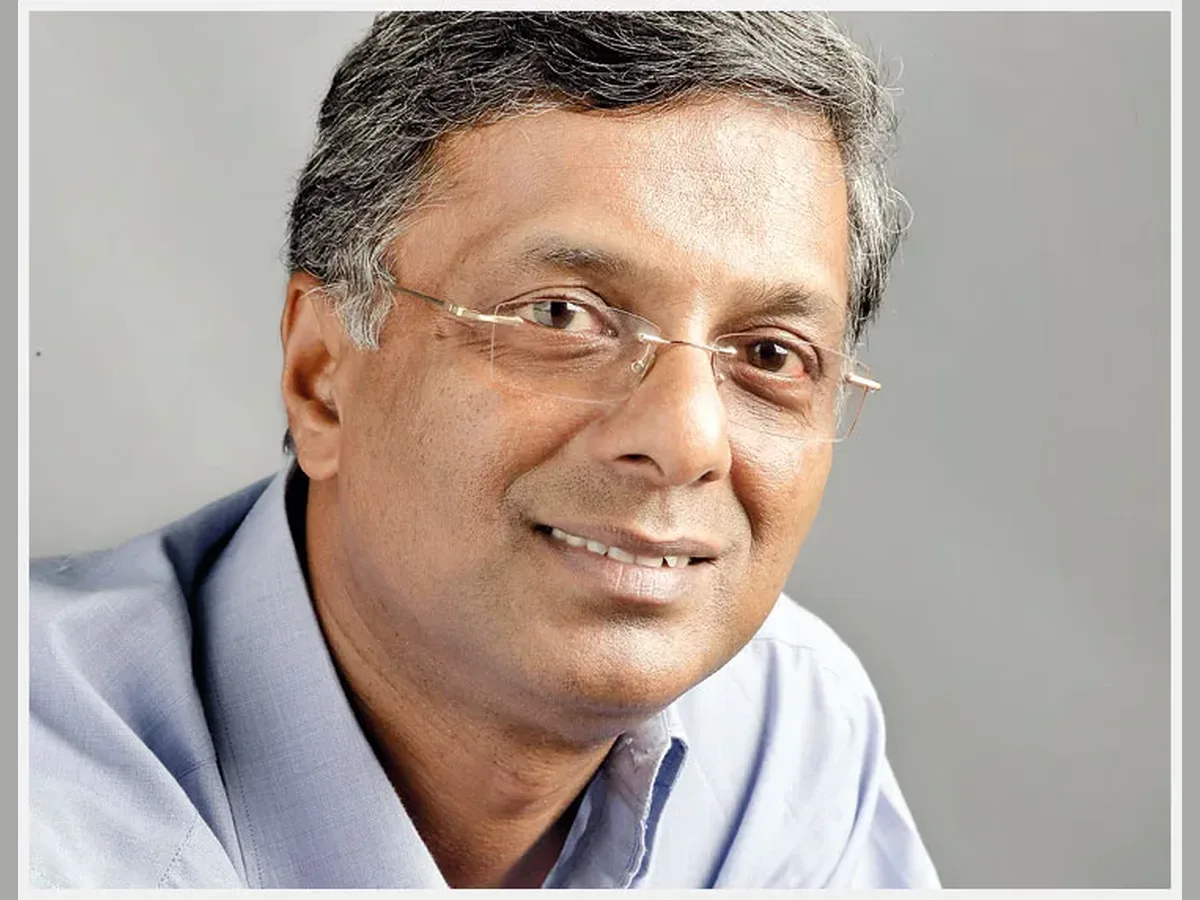
Three boys came out of the gates of Ananda College in Maradana in the late 1960s with sheaves of poems under their arms and went from newspaper office to newspaper office, asking whether anyone would print them. One of them, A. D. Ranjith Kumara, would become a film man. Another, Maithri Panagoda, would go into law. The third was Kularatne Ariyawansa, and the walk between those offices was the beginning of a career that put words into the mouths of Amaradeva, Nanda Malini, Victor Ratnayake, Sanath Nandasiri and Sunil Edirisinghe.
He was born in Benthara — Bentota, on the southern coast — on 17 June. No accessible source gives the year, which is a small illustration of how thinly Sri Lanka has documented the people who wrote its songs. The family was settled in Colombo, so after his Ordinary Levels at the village school he was sent up to Ananda.
What Ananda did to a poet
Ananda in those years was full of boys who drew, acted, argued about cinema and wrote verse, and Kularatne fell in with two of them who redirected him: Premakeerthi de Alwis, the poet, and Ranjith Kumara, the cinema enthusiast. It was Ranjith Kumara who eventually walked him into the music business.
What changed first was the form. "After I shifted to Ananda," he told the Daily Mirror in 2018, "I turned from poetry, the sivpada and the nisadas in vogue at the time, to the three minute sarala geeya. In that sense I was very much influenced by Chandrarathne Manawasinghe, Madawala Ratnayake, Mahagama Sekara, and Karunaratne Abeysekara, and in that order. It was through Amaradeva that I realised how the three minute song derived from our poetic tradition."
That is an unusually precise account of what the sarala gee movement actually was — classical Sinhala prosody cut down to the length of a radio slot. Whenever he heard a song after that, he said, he wrote the words down and studied them. Ranjith Kumara put him in front of other young writers through a school magazine called Sevana and then through Arthur Amarasena's tabloid Visithuru, and those introductions got him onto the radio programmes Saraswathi Mandapaya and Yowun Samajaya.
A newspaper article that turned into a song
His first song came out of journalism rather than music. A young singer named Abeywardena Balasuriya was beginning to be noticed, and Kularatne wrote a piece about him for a paper. "After the article I wrote about Abey," he told Lankadeepa in 2016, "a wonderful friendship grew up between us. And it was as a result of that friendship that the first song I ever wrote was written for Abey."
The song was ආදරයෙන් මා හද වට Adarayen Ma Hada Wata — "the vine that winds lovingly round my heart" — with music by Sarath Dassanayake, recorded at the SLBC as a paryeshana geethaya, an experimental song. The Daily Mirror prints the title as "Adarayen Ma Hadawatha"; the Sinhala press and the lyric databases use the shorter form.
The second was පිණිබර මලක් වගේ Pinibara Malak Wage — "like a dew-laden flower" — and it brought him to Victor Ratnayake, whose voice made it. It is a village boy watching a girl leave for work in a Colombo mansion: though you have gone away to a house in the city, do not forget — I am waiting here for you.
The third was සඳ හොරෙන් හොරෙන් Sanda Horen Horen, written for Amaradeva to a melody by Premasiri Khemadasa, recorded for Amaradeva's fiftieth birthday and released in 1978 on the album Aradhana. To have your third song sung by Amaradeva to a Khemadasa tune is not a normal beginning.
Accounts differ on when the run started — Sinhala Wikipedia dates him from 1970, while the 2016 Lankadeepa interview says he was then in his fortieth year as a songwriter, which points to 1976. What is not in dispute is that by 1978 he was writing at the top of the field.
Building the machine that carried the songs
1978 was also the year he started a second career, in the business rather than the art. He was a government servant; he began moonlighting for the cassette label Tharanga, first as a lyricist and then as a production coordinator, and about two years later left the civil service altogether to join Singlanka, which his friend Ananda Ganegoda had set up in 1980 with a recording studio attached.
His own explanation of why cuts against the usual story of the cassette era as pure commerce. "We started Singlanka because we felt that our artists needed an outlet through which they could sustain their lives," he said. "The only path they could carve for themselves lay in the SLBC, and even that had become a virtual monopoly. There was a way in which the private sector could help."
Singlanka released twenty-five cassettes almost at once, and the studio filled up with people Kularatne had never expected to be in a room with: the film composers Muttusamy, Rocksamy and Wijeratne Ranatunga, Khemadasa Master, and singers running from H. R. Jothipala to Amaradeva. Lyricists treated it as a clubhouse.
In 1982 the composer Rohana Weerasinghe left his job teaching music at Ananda Sastralaya, Kotte, and joined the label. That is the partnership that defines Kularatne's catalogue. "Looking at it now," he said in 2016, "eighty per cent of the songs I wrote have music by Rohana." Everything else — H. M. Jayawardena, Khemadasa, Victor Ratnayake, Clarence Wijewardena, Stanley Peiris — fits into the remaining fifth.
Nanda Malini made something like twenty-five records with the label. One of them sent Kularatne and Professor Sunil Ariyaratne round the country tracking down surviving singers of the gramophone era so that she could record their songs again; another, Araliya Landata, was given over entirely to lyrics by writers nobody had heard of yet.
The love songs
Almost everything he is famous for is a love song, and the Daily Mirror drew a sharp distinction between him and his near-contemporary Ajantha Ranasinghe: Ranasinghe's lovers are separated and longing, while Kularatne's are together and afraid of being parted, so they "pour out their feelings in gushes and torrents, as if to keep their lovers by their side."
Asked repeatedly where the songs came from, he gives an answer that closes the subject rather than opening it. "Those were our young days, and I was in love too. So what was written into those songs is my own experience."
The list is long: පාවෙනා නිල් වලාවේ Pawena Nil Walawe and ආරාධනා Aradhana and මා වවුලන් Ma Wawulan for Amaradeva; දෙනෝ දාහක් නුවන් අතරේ Deno Dahak Nuwan Athare for Nanda Malini, to a Victor Ratnayake melody; මේ ප්රථම වසන්තයයි Me Prathama Wasanthayai for Sanath Nandasiri; වළා තීරයෙන් එහා Wala Theerayen Eha for T. M. Jayaratne; සැදී රන් අබරණින් Sadi Ran Abaranin for Milton Mallawarachchi; පුංචි සිතේ පුංචි සිනා Punchi Sithe Punchi Sina for Neela Wickramasinghe; මට මුළු ලොවම ඔබයි Mata Mulu Lowama Obayi for Rookantha Gunathilake and Chandralekha Perera; බැස යන සඳ Basa Yana Sanda for Namal Udugama.
He wrote a great deal for the cinema too, and the Daily Mirror makes the point that this half of his work has gone unremarked simply because the films themselves were forgotten — සීත අරණේ Seetha Arane from Aradhana, හිම කඳු යහනේ Hima Kandu Yahane from Sasara Chethana, and quieter things like Eka Mawakage Diyaniyak Nowei from Sumitra Peries's Yahalu Yeheli.
Pinibara Malak
Lankadeepa credited him in 2016 with more than a thousand songs. Figures of that kind are notoriously loose in Sinhala music writing and this one should be read as an order of magnitude rather than a count; what can be checked is the anthology.
Around 2006 he issued Pinibara Malak, three CDs in one pack holding sixty-four of his best-known songs. In 2016 he expanded it to four CDs with twenty-two more, and — answering a request people had been making for years — published a book of the lyrics under the same title. He chose for it the songs he loved most rather than the ones that sold. "Some of them never became popular at all," he said. "But as lyrics they are entirely successful." The collection was named Best Lyrics Collection at the State Literary Awards the following year.
Unlike most writers of his generation he has kept working with people much younger than himself — Udayakantha Warnasuriya, Uresha Ravihari, Senesh Bandara, Nawarathne Gamage — on the argument that talent on the sidelines only becomes legitimate when someone from the mainstream works with it. His own two sons, Vindana and Kalpana, made the film Premaya Nam.