
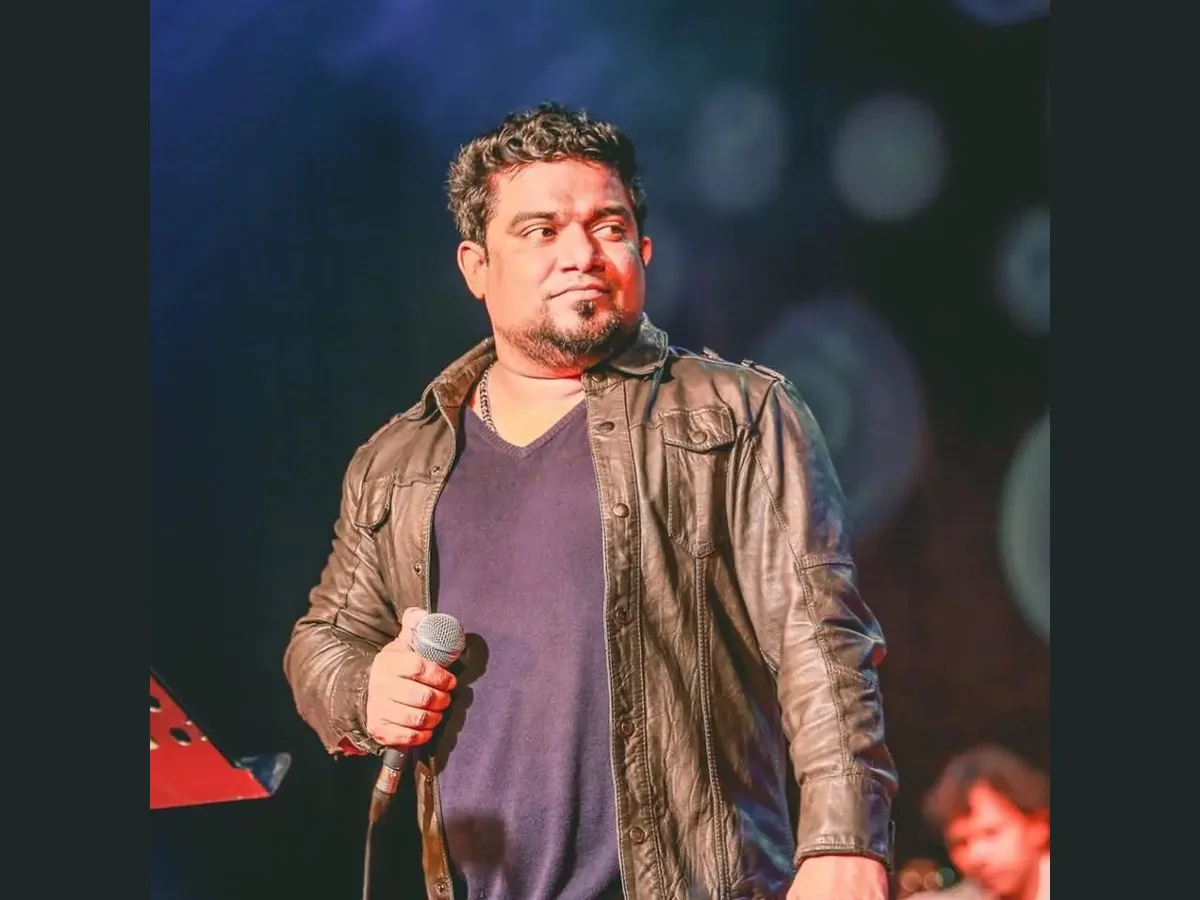
A newspaper once asked the singer Malani Bulathsinhala to name the most memorable day of her life. She did not choose an award or a recording or a concert of her own. She chose the evening her son came off stage after his first concert and Premasiri Khemadasa walked up and hugged him. "That warm hug from Master Khemadasa guaranteed that Kasun had a genuine talent and a clear future."
She was right, and she had reason to be careful about the question. Sri Lankan music is full of children of famous singers who go nowhere. Her son had the one thing that cannot be inherited, which is a particular voice, and — more unusually — a set of opinions about what he would and would not do with it.
The lineage
Kasun Kalhara Jayawardena was born on 3 November 1981 in Rajagiriya. His mother, Malani Bulathsinhala, had been an SLBC child artist from the age of ten and became one of the leading light-music voices of the 1970s and 80s, Hindustani-trained and equally at home in soul and pop. His father, H. M. Jayawardena, was a composer. This is documented, citable and, oddly, left out of most profiles of him — the assumption being that a lineage is either the whole story or no part of it.
He was educated at Ananda College, Colombo, and there met the singer Indrachapa Liyanage; the two of them studied under K. M. Rathnapala. He also became a student of Khemadasa and played in the maestro's opera orchestra, which is where the taste for long-form, unpopular, ambitious musical structures comes from.
හරිත නිම්නය
The career started properly in late 1999 with a concert Kasun and Indrachapa staged together while they were still barely out of school — Waves of Introspection, the show after which Khemadasa delivered his hug. The song that made them was හරිත නිම්නය Haritha Nimnaye ("in the green valley"), and it became the title track of an album that a generation of Sri Lankan teenagers owned.
Haritha Nimnaye did not sound like the light-music tradition Kasun's parents came from, and it did not sound like the imported-melody pop then filling the charts either. It is guitar- and piano-led, structurally restless, and sung in a low, close, slightly breathy voice quite unlike the projected radio tone of the previous generation. Songs from it — ඔබ පිපුණා Oba Pipuna ("you blossomed"), වළාකුලක් වී Walakulak Wee ("having become a cloud"), ආදර මල් වල පාට Adara Mal Wala Pata ("the colour of the flowers of love"), නතාෂා Natasha — are still radio staples a quarter of a century later.
The album's sixteen tracks give a fair idea of how little he cared about consistency of mood: Ananthayata Yana Para Dige ("along the road that goes to infinity") sits a few tracks from one simply called Escape and another called Wine Kendiye. He has said that he attends to every detail of a song — "from the words to sounds, recording technology and many more details" — and it shows in the records, which are unusually carefully made for Sri Lankan pop of that moment.
He then did the least commercial thing available and waited. His second album, රැඩිකල් ප්රේමය Radical Premaya ("radical love"), arrived several years later and he described it flatly as an experiment, one that had not been a hundred per cent successful, but which had got something out of his system. The third, රෝමාන්තික ඔපෙරාව Romantic Opera, followed. Between and around them came the songs most people know him by: එක වසන්තයක Eka Wasanthayaka ("in one spring"), සොඳුරු සිතුවම් Sonduru Sithuwam ("lovely paintings"), සඳ ඕනා Sanda Ona ("I want the moon"), ලිහිනියේ කියන්න Lihiniye Kiyanna ("tell me, swallow") and මනමේ කුමාරී Maname Kumari, a nod to Ediriweera Sarachchandra's Maname that a pop singer had no obvious business making.
The things he would not do
In December 2005, aged twenty-four and with one hit album behind him, Kasun gave the Sunday Observer an interview that reads today like a manifesto. He began by asking the journalist whether readers would actually benefit from it. "I feel humiliated when they ask me silly questions. I would never let my fans see me as a clown."
Then he listed what he did not do. He did not sing at clubs, parties, open-air shows or weddings: "People don't come to these places to enjoy music. They just come to enjoy the food and the atmosphere." He did not sing or compose for teledramas. He refused to aim one set of songs at several audiences at once, on the grounds that it does justice to none of them. He was scathing about the practice of setting Sinhala words to lifted Indian soundtracks — "listeners cannot be cheated forever" — and argued that anyone without their own creations would not last.
He also offered an analysis of his own market that is sharper than most academic writing on it. There were upper-class listeners who could afford concerts by Amaradeva or Victor Rathnayake; there were listeners with no choice but whatever the production houses put on the radio; and in between there was a middle-class audience "who want to break away from both these set ups and are constantly on the look out for experiments." That audience is the one he built a career on, and he was right that it existed.
He named Chitral Somapala as the finest musician in the country and Aaron Neville and the Scorpions as his own touchstones — which explains a good deal about the way he phrases a line.
Teacher, and judge
Alongside the recording he has worked steadily as a vocal coach, something he was planning as early as that 2005 interview: a six-month course, open to anyone who passed a basic test. Hundreds of students have gone through his teaching.
His concert work has been large-scale and infrequent by design — Kasun Kalhara Live in Concert, Unforgettable, The Black Red White Concert, Culture Shock in 2013, and the LoveU shows of 2016 and 2017 at the Nelum Pokuna theatre. He served as a coach on both the first and second seasons of The Voice Sri Lanka, alongside Bathiya and Santhush, Sashika Nisansala and Umaria Sinhawansa — a full circle of sorts for a singer who spent his twenties objecting to being made a spectacle, now sitting in a chair on national television deciding whether other people can sing.
His mother did not see most of it. Malani Bulathsinhala died in Los Angeles on 29 March 2001, when Haritha Nimnaye was barely a year old.