
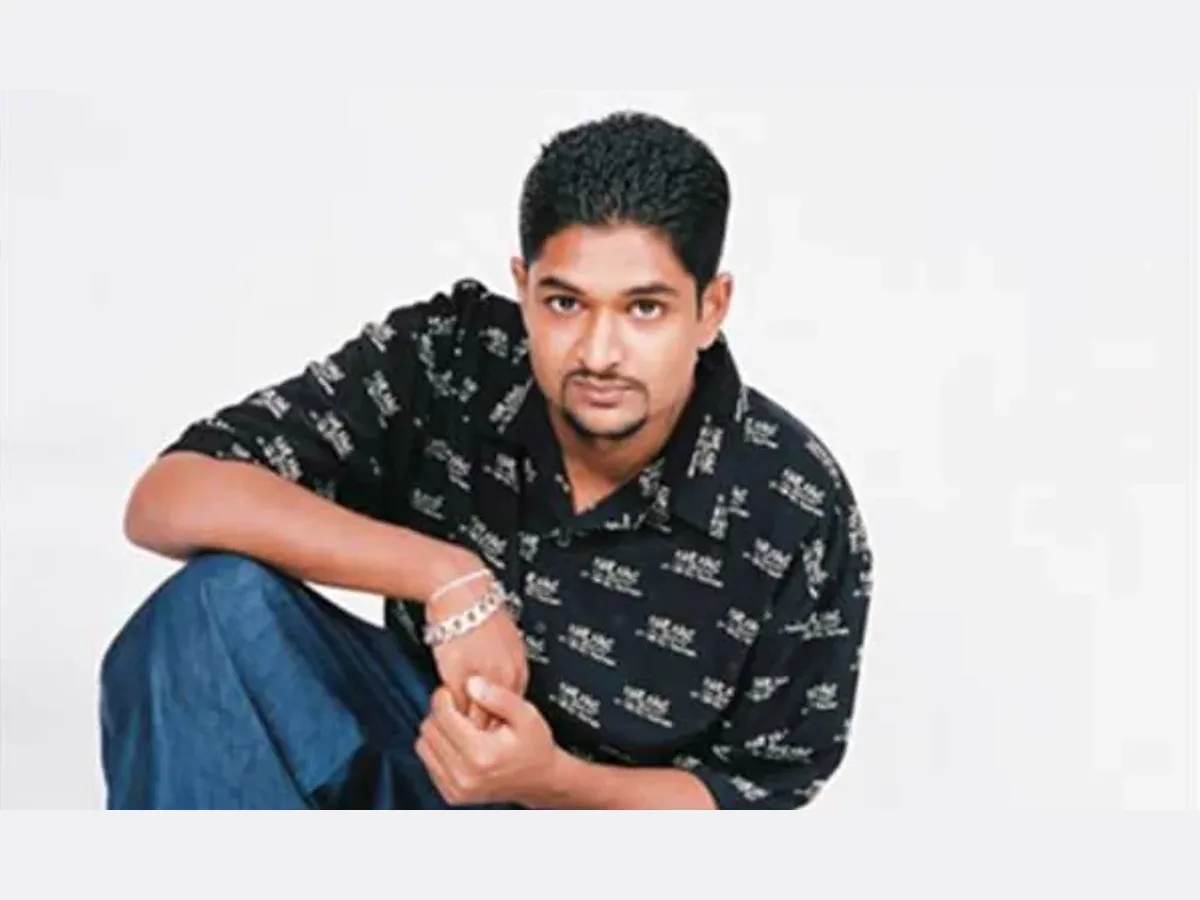
The cassette came out before the CD did, which tells you something about Sri Lanka in 2004, and it sold eight thousand copies in two days. The album was self-titled, twelve tracks, and it belonged to a twenty-three-year-old producer from Colombo who had spent the previous decade convincing radio stations that a Sinhala-speaking country would listen to hip hop. By the time the CD followed, the argument was over.
Iraj Weeraratne is a difficult figure to write about calmly, because his later public life has been loud and contested in ways that have very little to do with music. But the musical record is clear enough, and it is a bigger record than most people give him credit for.
Zealots
He was born on 21 February 1981 and educated at Royal College, Colombo. "Everything began somewhere in 1994 with Ranidu," he told the Sunday Times in 2004. "We went to the same school and thought of doing something together." At sixteen he won a best-keyboardist award from the Guildhall School of Music, and while still at school he formed the band Zealots with his classmates Ranidu Lankage and Yauwana Wigneswaran.
The scene he was joining was tiny and English-speaking. The first Sri Lankan hip hop recording had appeared in 1997 — Colombo Tribe Project Vol. 1 on Blood Brother Records, carrying tracks by the G-funk group Brown Boogie Nation and the rude-boy trio Rude Boy Republic. Brown Boogie Nation's "You Get Around" was the first local hip hop track to get airplay, on the English-language TNL Radio, and their anti-war song "Lions and Tigers" the first local hip hop video on national television. Then came Urban Sound, the brothers Krishan and Gajan Maheson, on Sun FM.
Iraj worked inside that circle first. In 1998 he teamed up with Ruki of Rude Boy Republic and Urban Sound on a track called "Sri Lankan 2030". In 2000, with the same people, he produced "Down Dirty", which reached number four on the Sun FM Top 40. His instrumental-and-vocal production "Roots" — hip hop with, as the Sunday Times put it, an Asian twist — went to number eighteen on the BBC Radio 1 UK Asian chart. In 2004 he made a Punjabi remix of Ranidu's R&B track අහංකාර නගරේ Ahankara Nagare, and released "J-Town Story", a narrative rap in Tamil about a young man who leaves a Jaffna in turmoil for a city that discriminates against him. It was played on Shakthi FM, Sooriyan FM, Shakthi TV, Sirasa TV and Swarnavahini, and reached number two on the Sun FM Top 40.
He was already thinking about where the music should go next. "I am planning to promote Southern Indian music in the future, because people love it," he said at the end of 2004 — a remark that looks banal now and was not then, since the prevailing anxiety in Sri Lankan pop was about sounding too Indian, not too little. He is a son of the film producer Preethiraj Weeraratne, and told the same interviewer he hoped to write music for films.
The album, and a claim worth checking
His self-titled debut collected "J-Town Story", "Roots", "Ill Noize" and "Players Lounge" among its twelve tracks. English Wikipedia's article on Sri Lankan hip-hop states that "the country's first Sinhala rap track was released in 2005 in the form of Iraj's eponymous album" — but the sentence carries a "citation needed" tag, and the dates in the sources do not line up. The Sunday Times was reporting the album as newly released in December 2004; Roar Media, writing in March 2016, dated it to 2005; and Iraj's own Wikipedia discography lists an album called Iraj on MEntertainments in 2010. The safest statement is that the debut appeared around the turn of 2004–05 and carried the first widely heard Sinhala-language rap.
A related claim should be dismissed outright. A widely circulated item crediting a different musician with "introducing hip hop to Sri Lanka" originates in a paid newswire release rather than in journalism, and it is contradicted by the documented existence of Colombo Tribe Project Vol. 1 seven years earlier.
Sri Lanka's Dr. Dre
What Iraj actually did, over the decade that followed, was less about his own rapping than about production and access. Roar Media's survey of Sri Lankan hip hop called him "Sri Lanka's Dr. Dre" and made the comparison carefully: not the finest lyricist in the room, but the man with the beats and the industry contacts, "single handedly responsible for introducing a plethora of talented artists to mainstream audiences that might not otherwise have discovered them." Krishan Maheson, Killer B, Bone Killer and to a degree Ranidu Lankage all owe him career-making features. Krishan came to prominence on Iraj singles including "J-Town Story" and the radio hit "Ran Ran Ran".
The other half of the strategy was collaboration outward, into mainstream Sinhala pop. Putting rap verses next to established singers — Samitha Mudunkotuwa among them — is what moved the genre from a specialist English-language niche onto the same playlists as everything else. Songs credited to him include මුඩුක්කුවෙන් එලියට Mudukkuwen Eliyata ("out of the shanty"), ගිනියම් රෑ Giniyam Rae ("scorching night"), මනුසතා Manusatha ("human being"), වස්සානේ හීනේ Wassane Heene ("monsoon dream") and මනමාලි Manamali ("bride"), which also titled a 2017 album; a second album, Chapter 02: Aloke, appeared in 2013. He composed the score for the 2009 Tamil film Vettaikaaran.
He has also been an unembarrassed populist about format, writing television and sponsorship theme songs — the Carlton Super Seven cricket theme of 2014 among them — at a point when serious Sri Lankan musicians still treated that work as beneath them. When the "selfie rap" wave broke in 2015 and hundreds of unknown teenagers began uploading verses filmed on their phones, he was one of the established names asked to comment on it, and the wave broke into a mainstream that had not existed when he started.
Afterwards
From the mid-2010s his public profile shifted decisively away from music. He was appointed to the board of the National Youth Services Council in 2020 and resigned in 2021; he has been an outspoken supporter of particular political figures, was criticised during the 2022 protests and had his Colombo residence attacked that May; and he now co-hosts a political interview programme on his own YouTube channel. Those years are documented in the news pages rather than the music pages, and they are somebody else's article.
The music stands where it stands. Sri Lankan hip hop went from a 1997 compilation almost nobody heard to a mainstream commercial genre in under two decades, and for a good stretch of the middle of that period Iraj Weeraratne was the person deciding who got on the radio.