
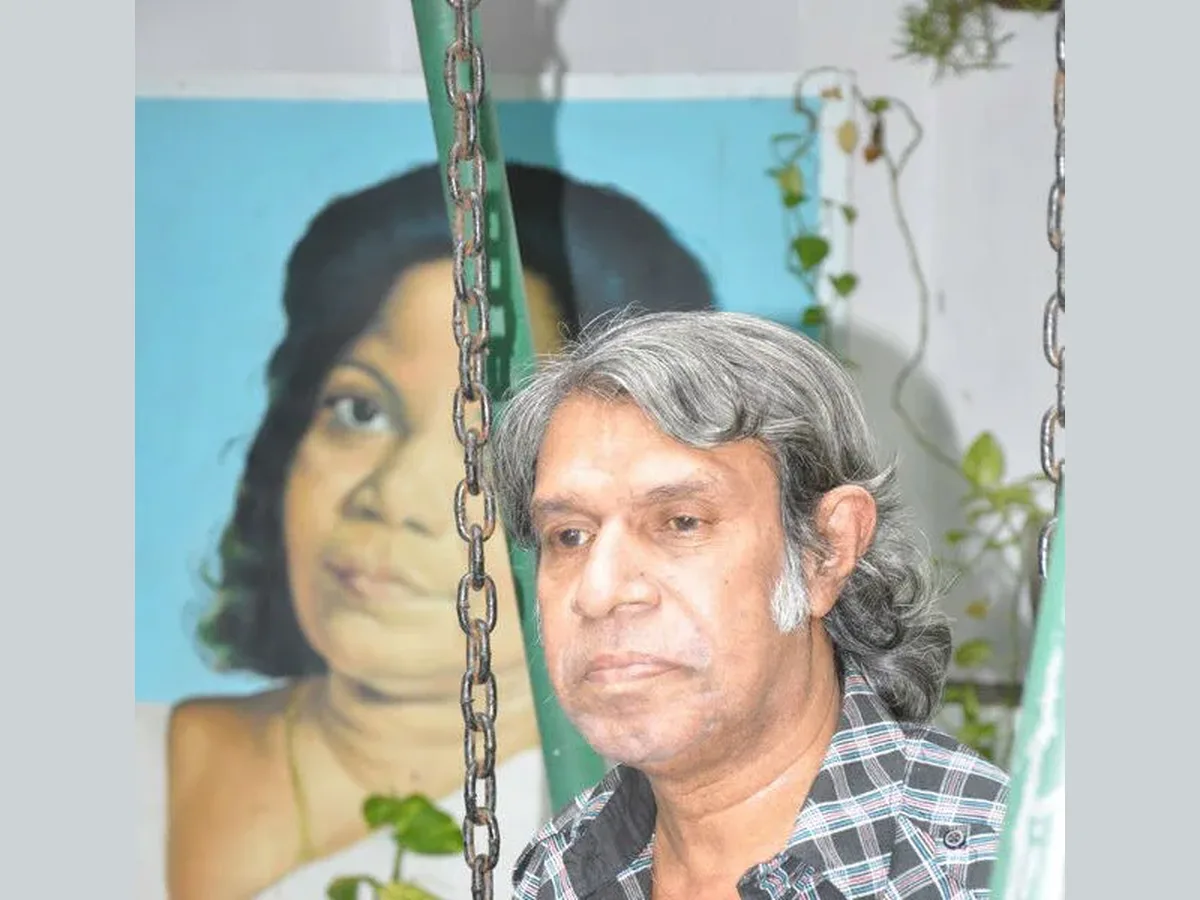
A young man walked into the Sri Lanka Broadcasting Corporation in the mid-1960s to audition for a vacancy as a flute player. He could play. What he could not do was read the chord charts put in front of him, and he was sent away. It took a letter signed by ten members of parliament, an intervention by his old history teacher, and a period of study with W. D. Amaradeva before Herath Mudiyanselage Jayawardena finally got past the door of the building whose music he would go on to shape for four decades.
A flute in Siyambalanduwa
He was born in the village of Siyambalanduwa in the Monaragala district, the eldest child of a farmer, H. M. Wijayasundara, and his wife D. M. Ranmenika. His birth date is a small mess of its own: his birth certificate recorded 10 March 1950, but his father told him the real date was 17 March, and 17 March is the date he used.
He went to the village school, passed the grade five scholarship examination, and moved on to Passara Maha Vidyalaya for secondary education, learning music along the way under a teacher named P. A. Subasinghe. Then he failed his senior examination, went home, and for a while lived the life the district offered — chena cultivation and hired labour. The flute was the thing that got him out.
Getting past the gatekeepers
The first audition at the SLBC failed on sight-reading. What followed reads like a parable about how careers were made in Ceylon: he was taken in by the member of parliament Somapala Seneviratne, who housed him at Shravasthiya in Colombo; ten MPs signed a letter of recommendation addressed to Somadasa Elvitigala, then head of the corporation's music division; and Elvitigala threw the letter away. Jayawardena went instead to Amaradeva, learned what he needed to know about chords and notation, and got a fresh letter from Vasantha Obeysekera, who had taught him history at Passara. That application was accepted.
He began as a freelance flautist at the SLBC and became the flute player everyone wanted — on radio sessions, in the pits of stage plays such as Devlowa Yanakam and Neth Anda Bisaw, and on film soundtracks including Sumithuro (1983) and Mala Giraw (1984). Sri Lankan writers routinely describe him as the country's foremost film flautist of his generation, and the description has never been seriously contested.
The melodies
His first composition was ඔබ හා මෙමා Oba Ha Mema ("you and I"), sung by T. M. Jayaratne, followed by සියක් ආයු ලැබ Siyak Ayu Laba ("may you gain a hundred years") for the same singer. After that the commissions came from almost everyone.
For Amaradeva he wrote සඳ තරු නිහඬයි Sanda Tharu Nihadai ("the moon and stars are silent"). For Nanda Malini he wrote ඔබයි රම්ය සඳ කිරණ Obayi Ramya Sanda Kirana ("you are the lovely moonbeam"), a song she asked him for after she and the lyricist Sunil Ariyaratne heard රත්තරන් නෙත් දෙකෙන් Raththaran Neth Deken and Oba Ha Mema on the radio. She recalled the difficulty of it: the lyric contained a spoken prose passage, and setting a melody around prose was a genuine technical problem. She also said, plainly, that she had sung more of his tunes than any other singer had.
For Sunil Edirisinghe there were මිනිසෙකු පිට නැගි Miniseku Pita Nagi ("a horseman mounted on a man"), Sayurak Nodutu Gangulak and නුඹේ සිතට පුන්සඳ පායලා වගේ Nube Sithata Punsanda Payala Wage. For Edward Jayakody, බණ කියන රටක් Bana Kiyana Ratak ("a country that preaches, a country that listens"). For Sanath Nandasiri, එක යායේ කකා Eka Yaye Kaka; for Karunarathna Divulgane, Mala Giraviye; for Amarasiri Peiris, Eya Yanna Giya; for Krishantha Erandaka, පංච කල්යාණියේ Pancha Kalyaniye. The Sinhala Wikipedia list of his tunes runs past thirty titles, among them Me Punchi Rate, Pilima Nela Nathi Weeruwan, Kada Mandiye Dola Aine and Pahan Kanda Mula Andaruyi.
He composed for his wife too, the singer Malani Bulathsinhala, beginning with Raja Maduraka Ipadee Sitiyana and going on to අහසින් තරුවක් Ahasin Tharuwak ("a star from the sky"), Sanda Ahasa Wage, Himi Sanaramara, Premaye Vil There and Obata Ma Adaraya Kala Bawa.
Aradhana, and an award he refused
He entered cinema in 1981 with Aradhana, sharing the score with Rohana Weerasinghe, and the film's music won him the Best Music Director award at the tenth Sarasaviya Awards in 1982 — for the song Sinawakin Puthuige Muwe. He later scored Kala Mal (1982), Muhudu Lihini (1983), Mangala Thegga (1987), Vimukthi (1998), Vishma Rathriya (2003) and Dharma Puthra (2006), and worked on the television serials Maheshika and Eka Mawakage Daruwo.
The story most often told about him is not about a prize he won but one he turned down. At the Presidential Awards covering 1983 he declined the Best Music Direction award for Muhudu Lihini, saying he could not in conscience accept it because the music Premasiri Khemadasa had written for Thunveni Yamaya was better than his own. The refusal was reported again after his death, and the writer for BBC Sinhala noted that Jayawardena himself treated it as an ordinary thing that had happened rather than a gesture. Accounts of the year vary — English Wikipedia places the refusal in 1985 — and the record is further muddled by the film database films.lk, which lists him as the winner of the Best Melody award for Muhudu Lihini at the sixth Presidential Awards. It is possible he declined one award and kept another; nobody has set the record out clearly.
Later honours were quieter. In November 2015 he was felicitated at the Nelum Pokuna theatre in the programme Miyasi Theerthaya, and in February 2018 a tribute evening called HM Harasara was held at the Maharagama Youth Council.
A family in music, and a date to be careful with
Jayawardena married Malani Bulathsinhala on 30 December 1978. She was one of the leading light-music voices of the 1970s to 1990s, and she died on 29 March 2001, aged 51, while in the United States for a concert. Their son is the singer and composer Kasun Kalhara, a major figure of the following generation — a lineage that is documented and citable, and that is nevertheless left out of most short profiles of all three of them.
Jayawardena died at the Colombo South Teaching Hospital in Kalubowila, aged 69, after a long period of kidney failure, and was cremated at Kanatte.
The date needs stating carefully, because the most-read source gets it wrong. English Wikipedia's infobox gives 18 April 2019, and its own one-line summary says 1950–2020. Neither is right. Ada Derana published its report of his death on 8 April 2019, saying he had died "a short while ago"; the Daily News carried it on 9 April, the funeral notice ran on 10 April, and BBC Sinhala's tribute was published on 10 April. The weight of contemporaneous reporting puts his death on 8 April 2019.