
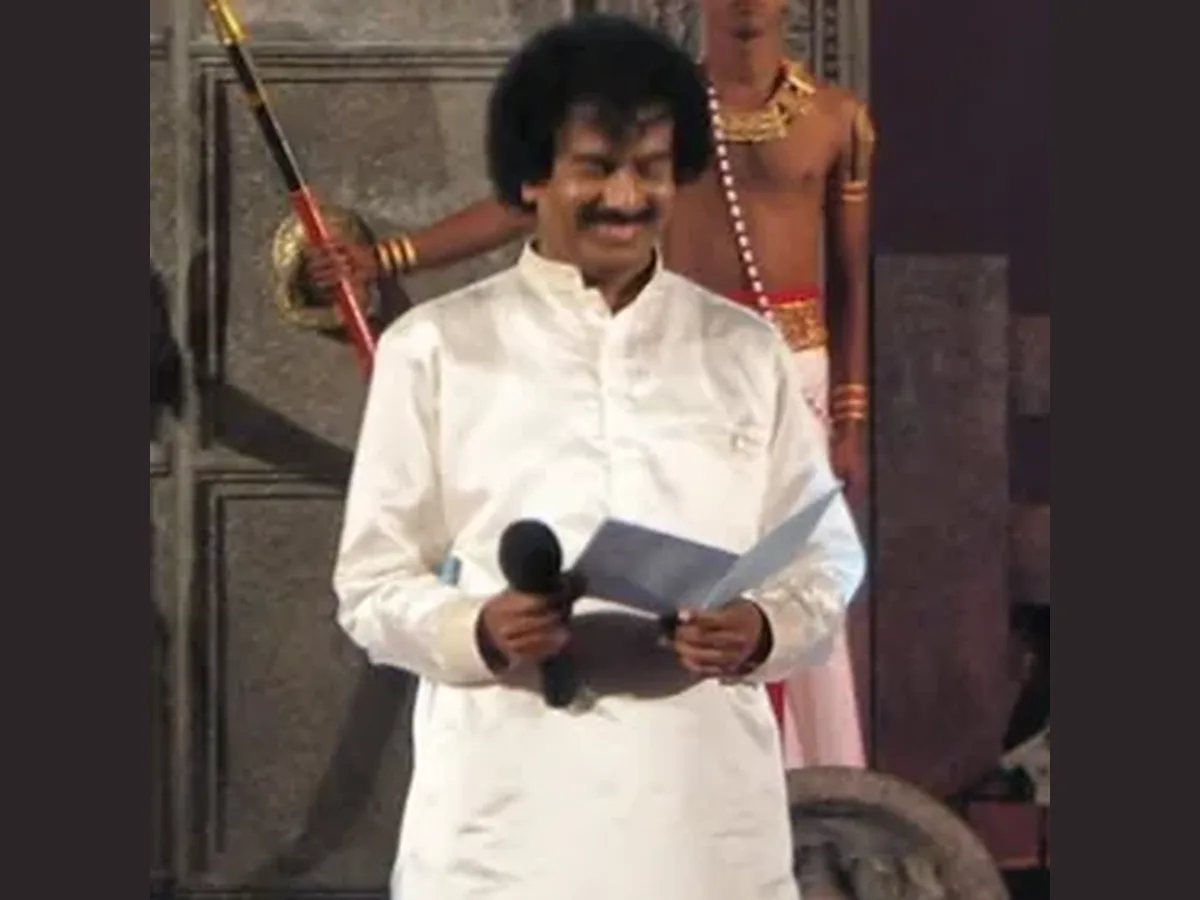
In January 2010 a fifty-seven-year-old singer did something Sri Lankan performers of his generation almost never did: he stood on stage alone, with his own band and his own programme, and called the show Marambari. It was meant as an experiment. Ten years later the tenth-anniversary edition filled the Bandaranaike Memorial Conference Hall, and by then he had played it thirteen times in Italy alone, along with Canada, London, France, Australia, New Zealand, Dubai and the United States — and once, in November 2017, at the Apeksha cancer hospital in Maharagama.
Jayakody Arachchige Don Edward Timothy Jayakody was born on 6 April 1952 at Hettimulla, near Kegalle, the youngest of six children of Don Raphial Jayakody and Victoria Jayakody. The first singing he did in public was in a church choir at Bandaranaike Junior School. At St. Mary's College, Kegalle he studied music under a teacher named H. Samarapala, and from 1968 he took part in Maliban Guwan Thotilla and the other amateur radio competitions that were, in that decade, the only audition circuit the country had.
Getting in
In 1976 he entered the Government College of Music — today the Faculty of Aesthetic Education of the University of Kelaniya — and the same year sang on the radio programme Pibidena Gayaka Parapura, "the awakening generation of singers", finishing second in the grand final. Coming second turned out to be enough.
His first proper recording followed in 1977, for a radio musical: කරදිය ගැඹරේ Karadiya Gambare, with words by Premakumara Jayawardena and music by Rohana Weerasinghe. Weerasinghe would go on to compose more of Jayakody's best-known songs than anyone else, and the pairing of that particular voice — light, unforced, with a slight catch in it — with Weerasinghe's melodic writing became one of the recognisable sounds of Sinhala radio in the 1980s.
The songs
The list is long and oddly varied. There is the love song most people name first, පුර සඳ හැඩයි මසකට වරයි Pura Sanda Hadai Masakata Warayi — "the full moon is beautiful, once a month" — set by Rohana Weerasinghe to words by Somaratne Dissanayake, and sung as a duet with Uresha Ravihari. There is නිල් නුවන් පෙඟෙන Nil Nuwan Pengena, again Weerasinghe, to a lyric by Amarasena Kankanamge. There is බැරි බර හින්දයි දරුවන් දුන්නේ Bari Bara Hindai Daruwan Dunne, a Premakeerthi de Alwis lyric. There is දස මසක් කුසයේ දරා Dasa Masak Kusaye Dara, which is what gets played on Mother's Day, and අකුරු මැකී නෑ Akuru Makee Na and මාලතී වසන්තේ Malathi Wasanthe, both to words by Kumaradasa Saputhanthri.
Then there is යාළු යාළු Yalu Yalu — words by Sunil Ariyaratne, music by Jayakody himself — and බණ කියන රටක් බණ අහන රටක් Bana Kiyana Ratak Bana Ahana Ratak, "a country that preaches and a country that listens", written by the Venerable Rambukkana Siddhartha Thera, which is a sermon disguised as a song and none the worse for it. බෝ සෙවණක් සේ Bo Sewanak Se and බකිණි ගහේ බකිණි මලින් Bakini Gahe Bakini Malen belong to the same devotional and pastoral strain.
Songs for children, and a state salary
The part of his career that gets the least attention is probably the part that reached the most people. Jayakody wrote and sang a body of children's songs — Koppara Koppara, කටු අකුලේ Katu Akule, Rajjuruwo Udai, Sulangak Vee, Chakgudu Gudu — which entered classrooms and school concerts and stayed there. The 1980s cassettes Seethala Pinimatha and කැරකෙන රෝදේ Kerakena Rode sit alongside them, and Samanalaya Mala Ha Lamaya, "the butterfly, the flower and the child".
He did all of this while holding a government job. He was appointed music teacher at Nalanda College, Colombo, moved to Gurukula College, Kelaniya, and in 1986 was promoted to Staff Education Officer in the music division of the Ministry of Education. In 1992 he took a master's degree at the Bhatkhande Music Institute in Lucknow — the same North Indian conservatory tradition that had trained the previous generation of Sinhala art-song composers. The title Visharada, which Sri Lankan writers attach to his name, comes from that world.
Composer, actor, and the family firm
Jayakody has directed music for a large number of Sinhala films and television serials — reported counts run into the hundreds and cannot be verified against any catalogue — and Sinhala papers credit him with composing for more than fifty different singers. He won the award for best music director in 1979 and 1980 for the plays Nidane and Aparadaya Saha Danduwama, and the Swarna Sanka award for best male singer in 1987 for the film Gedara Budun Amma. In 2019 Sabaragamuwa University gave him a lifetime achievement award.
He has acted, too, in seventeen stage plays beginning with Spartacus in 1975, and took the title role in the musical film Guththila. And he has worked, for most of his adult life, alongside the singer Charitha Priyadarshani, whom he married on 17 January 1991; the two tour together, and in 2010 took a show called Wasanthaye Aga around Europe.
The through-line is not stardom. It is a working musician who kept a teaching post, took a degree in his forties, sang for children and for temples and for films, and then in late middle age decided to find out whether he could hold a stage on his own for three hours. Marambari answered that.