
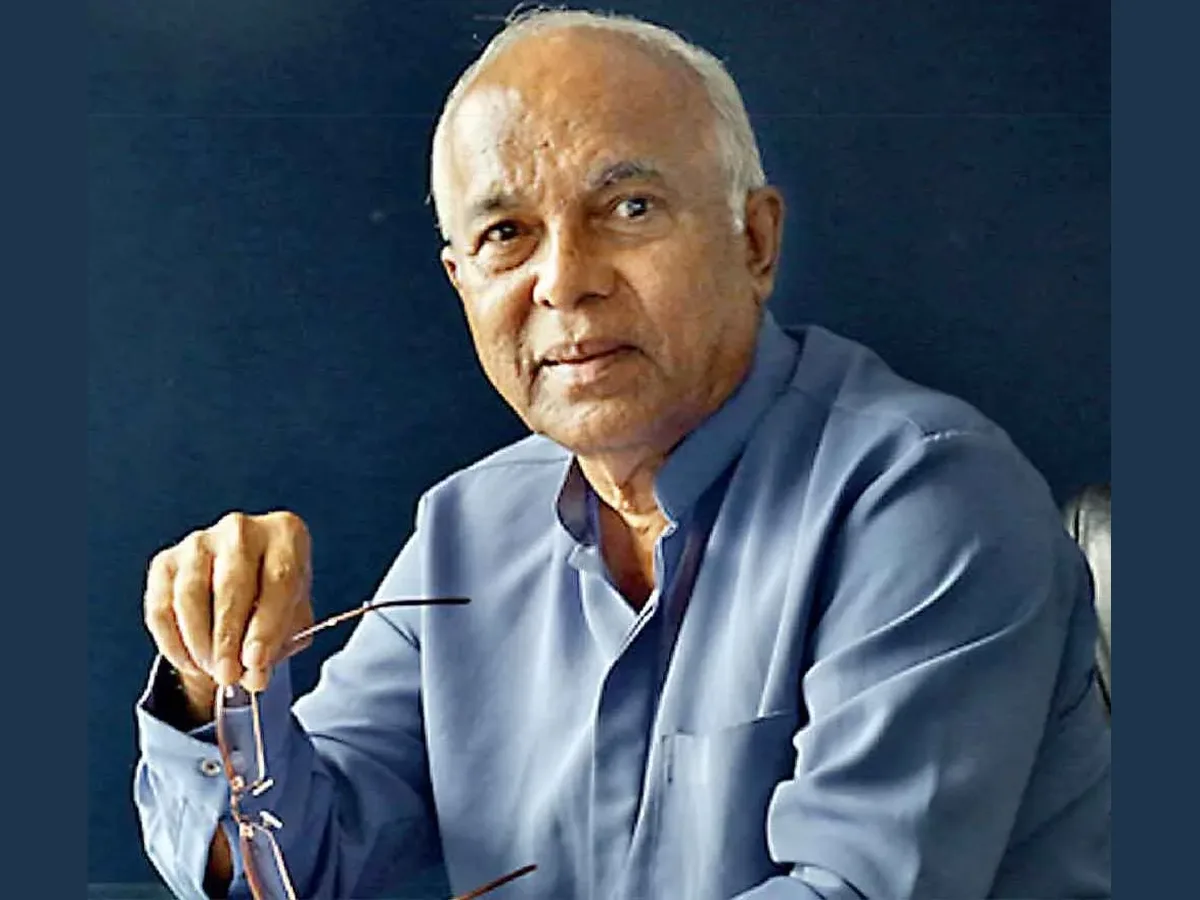
He had a practical problem. He was a features writer on Kumari, the Sinhala youth weekly, and he was filing so much copy that the same byline kept appearing three and four times in one issue. So for the paper's verse feature — a column called Rathu Rosa, "red rose" — he made up a name and signed the poems with it: Devinda Dasanayake.
The poems were about love, and they landed. Teenagers read them; so, he noticed, did their parents. And then something happened that he still describes with a kind of amused resignation. "In the end," he said in 2019, "Devinda Dasanayake became more popular than the name Dharmarathna Perera."
Makumbura, and the newspaper desk
He was born on 30 May 1948 at Makumbura, near Kottawa on the eastern edge of Colombo. Almost everything that can be documented about him afterwards runs through newspapers rather than record labels, which is why his name is far less familiar than his lines.
He began, in his own account, at Kumari under the editor Bandula Padmakumara, writing features. Over the following decades he edited the women's paper Yuvathi and the weekly Ranliya, and — in a turn he calls purely fortunate — eventually became editor of Kumari itself, the paper where the pen-name had been invented. He is now retired from the press, and writes a lyric when somebody asks him for one.
How a features writer became a lyricist
The crossing was made by a colleague. Praneeth Abeysundara — then a features writer at Kumari, later a professor of sociology and himself a lyricist of some standing — read the Rathu Rosa verses and recognised that the man writing them could write a song. That introduction is the hinge of the whole career.
What followed is a catalogue of songs far better known than their author. The one people name first is නුඹෙ සුවඳ පිරුණු පුංචි කාමරේ Nube suwanda pirunu punchi kamare — "the little room still full of your scent" — sung by Sanath Nandasiri. Sources differ on who wrote the melody: Sinhala Wikipedia credits Sanath Nandasiri himself, while the lyrics database used by this site records Nimal Jayakody. The song's own title is unstable in circulation too; Perera quotes his first line as Obe suwanda pirunu punchi kamare, with obe rather than nube for "your".
Then there is ළිහිණින් රෑන පියා සලන්නේ Lihinin rena piya salanne, sung by Priya Sooriyasena to music by Sarath Dasanayake; සමුගන්නදෝ ආයෙ වෙන් වන්නදෝ Samugannado aye wen wannado, again with Sanath Nandasiri; ඉස්සර වගේ හඳ Issara wage handa for Victor Rathnayake; මියුරු සරින් මං ගයනා Miyuru sarin man gayana for Vijaya Kumaratunga; අප හමුවීම වෙන්වීම දෝ ආදරේ Apa hamuweema wenweema do adare and වෙස්සන්තර බිසෝ Wessanthara biso for Namal Udugama; කන්දෙ විහාරේ Kande vihare for Chandralekha Perera; කැලෑ මලේ කොහේ ගියාදෝ Kela male kohe giyado for Prince Udaya Priyantha; පමා වැඩී Pama wedee for Chandana Liyanarachchi; and බිත්ති පත්තරේ කවිය Biththi patthare kaviya for Sashika Nisansala.
Almost all of them are love songs, and he is clear about why they worked on schoolchildren when he was well past school. "I wrote love songs as a mature person, not as a schoolboy lover," he said. "But schoolboy lovers embraced them, and they are still with the young generation today."
Teledrama
The second body of work is television. From the 1980s onward the teledrama theme song became one of the main routes by which a new Sinhala song reached a mass audience — cheaper than a film, more frequent than a cassette release, and repeated every week for the run of the serial. He wrote a great many of them; among the serials with his lyrics are Wathusudu Mal, Gimanata Pawana, Wanapasa Mal, Pabasara, Samudra Chaya, Kon Kala Doni and Haratha Hera.
The book with his name on it
In December 2019, at the Colombo Foundation Institute, a book of his was launched. It is called Lihinin Rena, after the song, and it is not the usual lyricist's collection of texts. Instead it gathers criticism — pieces by other writers analysing his songs one by one — on the argument that a listener who thinks he already knows what a song means may be surprised.
He is candid that this is often the case, and that it does not trouble him. Songs are heard where they are felt, he says, which means the meaning a listener takes is frequently not the one the writer put in. In the days he was writing there were no music videos to fix a song's images in place; the pictures assembled themselves in the listener's head, and were better than any that could have been filmed. "That," he says, "is how the words came to be the ornament of the song."
What is not known
For a writer with this many familiar songs, the documentary record is thin. There is a Sinhala Wikipedia article and no English one; there is one substantial interview, from 2019, and a 2025 Lankadeepa feature on Punchi Kamare that is unreachable to anything but a browser. No reliable count of his output exists and none is attempted here. Composer credits on several of the songs are contested between sources. His pen-name is better documented than his life — which, given how he came by it, he might consider a fair outcome.