
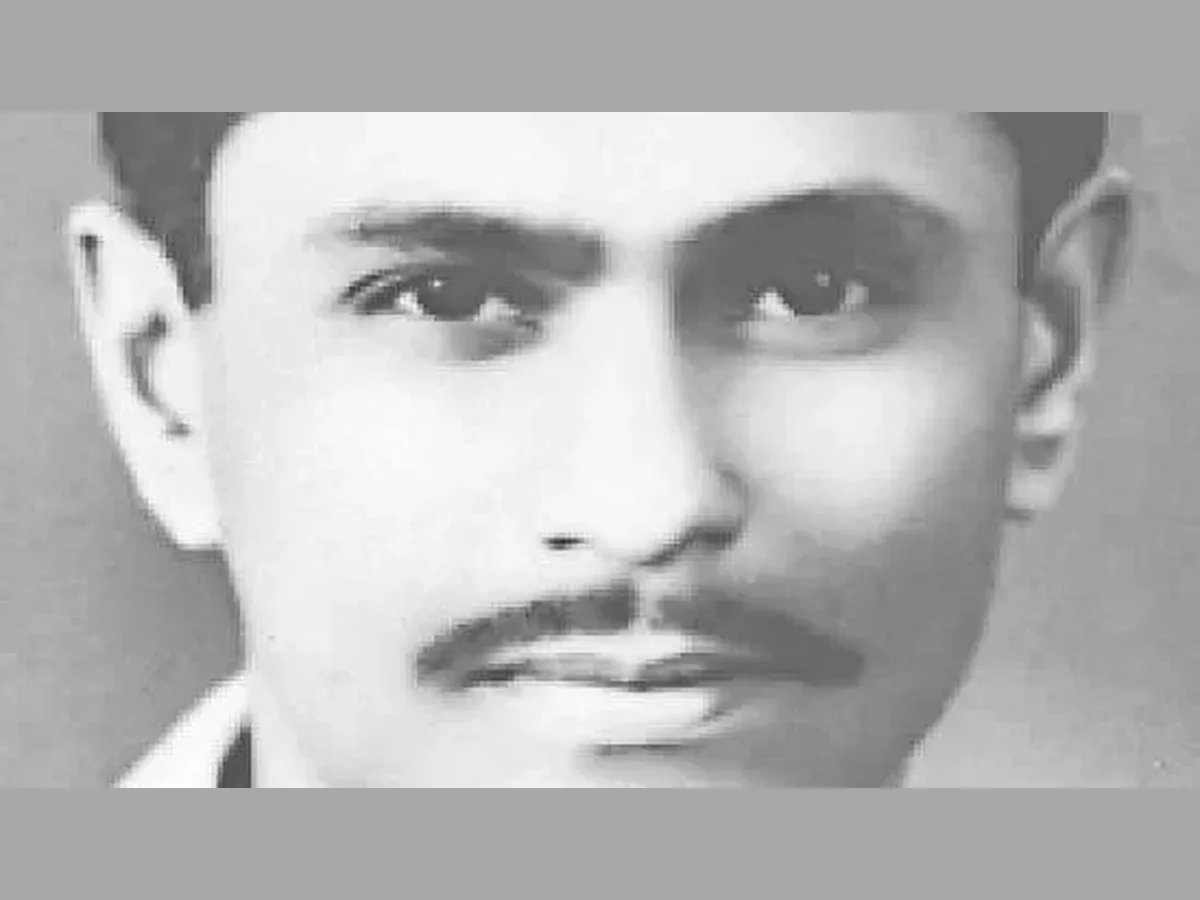
His father dressed other people for the stage. Charles Appuhamy — everyone called him Palis Ayya — worked with the costumes at the Tower Hall theatre in Colombo, the building where Sinhala popular performance was being invented, and his son grew up around it without ever quite being allowed inside it. The family needed money. The boy gave up school young, and for a period made masks. Then Sirisena Wimalaweera cast him in the play Amma, where his job was to sing a virindu — the fast, declaimed verse form that a Sinhala audience of the 1940s could not sit still through. It worked. He sang in Wessanthara next, and after that nobody was going to keep him in the costume room.
Deiyannewela to Radio Ceylon
Dharmadasa Walpola was born on 27 November 1927 in Deiyannewela, Kandy, to Charles Appuhamy and Karunawathie. What he wanted first was not to sing but to play the flute, and he set about it properly: lessons from a teacher known as Eddie Master, and then enrolment at R. A. Chandrasena's academy in Colombo. Chandrasena — a Radio Ceylon multi-instrumentalist whose school also trained Khemadasa and Victor Rathnayake — listened to his student play and noticed the voice instead. He auditioned him on several songs with harmonium accompaniment and then sent word to Thevis Guruge, the first Sinhala announcer at Radio Ceylon and later its Director-General.
Guruge gave him a sarala gee programme of his own, with G. S. B. Rani Perera as duet partner. That is the ordinary-sounding sentence on which the rest of the career rests: a regular slot on the only station in the country, at the moment when Sinhala light song was being defined.
He never stopped being an instrumentalist. He played flute, violin, tabla and harmonium, and knew what he was asking of a band — which is part of why the phrasing on his records sits so comfortably inside the arrangements.
The softer voice
He made his playback debut in 1953 in Prema Tharangaya, singing alongside a young woman then still billed as Rita Genevieve Fernando. Over the next dozen years he became the male voice of Sinhala cinema, and the reason usually given is a contrast: where Mohideen Baig brought a Carnatic-inflected attack to the microphone, Walpola sang softly and melodically, which suited the love songs the films kept needing.
The list of what he sang is a list of what the country was humming. උපත ලබා Upatha Labaa and හනික යමං පුල්ලි ගොනෝ Hanika Yamang Pulli Gono came from Mathalang (1955); "Seeya Manamalaya" from Asoka (1955); "Amu Pitisareyeki" from Seda Sulang (1955); the title song of Surathalee (1956); කටේ කිරි සුවඳ Kate Kiri Suwanda from Sandesaya (1960); ඔය බැල්ම ඔය කැල්ම Oya Balma Oya Kalma and "Waththe Wetunu Pol Athu" from Kurulu Bedda (1961); and මංමුලා වෙලා Man Mula Wela from Deepashika (1963). Away from the films there are the songs that still get requested on radio: මේ සෞම්ය රාත්රිය ගෙවිලා යතේ Me Saumya Rathriya Gewila Yathe, ජීවන ගංඟා ඉවුරේ Jeewana Ganga Iwure, අහසේ සඳ සේ Ahase Sanda Se and පෙම් රැල්ල නගී Pem Ralla Nagi.
He was a duettist above all. The InfoLanka song index for him runs to hundreds of titles and the great majority are duets — with Latha, with Rukmani Devi, with Vivienne de Silva Boralessa, with Chitra Somapala, with G. S. B. Rani Perera, with K. Rani and Jamuna Rani for the songs recorded in south India. Sinhala film music of that decade was built on the male–female duet, and he was the male voice in an extraordinary number of them.
Latha
The woman he sang with in Prema Tharangaya became his wife. Rita Genevieve Fernando — a Catholic girl from Bambalapitiya who had sung Latin hymns in a church choir before she sang anything else, and who first went on Radio Ceylon at thirteen — was renamed Latha at an audition, and on her marriage became Latha Walpola. They married at Sirikotha in Kollupitiya on 7 April 1958, though accounts differ: the Sunday Observer gives 1957 and the text of his own Wikipedia article says "around 1956".
Their duets are the best-known partnership in Sinhala film music, and the connection is oddly often dropped from profiles of either of them, as though each were a solo career that happened to overlap. Sources also disagree about how many children they had — four, five and six all appear in print — but several of them went into music, and their son Chaminda Lolitha Walpola, who has lived in the United States since 1991, has recorded his father's Me Saumya Rathriya. He told Sarasaviya in 2015 that he had left the original melody entirely alone and tried only to add something new in the arrangement.
Latha Walpola outlived her husband by more than forty years. She gave a final concert, Pem Rajjaye, in November 2025 — at which, laughing, she told the audience "I am not ninety-one, I am nineteen" — and died on 27 December 2025. She was buried at Kanatte, the Borella general cemetery, on 31 December with full state honours. (Her birth year is given as 1934 on English Wikipedia and 1933 on the Sinhala one, and her birthplace as Bambalapitiya in one and Galkissa in the other.)
Back to the microphone
Playback work thinned after the mid-1960s, as it did for most of that generation, when a new set of voices arrived and the films changed. He returned to radio, and the return is marked by one song in particular: උත්තම මුනි දළඳා වඩම්මන Uththama Muni Dalada Wadammana, a Buddhist devotional piece with words by Ajantha Ranasinghe and music by Sanath Nandasiri. It is a different kind of singing from the film duets — slower, more formal, aimed at a national occasion rather than a screen romance — and it gave him a second identity as a devotional singer.
In his later years he taught music. He died on 25 December 1983 in Colombo, at fifty-six.
What is missing from the record
There is a real gap in what can be checked about him. The most detailed account of his early life is an audio interview archived by the SLBC and summarised on a fan-maintained song index; the Sri Lankan newspaper obituaries that would settle the dates sit behind archives that no longer serve their old URLs. Song counts for the singers of this period are notoriously unreliable — the same paragraph on Wikipedia gives his wife both 6,750 songs and "more than 10,000" — and no defensible total exists for him either. What is not in doubt is the shape of the career: a Kandy boy who left school to make masks, learned the flute, got heard by accident, and then sang the male half of Sinhala cinema for a decade and a half.