
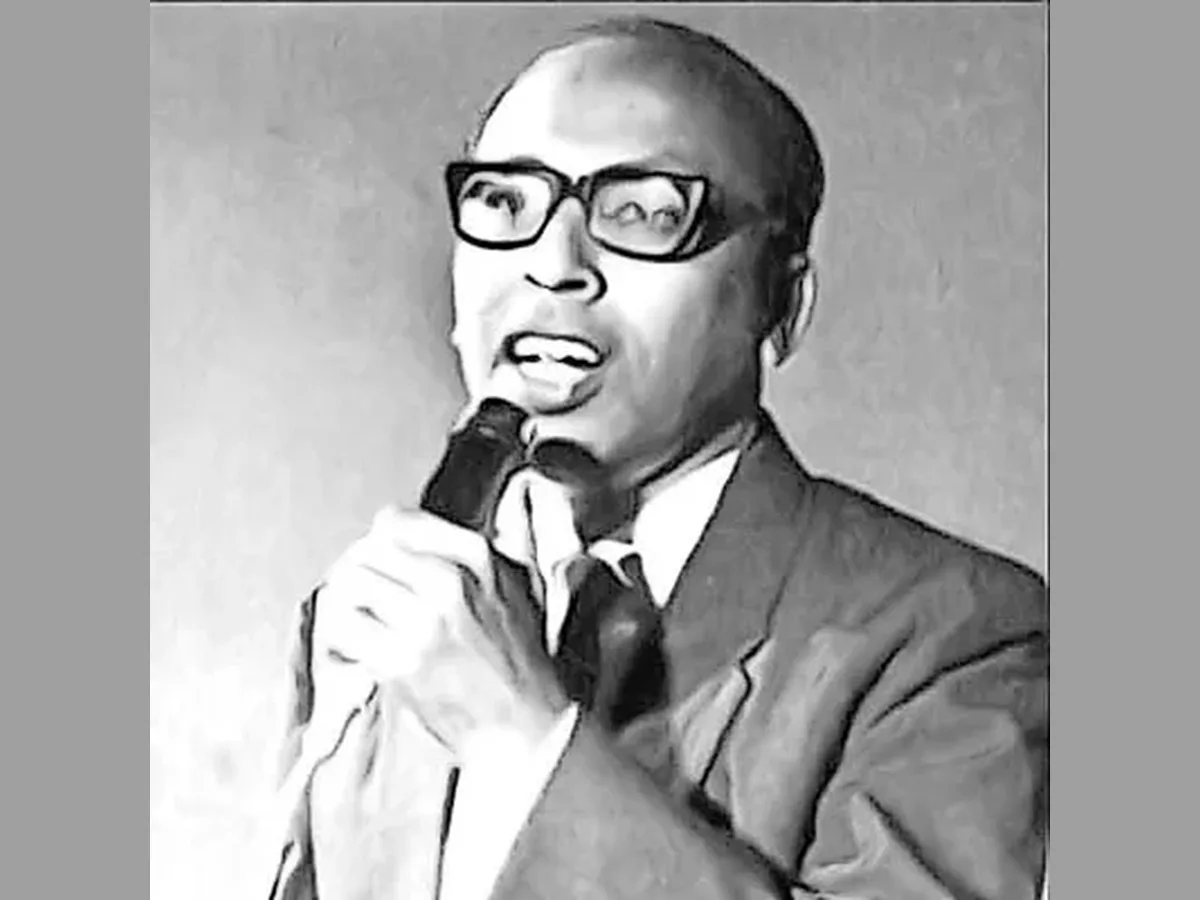
Somewhere around 1950 a young radio singer recorded a song asking children to stop killing birds. පින් සිදුවන්නේ Pin Siduwanne — "it would be a merit" — was a plea, not a hymn and not a love song, written by R. N. H. Perera, and it was the first record to make Cyril Tudor Fernando's name. Within a year or two a young woman in Badulla who had fallen in love with that voice would start writing him letters, and end up marrying him.
C. T. Fernando spent his career doing something no one had asked for. He took the Western pop song — its beat, its harmony, its jazz inflections, its electric instruments — and used it to sing about mango trees, village lamps and the koel's call. The result is the reason Sri Lankan pop music exists.
Nawalapitiya, and a boy in the choir
He was born on 28 January 1921. Where, exactly, is one of the small things the sources cannot agree on: Sarasaviya, the leading Sinhala cinema paper, records his birthplace as Uyana Road, Dehiwala, while the Daily News gives Kadalana in Moratuwa. Both are coastal Catholic districts, and either way he grew up in Nawalapitiya, up in the hills, and was educated at St. Mary's College there.
Everything he later did musically was already visible in the schoolboy. He won prizes for elocution, singing and drama — including a gold medal for oratory — sang in the parish church choir, and acted in school plays. The church choir matters more than it sounds: it is where a Sinhala singer of that generation learned Western harmony, part-singing and how to hold a line against an organ, none of which the Indian-derived radio tradition taught.
During the Second World War he became choir master of the A.R.P. messenger service in Colombo and joined the Grand Cabaret, entertaining troops. That, too, is a Western musical apprenticeship: dance bands, jazz standards, an audience that expected to be entertained rather than instructed.
In 1946 he auditioned successfully for a grade-one artist's post at Radio Ceylon. His first radio song was Sawas Kala Aele. Then came Pin Siduwanne, and the country noticed.
A new kind of song
In 1952 he signed as a commercial artist with the HMV subsidiary run by Cargills, and here the crucial fact about him emerges: he composed a great many of his own melodies. In an industry where the standard practice was to take a Hindi film tune and fit Sinhala syllables to it — the practice contemptuously known as vacana danava, "putting words" — a singer who wrote his own tunes was doing something close to radical.
What he wrote was not sarala gee and it was not baila. As a 2018 Daily Mirror appraisal put it, "he took elements of both, mixed it with Western pop beats, melodies and cadences, nuanced with jazz elements, and fashioned a new kind of song for us, all of it backed by Western instruments. This was at a time when Western instruments were disparaged by the broadcasting elite. No one had heard anything like it before."
The evidence is in the records themselves. බර බාගේ Bara Bage, අම්බිලි මාමේ Ambili Mame, සුවඳ රෝස මල් නෙලා Suwanda Rosa Mal Nela, ලෝ අඩ නින්දේ Lo Ada Ninde, අඹ රුක් සෙවනැල්ලේ Amba Ruk Sewanelle, බිළිඳා නැළවේ Bilinda Nalawe, දිළිඳු පැලේ ගම්මානේ Dilindu Pale Gammane, මා බාල කාලේ Ma Bala Kale, හෙළ ජාතික අභිමානේ Hela Jathika Abhimane. The subjects are rustic — bees at the flowers, moonlight, lullabies, the poor man's hut — and the settings are anything but.
Sarasaviya has credited several specific firsts to him: සීගිරි සුකුමාලියේ Sigiri Sukumaliye as the first Sinhala song built on a bossa nova rhythm, රන්වන් රන් කෙඳි Ran Wan Ran Kendi as the first Sinhala rock and roll song, බේරෙන පැණි බිඳු Berena Pani Bindu as drawing on a Polish melody, and සැළලිහිණි කොවුල් හඬ Salalihini Kowul Handa as carrying the accent of an English song. Claims of that kind are hard to verify and easy to repeat, so they are given here as the paper's judgement rather than established fact — but nobody disputes the direction of travel.
Behind the sound stood Patrick Denipitiya, the arranger and Hawaiian-guitar pioneer who wrote the orchestrations for much of his catalogue; B. S. Perera also composed for him. His lyricists included R. N. H. Perera, Karunaratne Abeysekera, Sarath Wimalaweera, Susil Senadeera and Lalith S. Maithripala — several of whom were, at the time, defining what a Sinhala radio lyric should sound like.
The duets
The other half of C. T. Fernando's popularity is who he sang with. His voice sat closer to a baritone than a tenor, happiest in the higher register but always audibly restrained; against it, Rukmani Devi's bright soprano had nothing to hold back. Their පුන්සඳ හිනැහෙන්නේ Punsanda Hinahenne and මල්බර හිමිදිරියේ පිපුණේ Malbara Himidiriye are among the most reissued Sinhala duets ever made. With Latha Walpola he recorded Salalihini Kowul Handa and several others; Chandra de Silva and Anjaleen Gunathilake were also regular partners.
He met his wife, Dhanawathie Gunasekara of Badulla, in 1951. She had fallen for his voice on the radio — her favourite song was Pin Siduwanne — and wrote to him. They married against her parents' opposition, with Latha Walpola's help. Their son Priyantha, born in 1952, became a singer in his own right and carried his father's repertoire for four decades; Priyantha's son Tisara went on to sing too, making three generations.
The stage, the screen and the road
Fernando acted as well as sang. He appeared in Deyyange Rate, in which he sang a virindu, and played the matchmaker in Lester James Peries's Gamperaliya. On stage he took a villager's part in J. D. A. Perera's 1947 production of Sirisangabo, sang "Mara Dadenek" in a revival of John de Silva's Sri Wickrama, and acted in Chitrasena's Vidura. His best-known film song, මී වදයකි ජීවිතේ Mee Wadayaki Jeewithe — "life is a honeycomb" — came from the 1969 film Kawuda Hari, with words by Karunaratne Abeysekera and music by Sisira Senaratne.
Between 1959 and 1960 he was rated the most popular singer in the country. From 1960 to 1966 he was resident at the Little Hut at the Mount Lavinia Hotel, and later at the Coconut Grove at the Galle Face. In 1967 he undertook what is generally described as the first overseas tour by a Sri Lankan artist with his own band, spending six months across the UK, France, Italy, Switzerland and Spain with Patrick Denipitiya and his Combo. He was also the first Ceylonese singer to perform at the Commonwealth Institute in London. His LP The Golden Voice of C. T. Fernando and, in 1975, the EP Sigiri Sukumaliye kept him on record to the end.
The last night
On the night of 17 October 1977 he walked home to Dehiwala after a concert, arriving around midnight, and told his wife he had a mild pain in his chest. A neighbour, Ivo Martins, drove him to Kalubowila Hospital, where he lost consciousness and died the same day of a heart attack. He was fifty-six.
His songs did not go with him. They are still played daily on Sri Lankan radio, still sung at weddings, still covered by artists who were not born when he died — and the whole tradition of Sinhala pop that followed, from Clarence Wijewardena's electric guitars to the duos of the 1990s, is walking a road he opened.