
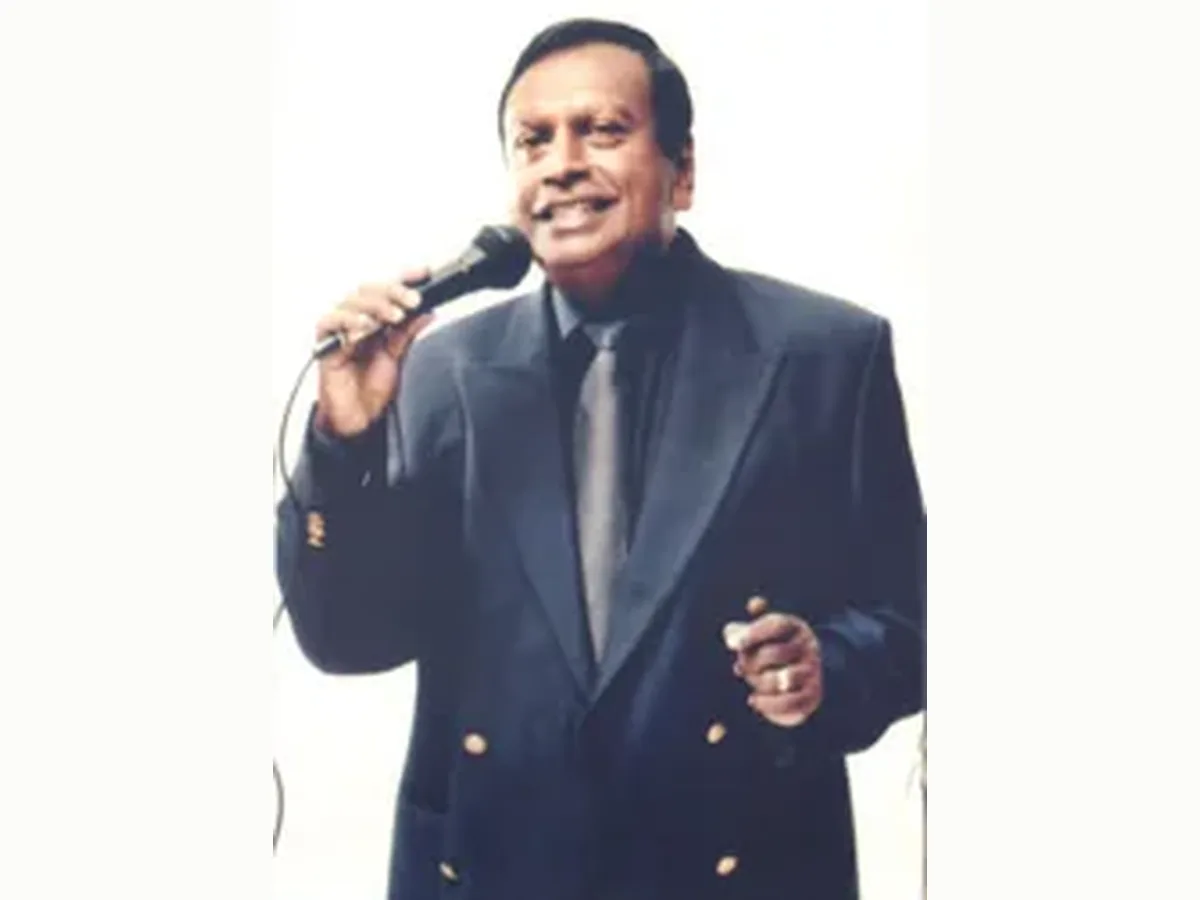
A young man came home to Ratnapura from St. Joseph's College in Colombo, school finished, nothing decided. A friend of the family, Premasinghe Marambe, thought he should meet another young man in the town who was writing songs and playing guitar. The guitarist was Clarence Wijewardena. The singer was Annesley Malewana. Between them, over the next decade, they would make Sinhala pop music into something a Sri Lankan could actually buy a record of.
Two boys and a recording slot
The band that came out of that meeting was named by the advertising man Sri Sangabo Corea, who heard them and called them මූන්ස්ටෝං the Moonstones. Wijewardena wrote and played; Malewana sang.
Accounts of when this happened genuinely disagree, and there is no point pretending otherwise. English Wikipedia gives 1966. Other retellings give 1964 or 1965, and Malewana's own account has been reported as 1965. The Sunday Times, previewing his fiftieth-anniversary concert in 2016, dated the start of his career to 1966 in Ratnapura — which is how he came to celebrate fifty years in August 2016 rather than in 2014.
Their break came through radio and through an act of generosity. The Corea family — the broadcaster Vernon Corea and his cousin Vijaya Corea — put the Moonstones on the Saturday Star programme on the Commercial Service, and their music went out on the English service of Radio Ceylon before it went out on the Sinhala one, which for a Sinhala-language band was an inversion of the natural order of things. The recording session that produced their first hit, Mango Nanda — carried in the Sinhala lyric databases as මන්ගෝ කළු නැන්දේ Mango Kalu Nande, "dark auntie of the mango tree" — came free because another bandleader gave up his own booked slot at Philips so that these unknowns could use it. That bandleader was Noel Ranasinghe of La Ceylonians. He is frequently misnamed in retellings of this story as Neville Fernando, who led a different band, Los Caballeros, and who died in 1968; the two men are not the same and the mix-up has been printed more than once.
The 1968 EP carried Mango Nanda alongside රුවන් පුරය Ruwan Puraya, Sudu Menike and Muhudu Rella. It sold around five thousand copies. In a market where Sinhala group music barely existed as a category, that was a signal flare.
The songs everybody knows
What followed is a run of songs that a Sri Lankan of a certain age can still sing without prompting, most of them written by Wijewardena and delivered by Malewana's light, unforced, faintly amused tenor: මාමේ අපෙ කළු මාමේ Kalu Mama ("our uncle Kalu"), රෝස මලේ නටුවෙ කටු Rosa Male ("the rose has thorns on its stem"), ගොයම් කපනවා මැණිකේ Goyam Kapanawa Manike ("they are reaping the paddy, Manike"), පවුරු වළල්ලක් බැඳලා Pawuru Walallak Bandala, කියන්න සුළඟේ Kiyanna Sulange ("tell it, wind").
Later, with the Super Golden Chimes, came උඩරට නිළිය Udarata Niliya ("the upcountry actress"), වන බඹරෝ Wana Bambaro ("wild bees"), සිහින පැතුම් විමනේ Sihina Pathum Wimane ("in the mansion of dreamed-of wishes") and සතුට සැනසුම ළඟ රන්දා Sathuta Sanasuma. One of the most enduring is මා ඇති දැඩි කළ පියාණෙනි Piyaneni ("O father who raised me"). He sang in duet and in chorus with Indrani Perera, who joined the Moonstones in 1969 and took the lead on Dilhani.
Three bands, in the right order
The lineage is routinely told wrong, so it is worth setting out plainly.
The Moonstones broke up in 1969 or 1970 — sources give both. Wijewardena, the bassist Chanaka Perera and the drummer Wijith Peiris then played a show in Moratuwa billed as "Breakaways from the Moonstones", and Gerald Wickramasooriya of Sooriya Records gave the new group its name: the Golden Chimes. Dixon Gunaratne came in on lead guitar. Lankika Perera joined and sang on the debut EP කිමද නාවේ Kimada Nawe ("why did you not come?"); Anil Bharathi joined soon after. Malewana was not part of this band. Accounts of its founding give 1970 or 1971.
Only then, in 1972 or 1973, did Wijewardena and Gunaratne leave to form the Super Golden Chimes, and only then did Malewana rejoin his old partner. The Golden Chimes did not dissolve into it; Chanaka Perera carried the band on, and it still performs as "Lankika & the Golden Chimes". Any account that runs Moonstones straight into Super Golden Chimes has dropped a band out of the middle.
The confusion is understandable, because when Malewana staged his fiftieth-anniversary concert at the BMICH on 6 August 2016 he billed all three bands as his own and put their original members on the same stage — Indrani Perera from the Moonstones, Lankika and Chanaka Perera from the Golden Chimes, and Dixon Gunaratne, Rukshan Perera, Paul Pereira and Sunil Malawana from the Super Golden Chimes.
Leaving, and coming back
The Super Golden Chimes dominated the 1970s, topping the hit parades on both the Sinhala and the English services. Then Malewana stopped. In 1977 he took a job at a private company and stepped back from the band; in 1978 he married, and announced his retirement from music altogether. Wijewardena went solo.
The retirement did not hold. He returned in 1988 as a solo recording artist, and in the 2000s formed a band of his own, Annesley & the Super Chimes, which has kept him working ever since — sing-alongs, "Stars of the '70s" revival shows, charity concerts. He made his playback debut in cinema in 1984, in M. H. Gafoor's Shirani. His voice reached Sri Lankans abroad through London Sounds Eastern on BBC Radio London and through community stations in the United States and Australia. In 2025 he was portrayed on screen by Saranga Disasekara in Rhythm of the Guitar: Clarence, a film about his old partner.
There has also been a copyright dispute. In 2009 Wijewardena's widow and daughter went to court to stop him singing a list of Wijewardena songs; the case turned on contracts signed decades earlier with the Sooriya label, and it was decided in Malewana's favour. It is a sad footnote to a partnership, and a reminder of how little the Sinhala music industry of the 1970s did to sort out who owned what.
One further story should be treated with care: entertainment sites regularly list his song Kageda Gon Wassa among songs kept off the air for political reasons in the 1970s. No broadcasting record, gazette or contemporaneous report has been found to support it, and no documented list of songs banned by the national broadcaster has ever surfaced. Until one does, the claim is folklore, not history.
The Prince of Sinhala Pop
The title stuck because it fits the voice. Malewana never sounded like a trained classical vocalist and never tried to; he sang Wijewardena's melodies the way an ordinary, cheerful person might sing them, and that plainness is precisely what made a guitar band feel like something Sinhala listeners already owned rather than something imported. Sixty years after Ratnapura, he is still on stage doing it.