
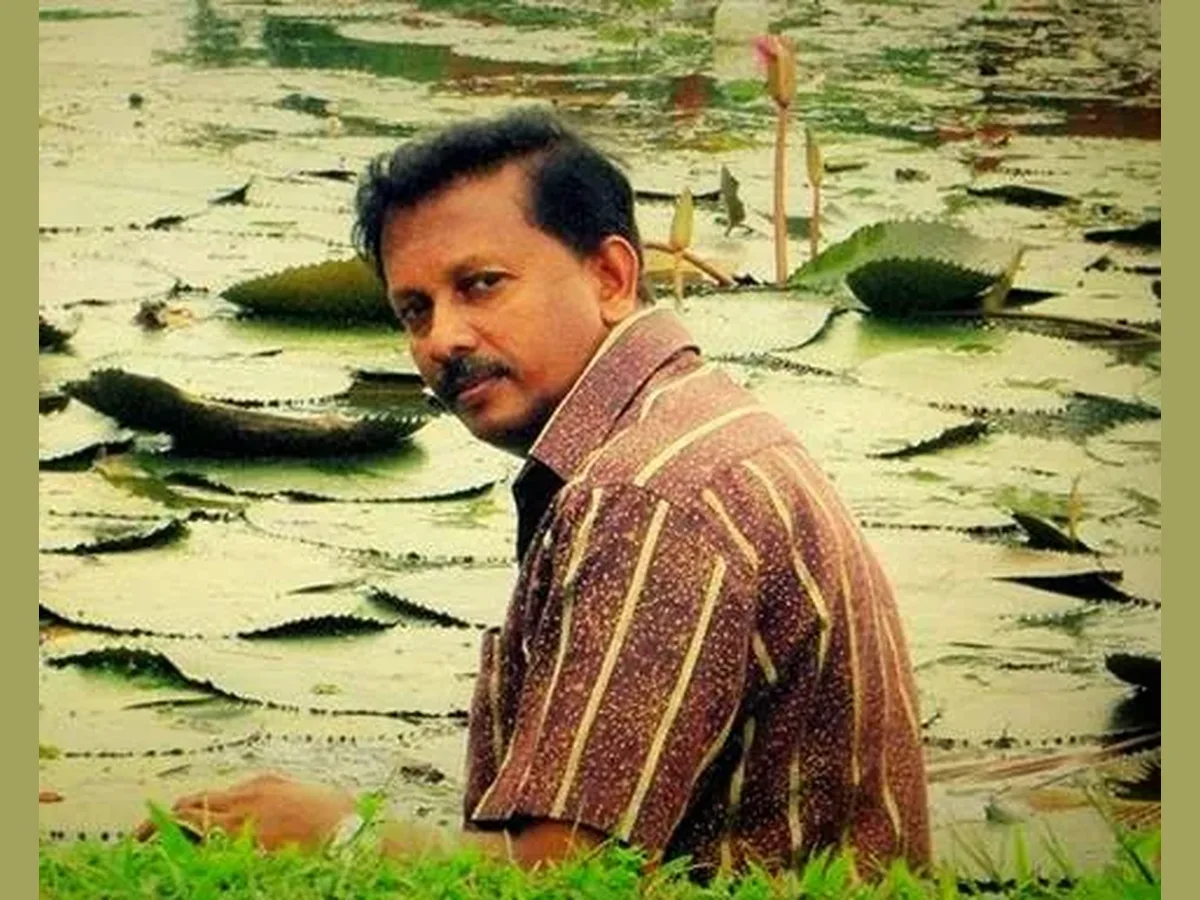
He reached the Sri Lanka Broadcasting Corporation at about half past four in the morning and was in the Commercial Service studio by 4.55. There had been a small pain around his chest since the night before, and he had put it down to acid. He wished the whole country a beautiful morning and read the programme through. At ten past seven he leaned into the microphone and said the last words he would ever broadcast: the time is 7.10 a.m.; this is the Commercial Service of the Sri Lanka Broadcasting Corporation. Then he wrote the time in the studio logbook — his last piece of writing — told the deputy director-general he was stepping out for something to settle his stomach, and walked across to the little shop opposite the station at Torrington.
He drank a glass of milk. He made a phone call to the singer Charitha Priyadarshani, which she missed, and nobody has ever known what it was about. Then, in front of the entrance to the building that had given him his working life, Vipul Dharmapriya Jayasekara fell. He was dead before he reached the National Hospital. It was Sunday 25 May 2014, and he was fifty-one.
From newsprint to the microphone
He was born on 23 February 1963 and educated at Thurstan College, Colombo. Before radio he was a journalist, supplying feature writing to Kumari and to several of the national newspapers of the day, and he had built a reputation as a popular writer well before anyone heard his voice.
In 1992 he joined the SLBC as a relief announcer, in the same intake as T. D. K. Jayantha, Idunil Dissanayake, Senaka Ubhayasinghe and Kalum Wijesuriya. The Commercial Service he joined was not the Radio Ceylon of the 1960s — by then it was one voice among many, competing with a decade's worth of private FM stations — but it still ran the country's most-listened-to breakfast programme, and the announcer's job still meant getting up at four, choosing the records, and talking a nation into its day. He lived out at Piliyandala, on the Bolgoda, and came in by station car. Jayantha, who by 2014 was a deputy director-general of the corporation, described what that literary background did for the job: "Vipul had a real command of literature. Even the words he spoke in conversation had a depth of literature to them. Look at how much love there is in the song lyrics he wrote."
The voice itself is what listeners describe first — cool, level, unhurried, as clear as settled water. The Buddhist magazine Mahamegha, writing a week after his death, said that anyone who heard it once never forgot it.
The songs
He had written some verse before he wrote his first song, but the first lyric that became a song came out of a chance meeting with the singer and composer Shalitha Abhayawickrama. Jayasekara gave him a set of words about his own schooldays, and the result was සුළඟේ ලෙලෙනා මල් සේ දඟපා Sulage Lelena Mal Se Dagapa ("playing like a flower swaying in the wind"), which became popular across the country and remains the song most people name first.
What followed was a small, coherent body of work rather than a large one. අහස් ගැබේ තරු කැට ගානේ Ahas Gabe Tharu Kata Gane ("counting the star-stones in the vault of the sky"), sung by Charitha Priyadarshani, is the love song of his that has lasted best. සඟවන්න එපා හසරැල් Sagawanna Epa Hasarali ("don't hide your smile"), sung by Karunarathna Divulgane to music by H. M. Jayawardena, is the other one that everybody knows. බොල් පිනි වැටෙනා මේ රෑ යාමේ Bol Pini Watena Me Re Yame ("in this night watch, as the light dew falls"), sung and composed by Lakshman Hilmi, is the one that Sri Lankan critics single out for its literary weight. දූ පුතුනේ රට අපේය Doo Puthune Rata Apeya ("sons and daughters, this country is ours") is the patriotic song of his that schools still sing.
The rest of the list is short and worth having whole: පිපුණු මලක හැඩ Pipunu Malaka Heda and දිලෙන පුරසඳ Dilena Purasanda, both with Shalitha Abhayawickrama; මම මවා ගතිමි Mama Mawa Gathimi, sung by Asanga Priyamantha Peiris to music by Jayantha Dissanayake; නොකී රහසක් Noki Rahasak, written for and composed by Edward Jayakody; සුරිඳුනේ කඳ සුරිඳුනේ Suridune Kanda Suridune; and ලෙංගතු පෙම Lengathu Pema, sung by Rohan Shantha Bulegoda.
There is a restraint in the lyrics that people who knew him kept pointing to as the man himself. He drank nothing and smoked nothing; the tributes describe someone unusually gentle and unusually plain, and note that his name means "one who loves the Dhamma".
Make-up, publicity and an audio magazine
Broadcasting and lyric-writing were only part of the working life. He was a make-up artist, credited on the stage play Sergeant Nallathambi and on several films, and he worked professionally in publicity and advertising.
The project his friends remembered most warmly was none of these. Nethra — described by its publishers as the world's first Sinhala audio magazine — was produced for blind and partially sighted readers under the banner "to see with the eye of the Dhamma what the walking stick cannot show". Jayasekara gave the project his voice from its beginning, unpaid, for about a year. The people who ran it described the collaboration as the best evidence they had of what he was actually like.
What is not settled
For a man who spent twenty-two years on national radio, the documentary record is thinner than it should be. The full list of his lyrics has never been compiled: Sinhala Wikipedia gives one set of titles, the Sarasaviya obituary another, and the site's own lyrics database holds only four songs under his name. Nor is the record consistent about his name — the database stores it as විපුල ධර්මප්රිය ජයසේකර, without the final consonant mark on the first word, while every Sinhala source consulted for this article writes විපුල්.
His death is exceptionally well documented, because it happened in front of his colleagues. Sarasaviya's reporter went to look at the logbook the following week and found the 7.10 entry in his handwriting, followed by the note the announcer Inusha Weebadda made when she went on air to tell the country that the man they had just been listening to was gone. He left his wife Damitha, his daughter Dinithi and his son Supul Sasmith.