
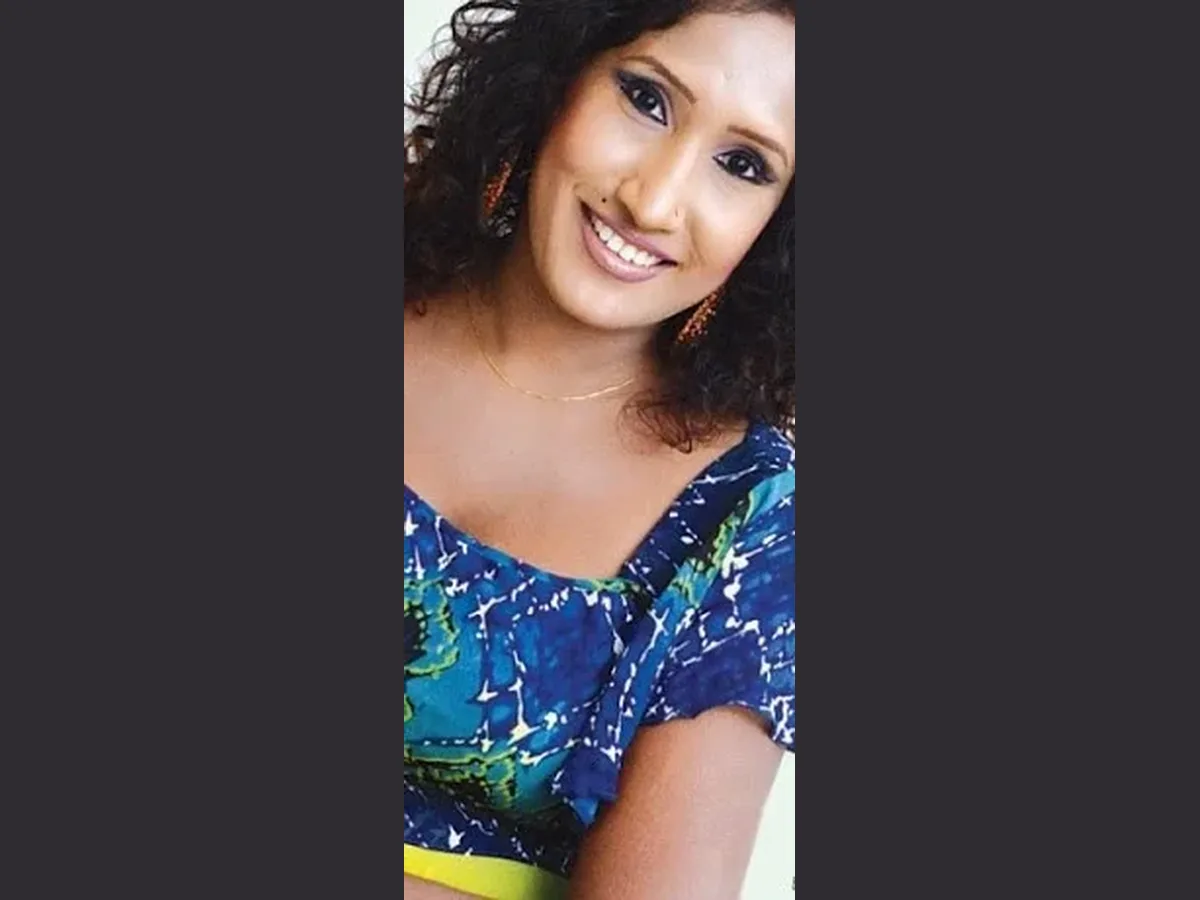
In 1989 a recording studio in Colombo needed a child's voice for a film called Shakthiya Obai Amme. The girl who got the job was eight years old. Standing at the microphone with her were Tony Hassan and Sujatha Attanayake — and Attanayake was not a stranger to the child, but her own music teacher. The song was පොඩි පුතූ ඉපදුනු දිනේ Podi Puthu Ipadunu Dine, "the day the little son was born."
Almost forty years later, Uresha Ravihari has sung on more than a hundred Sinhala films. Very few singers in the island's history have had a career that started that early and stayed that busy for that long.
The music class next door
She was born Uresha Ravihari Wickremasinghe in Nugegoda on 26 June 1982, into a house where broadcasting was the family trade: her father, Dharmasri Wickremasinghe, was a well-known announcer at the Sri Lanka Broadcasting Corporation. She went to school at Samudradevi Balika Vidyalaya in Nugegoda and then to St Paul's Girls' School, Milagiriya.
The music came from a neighbour's house. Sujatha Attanayake — winner of the Sarasaviya best-vocalist award back in 1967 for Parasathumal, and one of the great voices of the previous generation — held classes there, and the small girl next door listened in until she was enrolled properly. Ravihari went on to complete the Prathama examination and a diploma in Hindustani music under Attanayake and the late Austin Munasinghe, and studied Bharatanatyam under Preethi Ganegoda and Vasuki Shanmugampillai. It is worth pausing on how unusual that is: a playback singer of the pop era with a full classical grounding, taught by the woman she would later share a microphone with.
A child on cassette
The film work came first, then the cassettes. At nine she released her first album, Surathal Nangiye. At thirteen came a second, a Sinhala-and-Hindi mix, and a weekly Hindi-song slot on ITN; at sixteen, a third album, Kasun Tharaka. In 1996 the album Sithin Man Aaderai took the best-selling cassette award at the Rasa festival.
She also appeared on screen. In Malsara Doni, produced by her father, she acted as well as sang, and the song from it — උන්නා එක ගංගාවක Unna Eka Gangawaka, sung with the veteran Angeline Gunathilake — became widely popular. (Accounts differ on her age at the time: the film is dated 1992, when she would have been ten, but her own profile in the Daily News describes her as thirteen.) She chose singing over acting, and after that the screen credits are all soundtrack credits.
Three years at the top
The mid-2000s were the run that fixed her reputation. In 2006 she won best vocalist at both the Signis OCIC festival and the Presidential Film Awards for Anjalika, in which she sang පමාවී පිපුණු මල් සුවඳයි Pamawee Pipunu Mal Suwandai with Kasun Kalhara and Nelu Adhikari.
Then came the Sarasaviya awards, the oldest and most closely watched in Sinhala cinema, three years without a break — for Anjalika, for Asai Man Piyabanna and for Rosa Kale. Sources disagree on which award year attaches to which film: Wikipedia's list of Sarasaviya best female playback winners gives 2006, 2007 and 2008 in that order, while the award list on her own article puts Rosa Kale in 2007 and Asai Man Piyabanna in 2008. The three wins in a row are not in dispute; the ordering is.
The songs themselves are worth hearing in that light. සමනල් හැඟුමන් අතරේ Samanal Hanguman Athare from Asai Man Piyabanna is a solo, unhurried and almost conversational. වළාකුළට පාවෙන්නට Walakulata Pawennata from Rosa Kale sits at the other end of her range: light, high and cleanly phrased.
A hundred films
By July 2019, Sarasaviya was running a feature under the headline "Uresha passes a hundred films." The list behind that number is a fair map of Sinhala cinema over three decades: five songs in Sathutai Kirula Ape in 1998, four in Nilambare in 2006, five in Sarigama in 2016, five more in Adarei Man in 2018, the last of those recorded opposite Victor Rathnayake.
Her most durable partnership on record is with the composer and singer Kasun Kalhara. හීනයකි මට ආදරේ Heenayaki Mata Adare, their duet from Aadaraneeya Wassaanaya (2004), is still the song most people name first; they returned to the same register with අහසින් එහා Ahasin Eha from Adaraneeya Kathawak in 2016 and සුදෝ සුදු Sudo Sudu from Paththini. Elsewhere she has sung භවයෙන් භවේ Bhawayen Bhawe for Dedunu Akase, ජල ධාරාවේ Jala Dharawe for Kusa Pabha, and a duet with Karunarathna Divulgane for the historical epic Mahindagamanaya.
Television has been just as steady. She won best vocalist at the Sumathi Awards in 1998 and at the Raigam Tele'es in 2005, both for teledrama songs — the Sumathi citation appears under two different serial titles depending on which source you read — and the serial theme songs she records reach a nightly audience no film can match. Later awards include the Derana film festival for Wariga Pojja and, in 2018, the Hiru Golden Film Awards for Sarigama.
The shape of the career
There is a type of singer that the Sinhala film industry has always needed and rarely produced: someone who can carry a soft romantic lead, then a comedy number, then a historical devotional piece, on three consecutive session days, and sound as though each is the one they were built for. Latha Walpola was that singer in the 1960s. Uresha Ravihari has been that singer since roughly 2000.
The consequence is a strange kind of fame. Her voice is instantly recognisable to anyone who has been to a Sinhala film in the last twenty-five years, and her name is far less recognisable than the voice — because playback singers, by design, belong to the character on screen rather than to themselves. In 2023 she moved to the other side of that arrangement, joining Sirasa TV's The Voice Kids as a coach, in the position her own teacher had once occupied in a neighbour's front room in Nugegoda.