
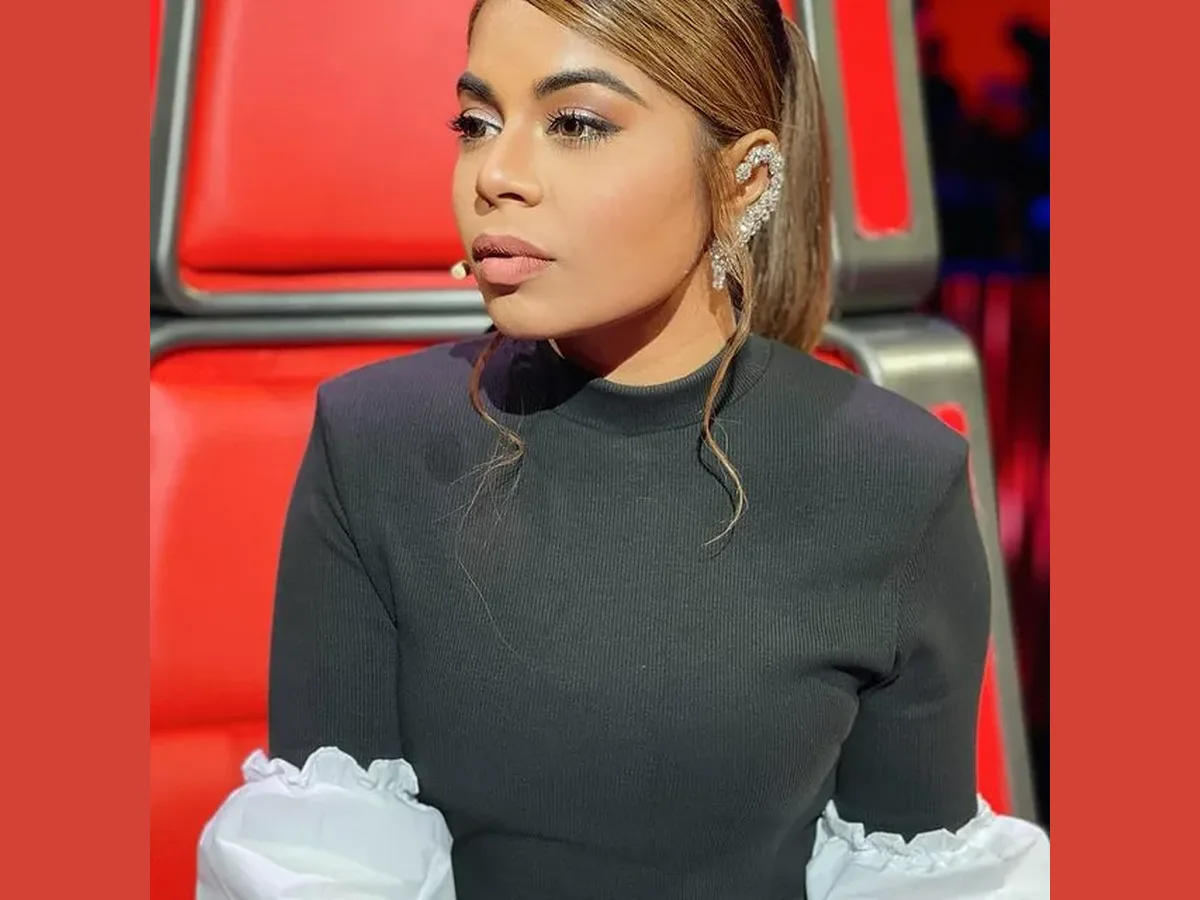
In 2019 the Sarasaviya award for best female playback singer went to ඇහිපිල්ලමක් අතර Ahi Pillamak Athara ("between the lashes of an eye"), a song from Vijayaba Kollaya, a period adventure directed by Professor Sunil Ariyaratne with a score by Rohana Weerasinghe. It is about as classical a piece of Sinhala film-music establishment as exists.
The singer was a pop and R&B artist in her late twenties who had spent most of her career in a studio associated with hip-hop, drum machines and English-language crossover. That gap — between where Umaria Sinhawansa came from and the rooms she ended up singing in — is the interesting thing about her.
First: she is not her sister
This entry needs a warning label. Umaria Sinhawansa (උමාරියා සිංහවංශ, born 5 January 1991) and Umara Sinhawansa (උමාරා සිංහවංශ, born 14 March 1987) are two different people. They are sisters, they are both professional singers, they performed together for years, and they have separate Wikipedia articles in both English and Sinhala. Search engines, aggregator sites and lyrics databases routinely merge them into one person, and the error is now thoroughly embedded online.
Umara is the elder. She is a music producer and audio engineer as well as a singer, founded the Umara Music Studio in 2017, and was at the centre of a national argument in 2023 over her rendition of the national anthem at a Lanka Premier League opening ceremony. Umaria is the younger, and is the subject of this article. Where a source does not make clear which sister it means, it should not be used for either.
The confusion is compounded by the fact that they genuinely did work as a pair. They performed together in public from Umaria's childhood, and in 2011 they entered the Crimea Music Fest in Ukraine as a duo, performing an original song called "My Dreams" and a cover of Beyoncé's "Halo". Even the placing is disputed: Umaria's article and part of Umara's say they came third, while another section of Umara's claims a gold award. Both accounts sit in the same encyclopedia.
The Sinhawansa household
Umaria was born in Colombo on 5 January 1991 to Tony and Ayesha Sinhawansa, both musicians, and was educated at Muslim Ladies' College and Gateway International School. Two older brothers went into music as well — Subandrio as a musician, Hartono as a producer. She later took a bachelor's degree in music.
The family is connected to Rukmani Devi, the first great star of Sinhala cinema and recorded song, though the nature of the connection is reported inconsistently: most sources, including the infoboxes of both sisters' articles, call Rukmani Devi a great-aunt, while a loosely sourced line in one profile calls her a grandmother. Great-aunt has the broader support.
Shaheena, and the BnS years
Her first widely heard recording was ෂහීනා Shaheena, a song in an Arabic idiom made with the duo Bathiya and Santhush. She followed it with පැතූ පෙම් පැතුම් Pathu Pem Pathum for the 2007 film Asai Man Piyabanna — her playback debut, and the record that made her name. That year she became the youngest singer ever nominated for the Sarasaviya award for best female playback singer.
What followed was a decade of collaboration rather than solo stardom. She sang on a long list of BnS tracks — "Kavikariye", "Hinipeththata", කස්තුරි සුවඳකි Kasthuri Suwandaki and, in 2019 with Sanuka Wickramasinghe, සරාගී ඇසිල්ලේ Saragi Asille. She featured with Randhir Witana on මල් මදහාස පීදෙනා Mal Madahasa Peedena and with Ruwan Hettiarachchi on හිරු මල් Hiru Mal. She sang the theme for the television serial Gehenu Lamai, and recorded a duet with W. D. Amaradeva, හන්තාන සිහිනේ Hanthana Sihine, before his death in 2016 — a striking piece of casting, the country's classical patriarch beside a pop singer a little over half a century his junior.
She has also appeared on the international-competition circuit that Sri Lankan singers of her generation used as a shortcut to recognition: the Pan Asia Music Festival in Beijing in 2010, a competition in Turkey, and Crimea in 2011. Reports of the exact placings vary and the ages given in some accounts do not square with her stated birth year, so the results are best left as "she competed and placed."
Solo, and television
The solo career proper begins with දෙනුවන් පියා Denuwan Piya (2015), produced by BnS, followed by the single Malak Nowe (2018) and රැඟුමේ Rangume (2019). In July 2020 she released මන්ද පමා Manda Pama, recorded in France, which won the SLIM-Nielsen People's Award for song of the year in 2021. රතු එලි Rathu Eli followed in 2021, and තුරුළු කරන් ඉන්නට Thurulu Karan Innata came from Ariyaratne's Bimba Devi Alias Yashodhara. Most of the lyrics on those records are by Manuranga Wijesekara.
Television has done at least as much for her profile as the records. She judged a season of Sirasa Superstar, guest-judged Youth with Talent, and from November 2020 was a coach on The Voice Sri Lanka, where she coached the winning team of the first season and returned for the second. She was named a Kala Keerthi Abhimani in 2020, and is reported to have become an A-grade singer at the Sri Lanka Broadcasting Corporation — the state grading that still, decades after it was introduced, functions as a marker of arrival.
Where she sits
Umaria belongs to the first generation of Sinhala singers whose careers were built by studios and television formats rather than by Radio Ceylon and the Sarasaviya circuit — and who then, having built them, went back and did the traditional work anyway. A Sarasaviya award for a Sunil Ariyaratne film, a duet with Amaradeva and an SLBC A grade are not what a career that began with an Arabic-flavoured pop single with BnS was supposed to produce.
Her English Wikipedia article carries several maintenance notices about sourcing, and much of what circulates about her online rests on YouTube links and celebrity-gossip sites. The recordings, at least, are not in doubt.