
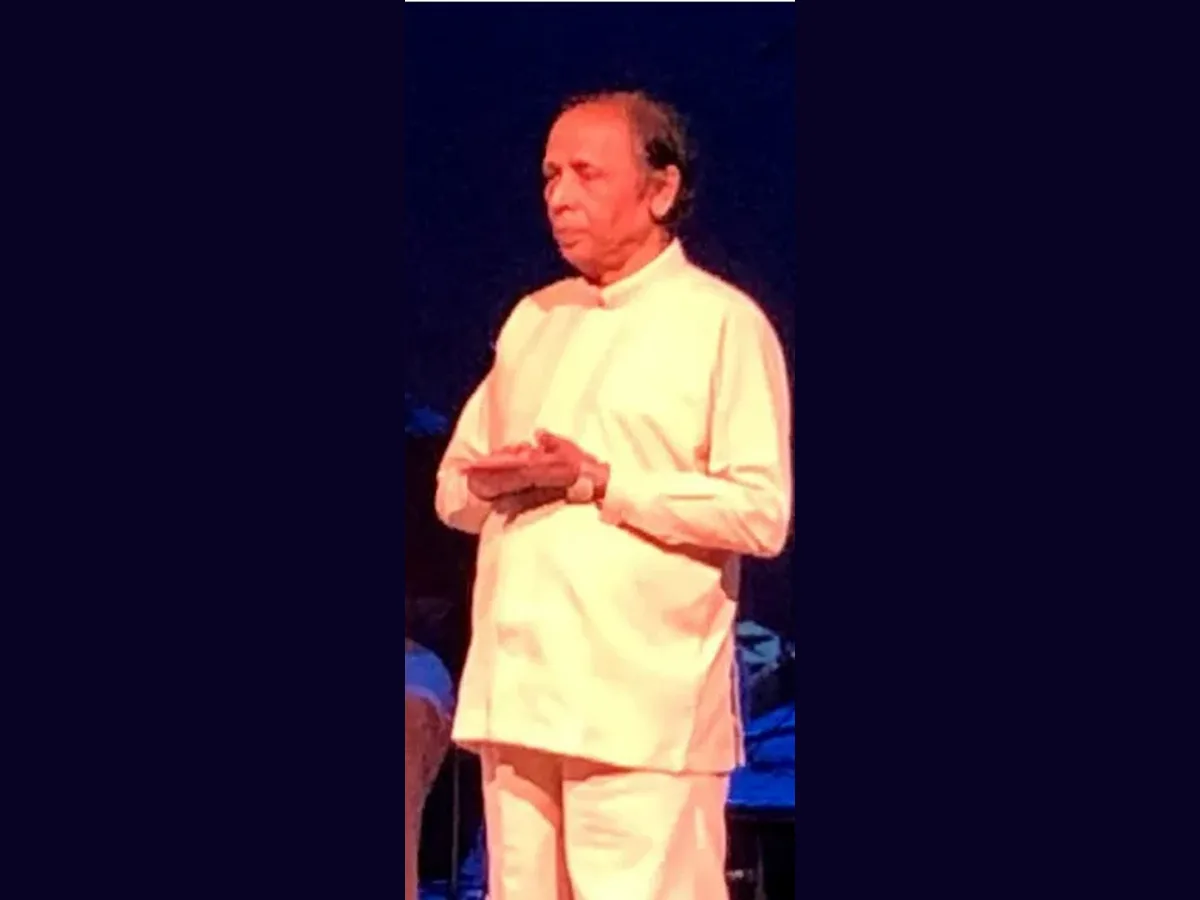
The song that started it was for children. In 1960 a young clerk at the Department of Broadcasting sang දස බිම්බර මාර සෙනග Dasa Bimbara Mara Senaga — the vast army of Mara, the demon host the Buddha faced down on the night of his enlightenment — on the radio programme හඳ මාමා Handa Mama, "Uncle Moon". It is a large subject for a children's slot, and that combination of the grand and the homely turns out to describe most of what Somathilaka Jayamaha did afterwards.
He was born in 1940 at Nakkawatta, a village near Kuliyapitiya in the coconut country of the North Western Province, and educated at Nakkawatta Mahinda Madhya Maha Vidyalaya. In 1959 he was appointed to what was then the Department of Broadcasting and News — the government office that ran Radio Ceylon and, with it, effectively decided which Sinhala songs the country got to hear. He was inside that building before he was twenty, and he stayed in music for the rest of his working life.
Getting graded
Radio in Ceylon did not simply broadcast singers; it ranked them. A panel sat, a singer sang, and a grade was assigned that determined how often you were recorded and what you were paid. The system made and unmade careers, and it is the reason so many Sinhala musicians of this generation describe their lives partly in terms of examinations.
Jayamaha sat the sarala gee — light song — examination held in 1979 and was placed in විශිෂ්ට ශ්රේණිය, the distinguished grade, the top rank available. He had prepared for it properly, studying under two demanding teachers: P. Dunstan de Silva, the Visharada whose own compositions turn up in his repertoire, and Sanath Nandasiri, the Sangeeth Nipun who was among the most influential classical musicians of the period. That grounding is audible. His singing is unhurried and clean, with none of the ornament-for-its-own-sake that a broadcast panel would have marked him down for.
Three jobs in one catalogue
What makes Jayamaha unusual is that he does three things across the same body of songs, and the credit lines shift from track to track.
The Sinhala Jukebox archive lists ninety-seven recordings by him. On a large share of them the tune is his own — Hiruta Hora, Yaalu Bala Sande, Manamala Girawu, Palingu Thalawaka, Surinduni Katharagama, Lassana Wanamal, Wilthere Piyum Pipe. On a smaller set he wrote the words as well as the melody, singing his own song end to end: දෙනුවර මින් පසු Denuwara Min Pasu, නවදැලි හේනක Nawadali Henaka, පියමන් කෙරුවෙමු Piyaman Keruwemu, වත්සුනු සුවඳින් Wathsunu Suwandin, සුනිල්වන් නුවන් යුග Sunilwan Nuwan Yuga and සැඳෑ අඳුර ලොව Sanda Andura Lowa. And on many more he is purely the voice, singing lyrics by the best-known writers of the era over other men's tunes.
The company he kept
The names around him are a fair index of where he sat in the profession. His lyricists include Sunil Ariyaratne, Sunil Sarath Perera, Kularatne Ariyawansa, Rathna Sri Wijesinghe, Mahinda Dissanayake and Wasantha Kumara Kobawaka; his composers include Rohana Weerasinghe, H. M. Jayawardena, Amarasiri Peiris and his own teacher Dunstan de Silva. නුග සෙවණක් Nuga Sewanak ("like the shade of a banyan") pairs a Sunil Ariyaratne lyric with a Jayamaha tune, and gave its name to an album on which he composed most of the music and wrote two of the songs outright. බුදු පියාණනේ Budu Piyanane ("O Buddha, father"), a devotional song from the same collection, is probably the one most often sung back to him.
Not everything in the catalogue is settled. Dasa Bimbara Mara Senaga, credited to him in this site's lyric database and by the chord archive Sinhala Song Book, appears on Sinhala Jukebox with the words attributed to Thalangama Premadasa and the tune to Vincent de Alwis. Sinhala song databases disagree with each other constantly on authorship, and this is a normal example rather than a scandal; it simply means the credit is not certain.
What is not known
This is an honest place to stop, because the record thins out fast. There is no English Wikipedia article on Somathilaka Jayamaha, no obituary, no long newspaper profile that survives online, and no interview in a reachable archive. The Sinhala Wikipedia entry is short and gives him no death date; nothing found while writing this suggested he had died, and he is treated here as living, but that is an absence of evidence rather than a confirmation.
Nor is there a reliable total for his output. The ninety-seven tracks on Sinhala Jukebox are what one archive happens to hold, not a discography, and the eight lyrics indexed by Sinhala Song Book are what one chord site happens to have transcribed. The real figure is certainly larger and cannot responsibly be guessed at.
What can be said is specific enough. A boy from a village in Kurunegala District joined the state broadcaster at nineteen, trained under two of the best teachers available to him, passed the hardest grading the system offered, and spent decades in a job most listeners never see — supplying the tunes, the words and often the voice for songs that went out under other people's names as often as his own. Sri Lankan music runs on people like this, and it records almost nothing about them.