
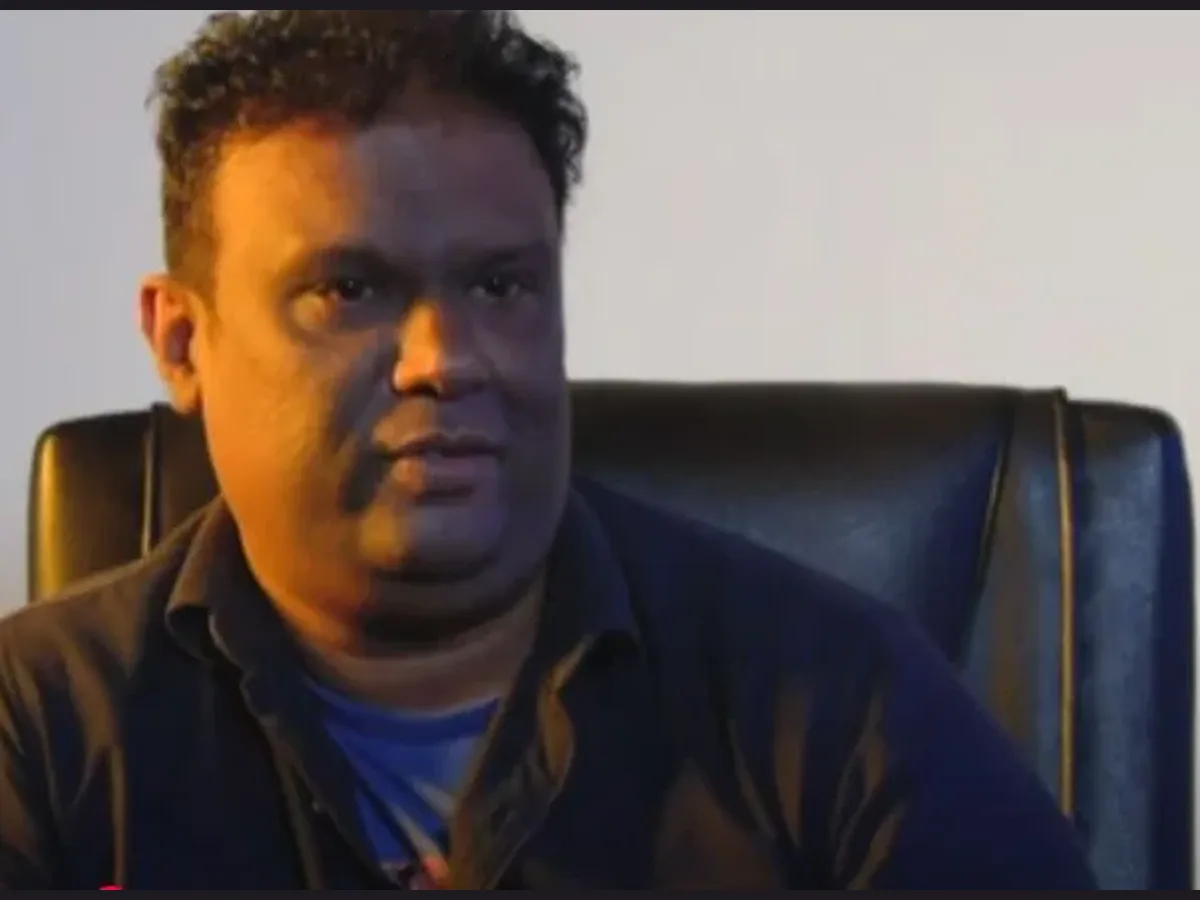
In the fifth form at St. Anthony's College, Katugastota, a Sinhala teacher told the class to take up a hobby — stamps, ornamental fish, anything. The boy who ended up writing some of the most-played Sinhala songs of the 2000s chose something odd: he started copying out the lyrics of English pop hits by hand. Madonna, Michael Jackson, whatever was on the cassettes. He kept a dictionary beside him for the words he did not know. Over about a decade the collection ran past five hundred songs, all in his own handwriting.
What is actually known
This article is short on purpose. Shehan Galahitiyawa is one of the most-recorded working lyricists in Sinhala popular music and one of the worst documented. There is no Wikipedia article about him in either language, no feature in any major Sri Lankan newspaper that could be found, and his own website no longer resolves. Essentially one biographical piece exists — a long profile by Sunil Thenabadu, written from Brisbane and published on the expatriate site eLanka — and everything personal below comes from it or from television interviews it quotes.
Even his name is unsettled. Lyric sites render the first name ශෙහාන්; the mathaka.org song database and some other lists render it ෂෙහාන්. No authoritative source settles which is correct, so both are recorded here rather than one being chosen silently.
Kandy
He grew up in Wattegedera, near Kandy. His father ran a motor garage locally known as Sunil Aiya's garage; his mother, a devoted H. R. Jothipala fan, kept the house full of cassettes. A neighbour was Sunil Siriwardena, father of the singer Madumadawa Aravinda, and when Siriwardena was on an SLBC programme the family were told in advance so they could listen. He went to kindergarten at St. Joseph's Balika Vidyalaya in Gampola and then to St. Anthony's, Katugastota — the same school as T. M. Jayaratne, Stanley Peiris and Rookantha Gunathilake — where by his own admission he was an indifferent student who got into concerts free with the help of the canteen owner. He watched Galaxy, Marians, Sunflower, Gypsies and Chitral's Friends play the halls around Gatambe and Menikhinna, and he says that hearing what those crowds responded to is the education that later paid for itself.
The song that opened the door
Colombo was hard. He boarded at the Fort station master's quarters, sold early mobile phones, lost the job, went home, trained as a cutter in a garment factory and rose to production assistant at a factory in Seeduwa on fifteen thousand rupees a month, then quit. He hung around Roshan de Silva's studio doing whatever small jobs he could with his friend Madhawa Hewawasam. He tracked down established lyricists — Vernon Perera, Sunil Perera, Hemasiri Halpita — and asked them what a song was worth; Halpita, charging five thousand rupees himself, told him to ask two and a half as a newcomer.
The break was Jeevithe Mal Amma Innakan — life is in flower while mother lives. Priyantha Nawalage of the Galaxy band set it, Hewawasam mixed it, and Galaxy carried it around the island. Songs about mothers had almost always been slow; he wrote his in a 6/8 dance metre, because bands play to a floor. The announcer Chaminda Wimalasena took to naming the lyricist from the stage, which is how the name got out at all.
Then a keyboard player passed on a message that Bathiya Jayakody wanted to see him, and he rode his motorbike to a studio on Kirimandala Mawatha. The work that came out of that association — including the Bathiya and Santhush tracks ලංකා මාතා Lanka Matha, ගගනේ සිංහ සේනා Gagane Singha Sena and රූ සරා Roo Sara — moved him into the centre of the commercial industry, and into writing advertising jingles as well.
The catalogue
What followed is a very modern kind of career: cassettes, band repertoire, advertisements, cricket anthems, film and — above all — television. He wrote for Derana's serials Deweni Inima, Sangeethe and Iskole, and for the Heily theme; some song indexes also list film credits for him, though in the eLanka profile he says his film work is modest and something he would like to do more of.
The songs that get named most often include ප්රාතිහාරී Prathihari (2021), sung by Supun Perera and produced by Saranga Dissanayake of Wayo; තරුමිනි ඔච්චම් පාවී Tharumini Ochcham Pawi, a duet for Raini Gunathilaka and Chinthy; ගිම්හාන කාලයේ Gimhana Kalaye for Sashika Nisansala; කෛලාශිනී Kailashini; පපරේ Papare for Ashanthi; and a long run of cassettes for Chamara Weerasinghe, among them දිවියම වාගේ Diviyama Wage. In 2021 he was one of three writers on Gammane, the Sinhala-Tamil crossover with ADK, Sahan Hasthi and Hirushi Jayasena that reworked the early-2000s hit "Cross Culture".
How many songs?
Here the sourcing collapses completely. The one profile that exists is titled "owns thirty thousand compositions"; its own text says "approximately three thousand songs"; and its closing paragraph says "over a 1000 songs". Three figures, one article, an order of magnitude between the highest and lowest. It also credits him with 946 gal ketu kavi — cart-driver's verses and folk-song forms. None of this is verifiable, and it should not be repeated as fact. What can be said honestly is that he has written for several hundred released recordings across roughly twenty-five years, which is enough.