
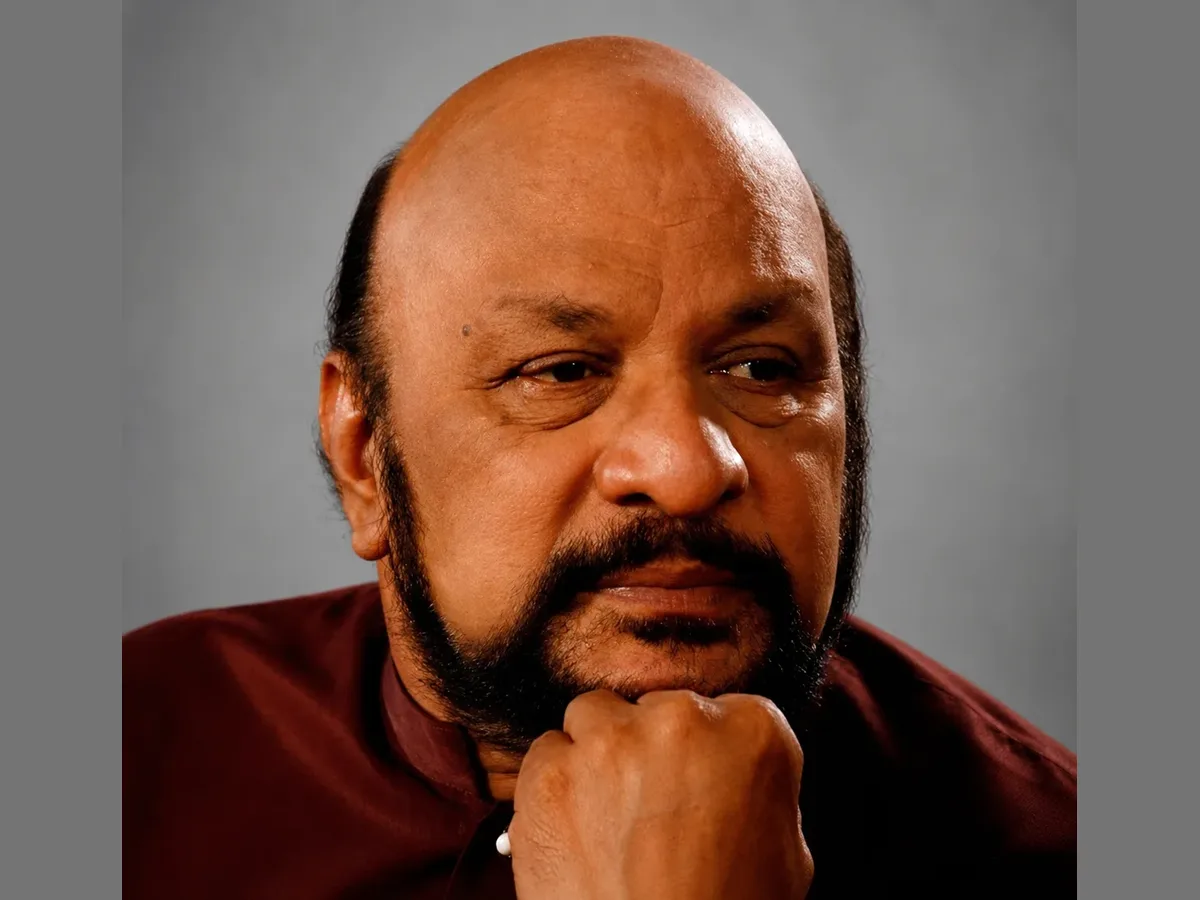
He was thirteen, and he was a runner. Short distances, mostly — the hundred metres, where he won school trophies — and a useful hand at elle, the village bat-and-ball game. Nothing about the boy from Gothatuwa in 1955 said that he would spend the next sixty-eight years in front of a microphone. But that was the year Sinhala radio put him on air for the first time, and the studio held him harder than the running track did.
Herath Mudiyanselage Sanath Nandasiri was born on 15 February 1942 in Gothatuwa, on the eastern edge of Colombo, the third child of a building contractor, H. M. William Perera, and his wife Dona Amalin Katugampola. He went to Gothatuwa Maha Vidyalaya, then to St. Matthew's College in Dematagoda, then to Mahabodhi Maha Vidyalaya, and later to Stafford College to work on his English. What he actually studied, though, was the building he kept walking into: Radio Ceylon.
An apprenticeship on air
Children who sang well were useful to a radio station in the 1950s, and the boy was passed from producer to producer. He worked in the orbit of Madawala S. Ratnayake — the scriptwriter who reviewed every song text before it went out and who, more than anyone, decided what sarala gee would sound like — and of Nanda Jayamanne, Karunaratne Abeysekera and Sanath Wimalaweera. It was an education you could not buy: the whole apparatus of Sinhala song being invented around him while he waited for his cue.
At seventeen he went to learn the tabla under D. R. Peiris, and was the first student to turn up at Peiris's new class in the YMBA hall at Borella. Peiris pulled him into radio and outdoor programmes and got him onto the monthly folk-singing broadcasts. Then, in 1960, he did what the serious ones did: he left for Lucknow and the Bhatkhande Music Institute, where the Sinhala musicians of two generations went to be finished properly.
His teachers there included the tabla master Ustad Ahmed Jan Thirakwa, along with G. N. Nattu, Ustad Mokshut Ali, Pandit Hari Shankar Misra and Ustad Rahimmuddeen Khan Daga. He was not only a student; songs he composed in India were broadcast on Lucknow radio. He came home in 1965 with a Hindustani training that would sit underneath everything he sang afterwards, however light the song looked on paper.
Gamey Kopi Kade
He rejoined radio, and in the 1970s the records started. In 1972 he recorded මහද වීණා Mahada Veena ("the veena of my heart") for the Sooriya label's album Songs and Rhythms of Sri Lanka. Premasiri Khemadasa composed two more for him in the same decade — "Sanda Balanna" and ගමේ කොපි කඩේ Gamey Kopi Kade ("the village coffee shop"), a song built out of ordinary morning gossip, which is exactly why it stuck.
In 1974 he built a solo concert around himself and called it Swarna Kundala. Solo concerts were still a fairly new idea in Sinhala music — Victor Ratnayake's Sa had opened the door only a few years earlier — and Swarna Kundala went on to be performed more than 250 times. The album of the same name followed in 1979, for Gemtone, carrying "Kisiwak Nokiyana" and "Egodaha Kandey". Three more albums for Singlanka in 1980 and 1981 brought "Eka Yayata Mal" and මම නම් ආසයි අහන්න නයනා Mama Nam Asai Ahanna Nayana.
The song list kept widening: බෝ මළුවේ මල් Bo Maluwe Mal ("flowers in the bo-tree courtyard"), written for him by Priyananda Wijesundara; මා හද අසපුව Ma Hada Asapuwa ("the hermitage of my heart"), to a Karunaratne Abeysekera lyric; මිහිරාවී Mihiravi; සීත රෑ යාමේ Seetha Re Yame ("in the cold night watch"). Kularatne Ariyawansa wrote for him too. He was a playback singer in more than thirty films — Ahas Gauwa, Duleeka, Sihina Lowak, Pembara Madhu, Senasuma among them — most memorably under Khemadasa's music direction, and he composed the scores for several films himself, including Ajasaththa (1981), Thunhiri Mal (1983) and Mihidum Salu (1985). He also wrote the music for Sandamalige Kathawa, described as the first television serial broadcast on Rupavahini.
Accounts of how many songs he recorded in all vary, and none of them is documented well enough to repeat as a number. What is documented is the shape of the career: six decades, radio and stage and film, with the classical training never quite out of earshot.
The other job
The half of his life that gets less attention is the teaching. He was posted to Uhana Maha Vidyalaya in Ampara in 1967. He applied for a university lectureship and was not even called for interview; it took until 1974, and the intervention of the former education minister I. M. R. A. Iriyagolle, for him to join the University of Kelaniya. He ran its music department from 1988 to 1992, and is described as the first Sri Lankan to take a first class in the Bhatkhande "Nipun" vocal examination, which he did in 1992.
In 1998 he opened his own school, Gandhari, teaching voice and tabla to the Bhatkhande syllabus alongside the school music curriculum for grades six to eleven. Somathilaka Jayamaha, himself a broadcaster-composer with a large catalogue, is among those who trained under him. A great deal of what a Sri Lankan music student learns today passes through people Nandasiri taught.
A household of singers
In 1967 he met the singer Malkanthi Peiris during a Vesak drama, Mara Parajaya; they married on 18 December 1971 and sang together for the rest of his life. Malkanthi's family is one of the significant musical dynasties of the island: her sisters Nirmala Ranatunga and Niranjala Sarojini are both singers — Niranjala married the musician Abeywardena Balasuriya — and her brother Manoj Peiris is a well-known tabla player. Their daughter Anuradha, born in 1974, is a musician too, and the concerts kept being named after her: Anuradha in 1982, Prathama Wasanthayai in 2015, and Du Anuradha — දූ අනුරාධා, "daughter Anuradha" — at the Nelum Pokuna theatre on 11 March 2018.
Chancellor
When W. D. Amaradeva died in November 2016, the chancellorship of the University of the Visual and Performing Arts fell vacant, and President Maithripala Sirisena appointed Nandasiri to it. He kept singing anyway; asked about it by Sarasaviya, his line was that a post as weighty as Mahameru would not make him resign from singing.
The honours arrived in the usual late cluster. A study of his work by Yapa Bandara Seneviratne was launched in Colombo in October 2017. In February 2018 the president handed him a special honorary award at a tribute concert, Ninnada 2018. In 2019 came the Janabhimani award, and Rasanandaya, a book collecting a hundred of his songs with their chords — a teacher's book, fittingly, rather than a memoir.
He died at his home in Colombo on 28 March 2023, aged 81. The obituaries called him one of the iconic voices of Sri Lankan music, which is true and slightly beside the point. He was one of the few who did both halves of the job: he made the songs, and then he made sure somebody else knew how.