
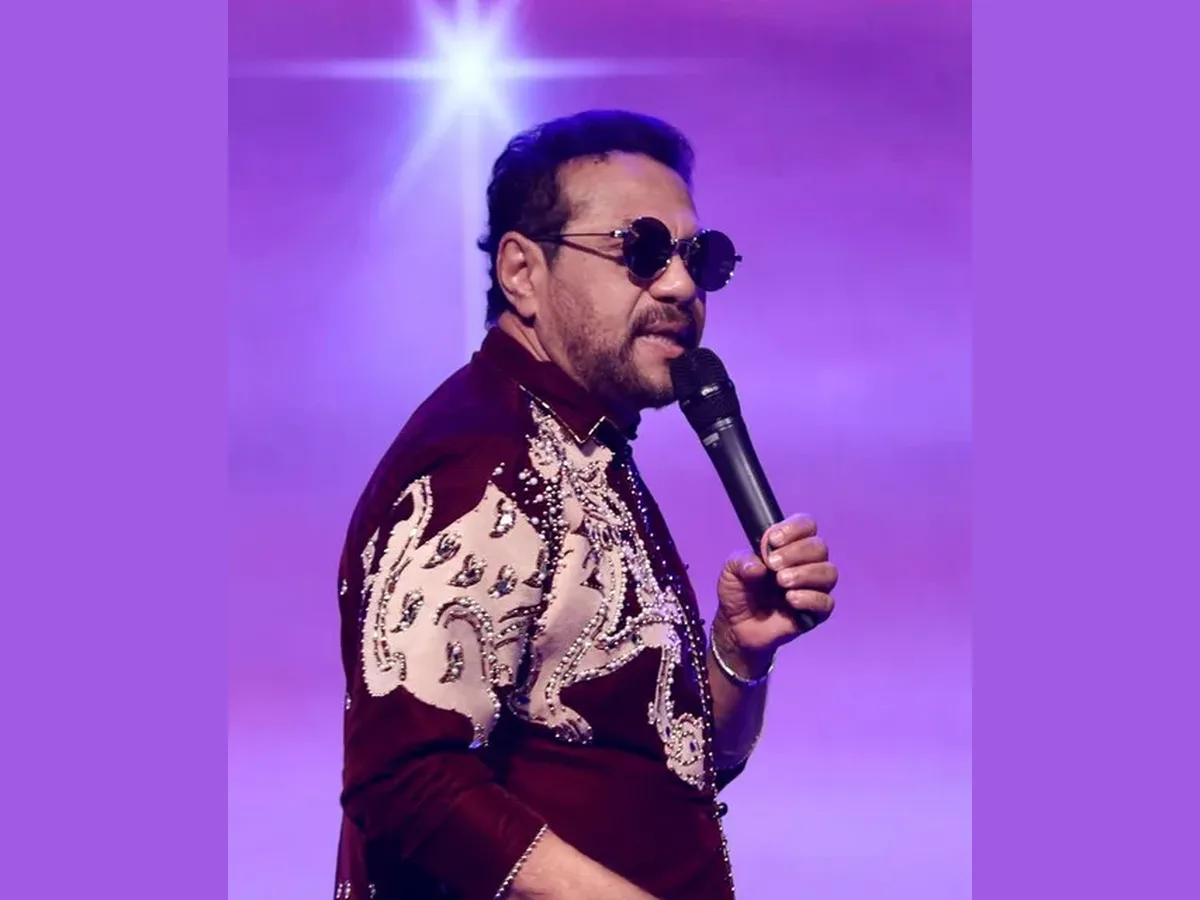
In 1985 a young composer in Colombo had a finished song called බඹර පහස Bambara Pahasa ("the touch of a bee"), a booked studio, and no singer. The vocalist he had lined up could not make the session and there was no time to find another. So he sang it himself. Rookantha Gunathilake had been writing music for other people since 1976; from that afternoon onwards he was a singer, and within a few years one of the most-heard voices in the country.
Kegalle, Kandy, and a piano teacher he did not like
Mario Glory Rookantha Goonatillake was born on 5 September 1959 in Kegalle, into a middle-class family, and was pushed towards music early — his parents sent him to a local teacher for keyboard lessons. He has said in interviews that the arrangement did not suit him: the teacher rapped him for using the wrong fingers and, more to the point, the boy could feel the frame closing around what he was allowed to play. He kept the instrument and dropped the lessons, and started working out his own songs in his own way.
He was schooled at St Mary's College, Kegalle and then at St Anthony's College, Kandy, where he had the considerable good luck to learn music from Stanley Peiris — one of the finest arrangers in Sinhala popular music — and from Cyril Brown. He finished his Advanced Levels even though he was already working in music.
The cassette years
Sri Lanka in the 1980s was a cassette country. Records had never been cheap, but a C-60 could be bought at a bus-stand kiosk, copied for a friend and played on a shop counter, and the artists who understood that format defined the decade. Gunathilake understood it completely. His first album, Adara Rekha, came out in 1983. Bambara Pahasa followed as a cassette in 1988 and became one of the era's landmark releases; Diganthaye came in 1992 and Charuka in 1997, named for his elder daughter. Sri Lankan sales figures from that period are rarely audited, but the Sinhala Wikipedia entry, drawing on the trade's own accounts, puts Bambara Pahasa above 150,000 copies and Diganthaye above 100,000 — extraordinary numbers for an island of that size.
The songs from those tapes are still standards. මේ දිගන්තයේ මල් වසන්තයේ Me Diganthaye Mal Wasanthaye, කලකට පස්සෙ Kalakata Passe ("after a long while"), උකුලට නාවත් Ukulata Nawath, සඟවන්න ඔය නිල් නුවන් Sangawanna Oya Nil Nuwan ("hide those blue eyes"), තරුමල් වගේ Tharu Mal Wage ("like a star-flower"), නිදි නැති රෑ යාමේ Nidi Nathi Ra Yame ("in the sleepless watch of the night") and සඳපාන වාගේ දිළෙන්නේ Sanda Pana Wage Dilenne are his. He is a Catholic, and the devotional songs — කියන්න ජේසුනි මා ඔබේද Kiyanna Jesuni Ma Obeda, ආදර මගේ ජේසුනි Adara Mage Jesuni — are part of the catalogue rather than a sideline.
Much of the work is a partnership. He is married to the singer and television actress Chandralekha Perera, and the Rookantha–Chandralekha duet was one of the fixed points of Sinhala pop for two decades: සිතින් සිනා සිසී Sithin Sina Sisi, සඳ පිණි දියේ Sanda Pini Diye, and මට මුළු ලොවම ඔබයි Mata Mulu Lowama Obai, composed by Rohana Weerasinghe to a Kularatne Ariyawansa lyric. Their daughters Raini Charuka and Windy have both become singers and record with him.
He also kept composing for others, and writing his own words. Asked by the Divaina to total it up, he answered that he had written about a hundred songs and sung about two hundred — an unusually modest and unusually specific figure in a field where artists are routinely credited with thousands.
His own concert series, Ru Sanda Rae, opened at the Elphinstone Theatre in Colombo in February 1993 and became the vehicle for the rest of his career, staged several hundred times across Europe, North America, Australasia and the Gulf. A stadium show with Chandralekha at Sugathadasa drew a crowd in the tens of thousands; sources give its date variously as 2006 and 2009.
Mattegoda
At the end of 2000 the couple were headline attractions at United National Party rallies during the general election campaign, and their popularity made them a target. In December 2000 a group came for them at their home in Mattegoda; a friend inside the government of the day tipped Gunathilake off and the family fled, leaving a meal on the table and the piano lid up.
There was no warning the second time. On 26 January 2001 — some accounts, including the English Wikipedia, date it a year earlier, but the contemporaneous Sunday Times reporting and the photographs of the couple's press conference are from 2001 — armed men forced their way into the house. Gunathilake, Chandralekha Perera, their two young daughters and Chandralekha's mother were inside. The men held pistols to their heads, cut off the couple's hair, doused them in petrol, took cash and jewellery and drove off in the family's jeep. The couple gave a press conference the next day; the photographs from it were on front pages across the country.
More than twelve years later, on 1 August 2013, the Panadura High Court convicted ten former members of the Presidential Security Division who had served under President Chandrika Bandaranaike Kumaratunga, and sentenced each of them to four and a half years' imprisonment. Gunathilake told reporters afterwards that he forgave the men, that he respected the ruling, and that he did not believe the people who ordered the attack had been touched by it; he later wrote to President Mahinda Rajapaksa saying he had no objection to a pardon, and the convicted men were released in 2014.
Two things are usually lost when this story is retold. The first is that it was an attack on both of them — Chandralekha Perera was assaulted alongside her husband, and she was among the artists behind Artists Against Violence, formed as attacks and threats against performers who backed the opposition became a pattern. The second is what followed: the family left Sri Lanka and lived in the United States for years, which took one of the country's biggest live acts off its stages for most of a decade.
Coming back
Gunathilake returned to Sri Lanka in 2018 and resumed performing. He has sat on the judging panels of the big television talent shows — sources name both Sirasa Superstar and, in 2019, Hiru Star — where the format puts a veteran in front of teenagers who were not born when Bambara Pahasa was recorded. In 2019 he also entered party politics, appointed United National Party organiser for the Dambadeniya electorate.
He is best described as a self-taught musician who arrived at the right moment for the technology of his time and had the songs ready when it came. The cassette gave him a national audience without a record label's permission; the voice, which is light and unhurried and sits low in its range, did the rest.