
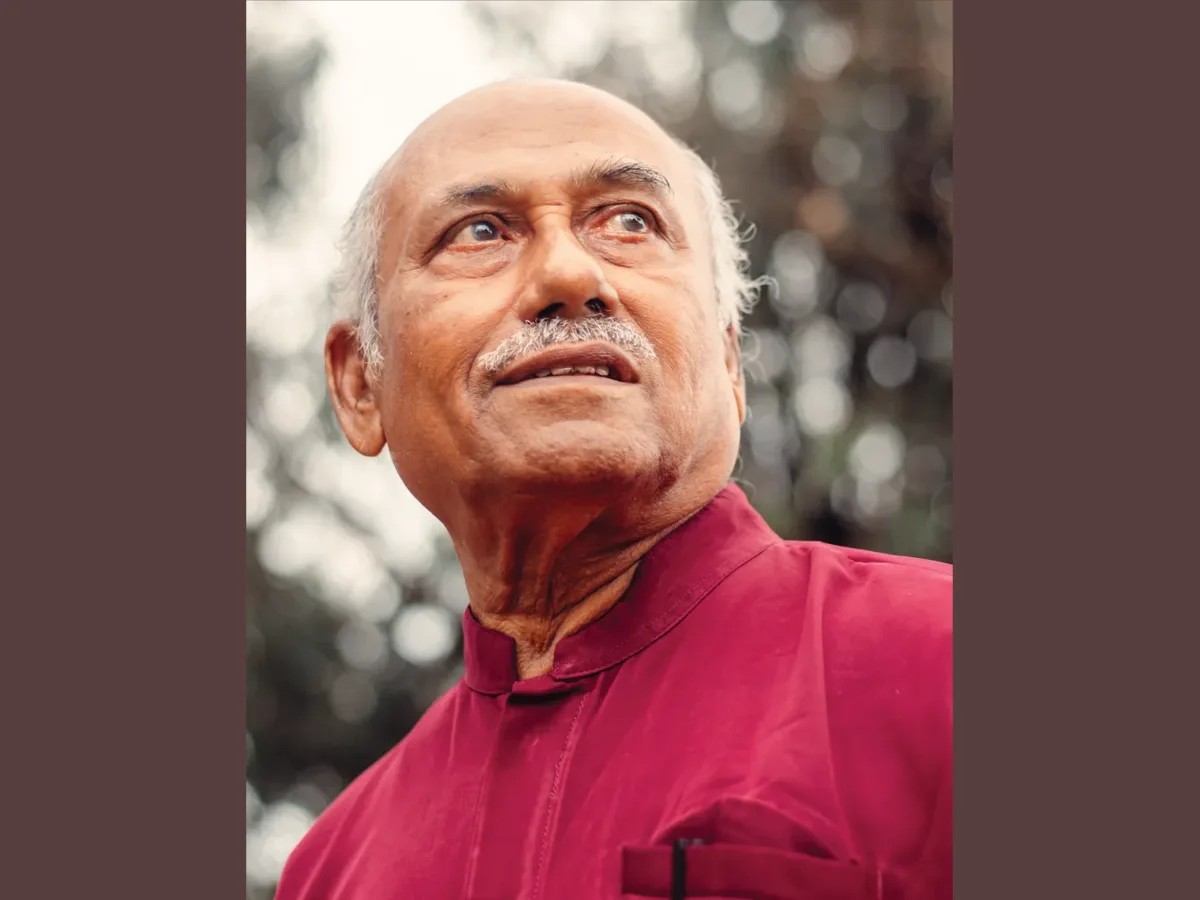
In 1956 Ediriweera Sarachchandra put on Maname and changed Sinhala theatre. Somewhere in the pit of that production, playing the බටනළාව batanalawa, the bamboo flute, was a young man who had just been appointed a government dance teacher and who had come to Colombo from a village on the Horana–Padukka road. He was there as a musician for hire. He stayed for seventy years, and by the end of them he had done nearly every job the Sinhala performing arts have: singer, lyricist, composer, dancer, actor, playwright, teacher, university lecturer, folklorist and, in his eighties, encyclopedist.
Uduwa
Rohana Beddage was born on 27 October 1935 in Uduwa, near Horana, the fourth of five children of a farmer, Beddage Nomis Singho. His father died when he was seven. He went to the village school at Uduwa, then in 1948 to Taxila Central College in Horana, where he finished his education in English and, in his last years there, began learning dance. He went on to the Heywood art institute in Colombo and trained as a Kandyan dancer — "I am a dancer by profession," he said in a 2007 interview. "Kandyan dance is what I taught."
He was appointed a government dance teacher in 1956 and taught in schools across the country for the next three decades. Music and singing, he insisted, were things he did besides his job. Accounts differ on when he left the school service: his own site says he retired as an Assistant Director of Education in 1986 and moved to teaching folk music at the Institute of Aesthetic Studies attached to the University of Kelaniya, while the Sinhala Wikipedia article has him working as an assistant director of education until 1992.
"Who's that?"
The song that made him a singer was මගේ රත්තරන් හෙලේනා Mage Raththaran Helena, "my golden Helena". He wrote and sang it around 1968 on a programme run by W. B. Makuloluwa, the composer and collector who had spent his life arguing that Sinhala song should be built from Sinhala village music rather than from North Indian raga. In the recording, the interjection "කව්ද?" — "who's that?" — is sung by T. M. Jayaratne, who happened to be on the same programme. It was not put on tape until 1974, for Sandella, made by the Sri Lanka Broadcasting Corporation's newly established Music Research Unit; Beddage's own account credits C. D. S. Kulatilake with inviting him to bring compositions to the unit's Paryeshana Gee ("research songs") programme.
Helena went past the kind of song that then existed, and after it came a long run built the same way — a village form first, a song second. කන්දේ ලන්දේ ගඟුලැල්ලේ Kande Lande Gangulalle, කොස්වතු කන්දේ Koswathu Kande, මල්සරා බැල්ම හෙළා Malsara Balma Hela, සකිය සගව්වට Sakiya Sagawwata, දොළොස් මහක් Dolos Mahak. What he drew on was the working and ritual verse of the villages — the seepada quatrain, the onchili varam sung on swings at New Year, the goyam kavi sung while reaping paddy, the karatta kavi of cart drivers. සසඳ Sasanda he built out of karatta kavi. රාජා ඕ මංගලියා Raja O Mangaliya, asked in the 2007 interview how he would classify its rhythm, he traced to a Vedda song source — "I developed it, and released it as a composition."
Around 1982 came the mamai-benai songs, the uncle-and-nephew duets with Bandula Wijeweera that made him genuinely popular: මගෙ සුදු බෑණන්ඩිට Mage Sudu Benandita, කලියුග කාලෙට උපන්න Kaliyuga Kaleta Upanna, දන්නතරම් පද කස්තිරම් Dannatharam Pada Kasthiram, පුල්ලි ගොනා ගෙට පැනලා Pulli Gona Geta Panela. The Sinhala Wikipedia article says the Mamai Benai stage show was performed over five hundred times at home and abroad.
Stage, screen, and a grievance
He joined Dayananda Gunawardana's Gajaman Puwatha in 1974 and afterwards directed the music and dance for Gunawardana's Jasaya saha Lenchina, Madhura Javanika and Ananda Javanika, and wrote music for Jayalath Manoratne's Andarela among others. He wrote and directed his own plays — Balal Sasthare, Alakalanchiya, Galvehi, Ralahami — and won best-music awards for Kontha Nona, Parassa, Madhura Javanika, Mee Pura Wasiyo and Andarela. His first television role came in 1982 in Palingu Menike, a part that asked for a man who could sing, dance, chant, carve and work a paddy field; Kande Gedara, Ves Thattuwa, Niyan Ukusso and Irata Handana Mal followed, and later films including Uppalawanna and Vaishnavee.
He is unusually blunt about what the cassette trade did to his catalogue. Traders would record him singing to his own drums, he said in 2007, and afterwards replace the backing with Western instruments — the nawa ridma, "new rhythm", fashion. "I agreed on a verbal promise that my songs would not be harmed. But there was no such clause in the written contract, so I could do nothing." Asked about rap versions of old Sinhala songs, he was equally direct: you do not need to rap them to enjoy them; it happens because traders think it will make more money.
Writing it down
The other half of his life is on paper. His research book සිංහල සංගීත ශෛලිය Sinhala Sangeetha Shailiya, on the underlying principles of Sinhala folk music, was reprinted by the Department of Cultural Affairs and recommended as a handbook for university students. A second research volume works through the note-systems of traditional Sinhala music. Alongside those are collections of stage scripts, stories and folk verse — Gammane Upan Geetha, Andara Watiya, Alakalanchiya, Ralahami, Shrungara Seepada, Raban Sural. In June 2025 he launched සිංහල පිරුළු කෝෂය Sinhala Pirulu Koshaya, an encyclopedia of Sinhala proverbial sayings, at the Sunethradevi Pirivena in Pepiliyana.
He taught folk music at the Institute of Aesthetic Studies and later as an external lecturer at the University of the Visual and Performing Arts and at the University of Colombo's Sripali campus, and he says the handful of people now teaching folk music in Sri Lankan universities are all his students. He has been chairman of the folk music sub-committee of the Department of Cultural Affairs and, in 2020, chairman of the Sri Lanka Arts Council; he served as Sri Lanka's High Commissioner to the Maldives between 2020 and 2021. He holds the title Kala Suri — sources give 2003 for it — and a state Best Musician award, dated 1986 by the Sinhala Wikipedia article and 1988 by his own website. On 21 January 2022 the University of the Visual and Performing Arts conferred a doctorate on him.
Asked in 2007 whether any of his students could carry the work on, he answered without false modesty and without vanity: they hold the same views on folk music that he does, "but making another Rohana Beddage, someone who actually sings the way I do — that is a hard job."