
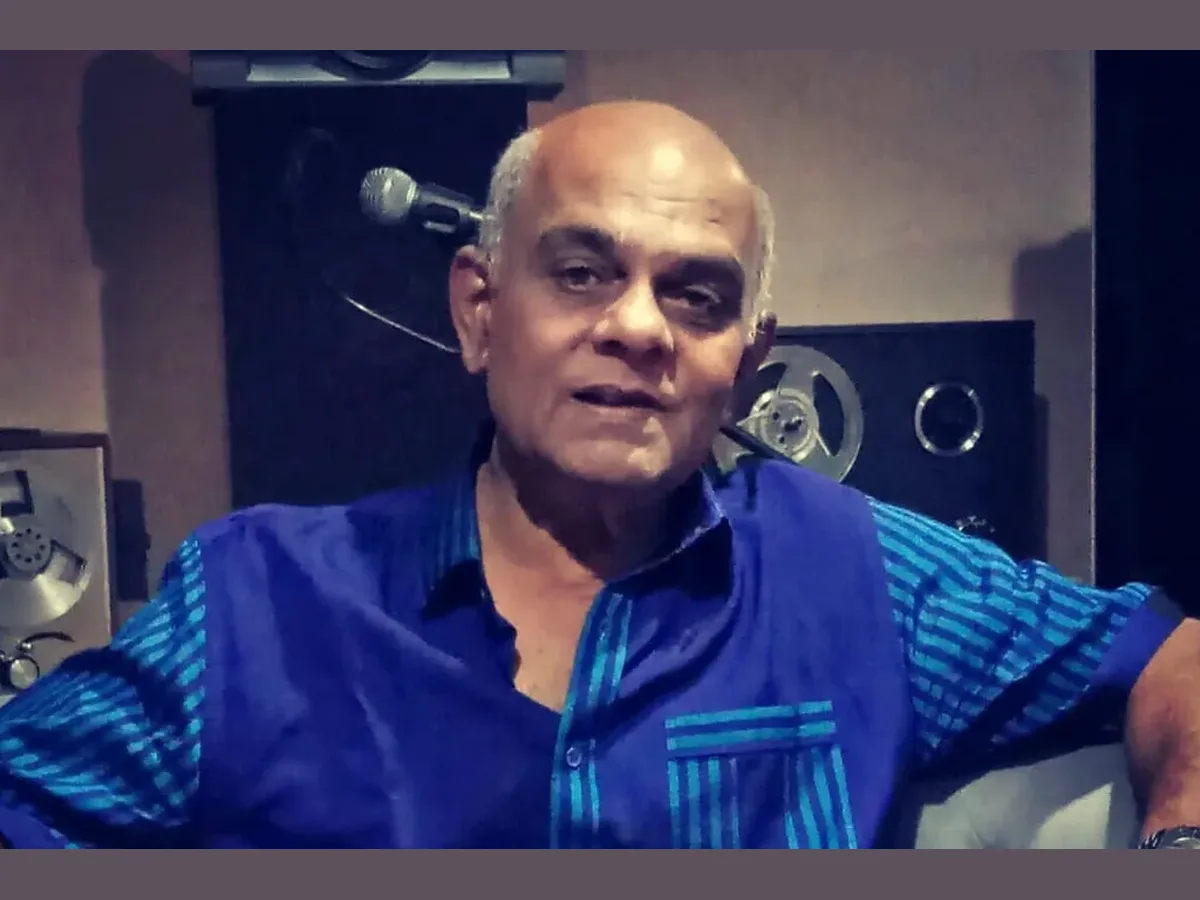
Sinhala cinema papers used to print the home addresses of singers. A schoolboy at Kalutara Tissa Vidyalaya noticed this, and started posting his lyrics to them — one after another, to anybody whose address he could find, sometimes borrowing the stamp money from friends. Nothing came back. Long enough went by that the joke around the school was the boy who wrote songs nobody sang.
Then a postcard arrived. Dear younger brother — my wife Lalani has sung one of your songs. It was from the singer Athula Somasiri, and it gave the date and the time the song would go out on the commercial service.
He missed it. He had gone to a shop with a friend, and when the moment came somebody switched the radio over to the news. He has never been able to remember a single word of the first song of his that was ever broadcast.
Kalutara, and a habit of reading
Priyananda Wijesundara has no English Wikipedia article and very little in print about his early life; almost everything below comes from a single long interview he gave the Sinhala film paper Sarasaviya on one of his visits home, and from the Sinhala Wikipedia entry that draws on it. His birth year is not recorded in any source found.
He was at Kalutara Tissa Vidyalaya and then Piliyandala Madhya Maha Vidyalaya, where he studied science subjects and wrote poetry on the side. There was scarcely an issue of the school magazine or the wall newspaper without a Priyananda poem in it, and they were formal poems — traditional Sinhala verse, keeping the elisamaya, the end-rhyme across all four lines of the quatrain. That grounding matters. A lyricist who has served an apprenticeship in strict verse can do things with a line that a lyricist who started with pop songs cannot.
The poets he read were the ones a serious Sinhala teenager of that generation read: P. B. Alwis Perera, Somaweera Chandrasiri, Sri Chandraratne Manawasinghe, Mahagama Sekera, Madawala S. Ratnayake, Karunaratne Abeysekara. "My big hobby in those days was reading and listening to songs," he told Sarasaviya. "I read everything that came to hand. That is where I learned the language — learned, mostly, how words are used."
An uncle eventually got him through the door of Radio Ceylon's Saraswathi Mandapaya, the programme through which most Sinhala lyricists of the period were introduced to the industry. There he met Premakeerthi de Alwis and Karunaratne Abeysekara. "It was that company," he said, "that made me want to be a lyricist."
Daasa Nilupul Thema
He arrived properly with a single song, and it was somebody else's first song too.
දෑස නිලුපුල් තෙමා Daasa Nilupul Thema — "eyes like blue water lilies, wet, scattering a string of pearl tears, breath choking in her throat, sobbing, O flower-garlanded one" — was Gunadasa Kapuge's first song. It made the singer, and it made the lyricist, at the same moment. Kapuge would go on to become the most politically charged voice in Sinhala music; Wijesundara wrote the words he stepped out with.
After that the commissions came from everywhere. Professor Sanath Nandasiri sang බෝ මළුවේ මල් සුවඳක පැටලී Bo Maluwe Mal Suwandaka Patali ("caught in the scent of flowers in the bo-tree courtyard"), to Nandasiri's own melody. Chandralekha Perera sang two that became permanent fixtures, both with music by Saman Kumbukage: මේ පාළු සීත රාත්රියේ Me Palu Seetha Rathriye — "on this desolate cold night, tell me in secret what love is" — and මේ උයන් කොනේ Me Uyan Kone. Amarasiri Peiris sang සඳුද අවදියෙන් Sanduda Awadiyen, setting it himself. Kamal Chithrasena sang කෙලෙසද කිව මැන Kelesada Kiwa Mana, music by Damitha Ayodya; Tudor Jayashantha sang මගෙ දෑසෙ කඳුළු Mage Dase Kandulu, music by Ranjith Perera; Asanga Priyamantha Peiris sang Senehasakata Aruthak; Waradatta Aravinda sang Mata Aradhanawak Kaladho.
The figure attached to his name is close to two thousand songs. That number comes from the Sinhala Wikipedia entry and from the Sarasaviya interview, and it should be read as the profession's estimate rather than a count — output totals in Sinhala music are notoriously unreliable, and he himself waved the arithmetic away. "I have honestly never had any wish to increase the number of my songs," he said. "The only wish is to leave behind a good creation."
Teacher, announcer, and then away
Two things about him are routinely dropped from the short profiles. He was a schoolteacher — by the Sarasaviya writer's account, a teacher to thousands of children. And he was a broadcaster, an announcer with a following of his own, which is a different relationship to a Sinhala audience than writing words for other people to sing.
In October 1995 he left Sri Lanka. He has lived in New Zealand ever since, coming back roughly once a year. He gave up teaching there, he said, because the relationship between teacher and student runs differently in the two cultures and he could not work inside the difference. So he went into television: first with a New Zealand broadcaster, then, after an invitation from an Indian running a private service closer to his own cultural material, into work he is still doing on contract. Alongside it he and his wife Sandhya — the first listener of every song he writes — run Sinhala music and dance programmes for the community there.
A verdict, and a departure
He is not gentle about what he came back to find. Asked who he writes for now, his answer was blunt: "Myself. If I am not satisfied inside the environment that exists, I cannot write songs." Of the contemporary Sinhala song industry he said flatly that he can see in it "neither song nor music," and that he cannot be in such a place.
There is a version of this story where an expatriate artist is simply sour about home. But the details of his own beginning cut against it: the boy borrowing stamp money to post lyrics to strangers, the postcard, the radio switched to the news. He came into the industry through a system — cinema papers that printed addresses, a radio programme that let unknowns in, senior lyricists who talked to juniors — and that system is what he thinks has gone. His last word in the interview was not about Sri Lanka at all: he expects that within a few years the better Sinhala audience will be the one he is building among Sri Lankans abroad.