
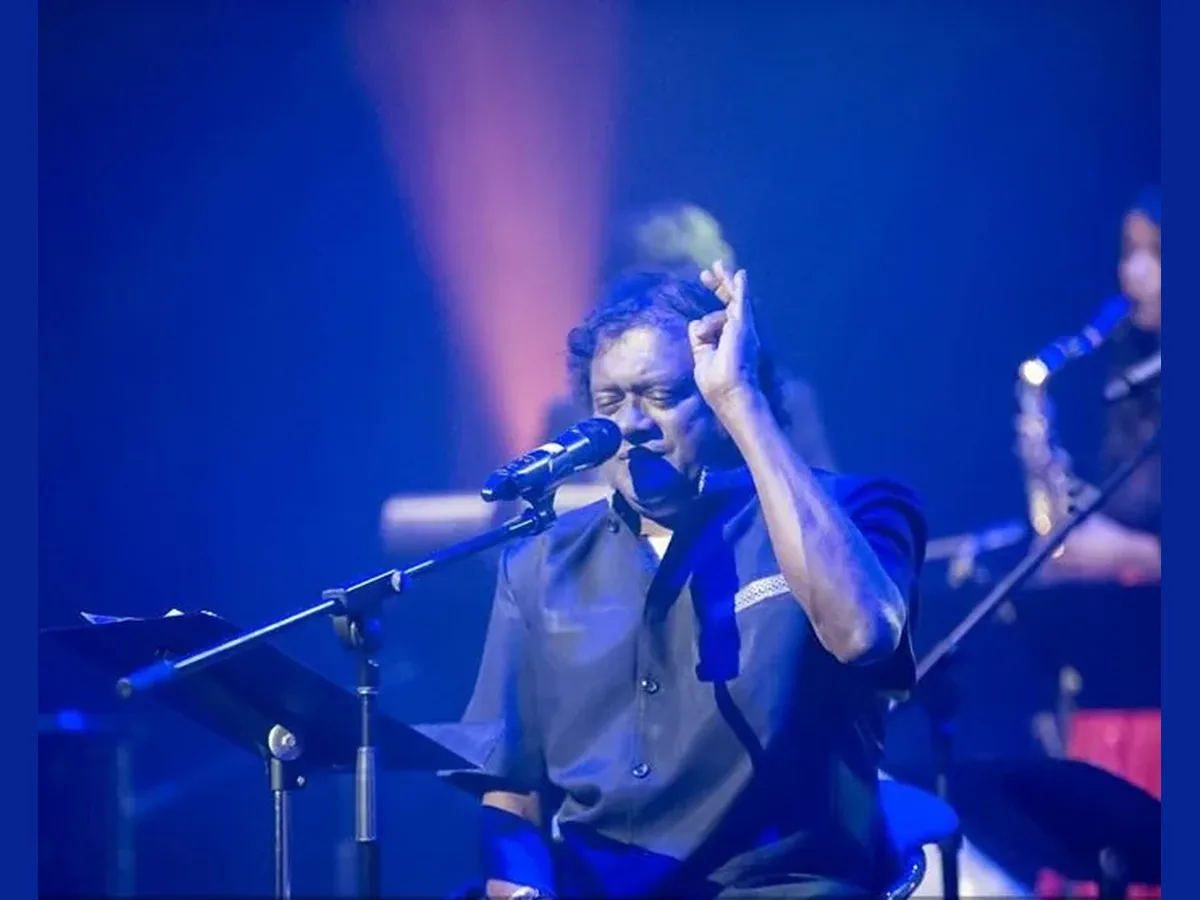
In 1972 the Sri Lanka Broadcasting Corporation put out four songs by a schoolteacher nobody had heard of. සරතැස නිවා Sarathasa Niwa, මට වාසනා Mata Wasana, හෙට දවසේ Heta Dawase and අඳුර අඳුර මගේ Andura Andura Mage — that was the lot. By the end of the month he was famous.
Overnight success stories in Sinhala music are usually retold with a shrug, because the fame rarely lasts. This one lasted fifty-two years. Priya Suriyasena went on to record something in the region of seven hundred songs, to compose for other singers, to run a cassette label, to sell out halls in forty-odd countries, and to be still touring in 2017 at seventy-three. He was one of the two or three voices that define what the 1970s sounded like in Sinhala popular song.
Nattandiya
He was born Madawala Liyanage Don Sarathchandra Priyadarshi Suriyasena Liyanage on 27 October 1944 in Nattandiya, in the Puttalam district — the only son in a family of four. His father, Jamis Appuhami, was a poet, and Suriyasena always credited him with the start of it. (Sinhala Wikipedia gives his birth year as 1952, which cannot be reconciled with every other source and with his reported age of eighty at death; 1944 is the date to use.)
He went to Nattandiya Primary and then Madampe Central College, where a music master entered him for a sarala gee singing competition at the Broadcasting Corporation. That was the moment, as he told the Sunday Observer years later: "That's what inspired me to sing in this genre. After that, I continued to pursue it with passion." Two schoolmasters, D. V. L. Mahipala and B. Veedagama, worked on his voice. He won the island-wide UNESCO talent competition.
Between 1968 and 1971 he sat the external examinations of the government music college at Heywood — today the University of the Visual and Performing Arts — and took a diploma. Before the music paid he worked as a cashier at the Yatakalanapattuwa co-operative wholesale in Nattandiya. Then he taught: at Nattandiya Katuneriya Maha Vidyalaya, at Kelaniya Gurukula from 1971, at Sri Vijayarama, at Kalubowila, and finally for about ten years at Dehiwala Central College, before the singing left no room for the timetable and he resigned.
Four songs, and a name
The 1972 SLBC recordings that made him were preceded by one he made in 1968, අඳුර අඳුර මගේ Andura Andura Mage — "my darkness, my darkness" — which is variously described as his first recorded song and as one of the famous four. He passed the grading panel as an A-grade radio singer in the same period.
It was at this point that Priyadarshi became Priya. He shortened it, by his own account, after the Sri Lankan motor racing champion Priya Munasinghe.
His first cassette came out on Vijaya Ramanayake's Tharanga label and is said to have been the second cassette ever produced in Sri Lanka — a claim worth holding loosely, but it places him right at the front of the format that would rearrange the whole industry in the following decade.
Premakeerthi's voice
The single most important relationship of his career was with the lyricist Premakeerthi de Alwis. The two were close friends through the 1970s, and an extraordinary proportion of the Suriyasena songs people still request were Premakeerthi's words with Suriyasena's own melody: Sarathasa Niwa, හෙට දවසේ අප දෙදෙනා Heta Dawase Apa Dedena, ආදරණීය නේරංජනා Adaraneeya Neranjana, එකම වීදියේ දෙතුන් වතාවක් Ekama Veediye Dethun Wathawak, රටකින් එහා ඉගිලී Ratakin Eha Igili ("flown away beyond the country"), තුන් යමේ රෑ Thun Yame Ra, ඔබ කඳුලේ උපතයි Oba Kandule Upathai.
Other music directors took him too: Lal Thenabadu, Sarath Dassanayake, Stanley Peiris, Sarath de Alwis, Clarence Wijewardena and Ranjith Perera all wrote for his voice. Wijewardena gave him ඈත රන් විමන් තුළින් Aetha Ran Viman Thulin ("from the golden mansions far away") and හිරුද මුවා වී Hiruda Muwa Wee. He sang duets with Victor Ratnayake, Latha Walpola, Chandralekha Perera and Malkanthi Nandasiri.
And he composed for others, including H. R. Jothipala, Milton Mallawarachchi, Mervin Perera and Anton Senanayake, and wrote the well-known Christian baila to St Anthony that Anton Jones sang.
His biggest hit of the 1980s, සුදු පරවි රෑන සේ Sudu Paravi Rena Se ("like a flock of white doves"), also brought him his one brush with the state: for a period the government stopped the song being broadcast on radio. The Sarasaviya interview in which he recounts this does not explain why, and no other account found says either.
The film songs, the cassettes, the tours
He was never primarily a playback singer — around ten film tracks in total, by the Sunday Observer's count — and he eventually gave it up altogether to concentrate on the stage. But two of them stuck. බිඳු බිඳු කඳුළු ගලා Bindu Bindu Kandulu Gala, a duet with Shyami Fonseka for Mal Kekulu, was Sarath Dassanayake's music. And කැන්දන් යන්නම් රන් මල් මාලා Kandan Yannam Ran Mal Mala, sung with Milton Mallawarachchi for Sena Samarasinghe's Aethin Aethata, won a Sarasaviya award and has never gone away. Accounts of the film's date hover around 1984.
In the early 1990s he opened the Luckshitha Trade Centre and moved into cassette production, releasing M. S. Fernando, Punsiri Soysa, H. R. Jothipala and Champa Kalhari. In 1996 the album Sunflowers with Priya — his voice fronting a live band — put him back at the top of the sales charts, and the Sunflowers format ran for years afterwards.
He first went abroad in 1978, to Singapore, with Nanda Malini, Sanath Nandasiri and Malkanthi Nandasiri, and after that toured continuously wherever there were Sri Lankans: the United States, Canada, Europe, the Middle East, Japan, Australia. In 2006 he returned to the charts sideways, when Ajith Bandara won the first Sirasa Superstar singing his songs.
The voice
He married Thamara Kumari Weerasinghe, a music teacher who had studied alongside him at Heywood; sources give the year as either 1972 or 1978. They had a son and three daughters. Their son Luckshitha, taught music by Lionel Ranwala, went on to a doctorate at Stanford and a career as an engineer in the United States, and sings his father's songs.
Priya Suriyasena died on the morning of 24 December 2024 at the Colombo National Hospital, aged eighty, and was cremated at Kanatte.
What people describe when they describe his singing is control. No huskiness, no theatrical break in the voice, no scooping up to a note: a clean, centred tone, a very accurate ear, and a mixed register that moved between chest and head so smoothly that listeners did not notice the seam. He used vibrato sparingly and put it exactly where it belonged. He stood straight and delivered the song. In a genre where feeling is often signalled by roughening the voice, he got everything he needed out of getting it right.