
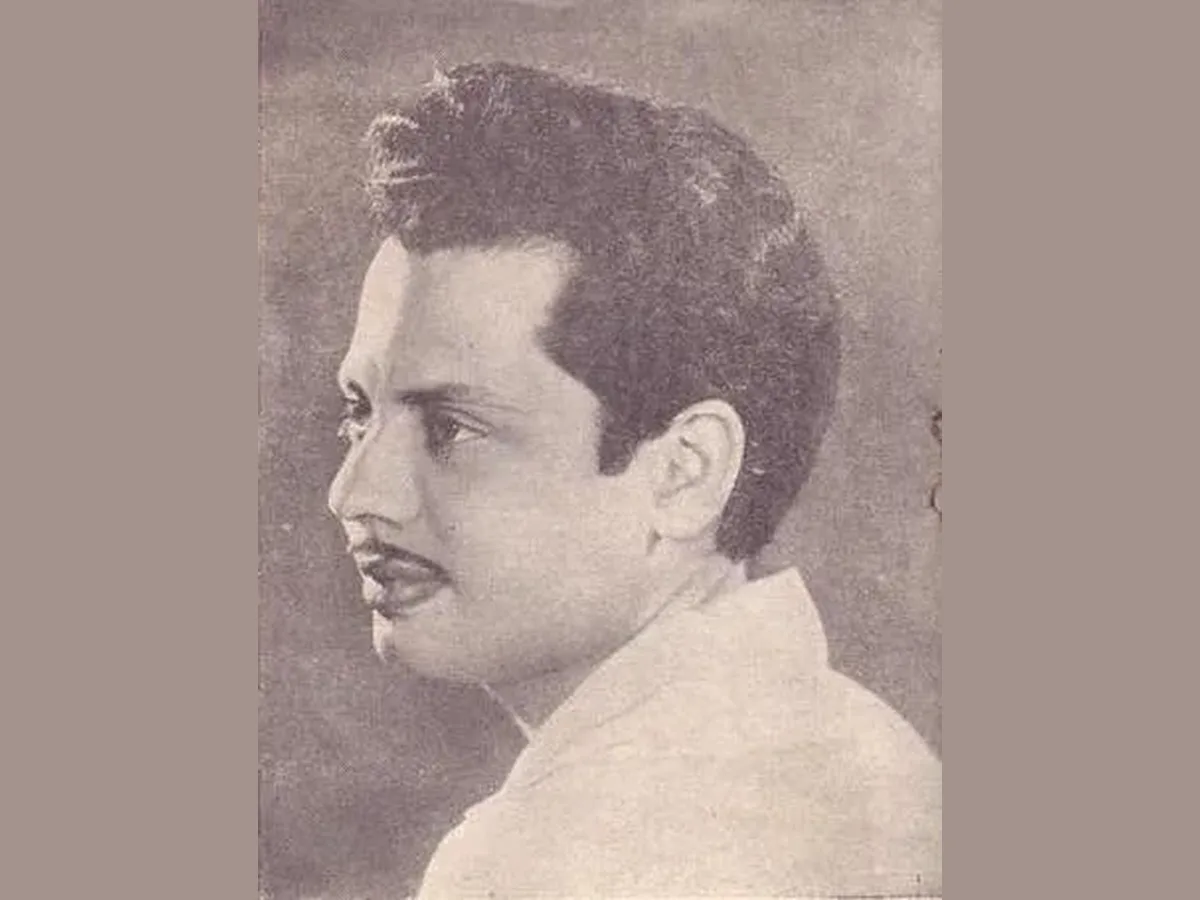
In 1979, on the stage of the John de Silva Memorial Theatre in Colombo, a music teacher from Gampaha unveiled an instrument that did not exist anywhere else in the world. He had been working on it, on and off, for eighteen years. It had strings, and it was meant to gather into one body the voices of the sitar, the Hawaiian guitar, the sarod, the santoor, the harp and the gottuvadyam, so that a single player could give a whole recital alone. He called it the Soothar. Two years later, on the advice of visiting Indian musicians, he renamed it the ශ්රී වීණා Sree Veena. He went on tinkering with it until 1994.
A theatre company in the front room
Algama Koralalage Lionel Kumaradasa Perera was born on 24 March 1935 at Brandiamulla in Gampaha. His father, Jinadasa Perera, was a landowner and trader with money enough to indulge an unusual hobby: he and Lionel's uncle ran an amateur theatre company, and rehearsals happened in the family house most evenings. A boy growing up in that room heard a great deal of music before he ever studied any.
He went first to the church school at Brandiamulla and then to Veyangoda Central College. His first music teacher was T. N. Silva; while still at school he began learning the sitar from the veteran musician Edwin Samaradiwakara. The sitar stayed his principal instrument, but he collected others compulsively — veena, sarod, harmonium, mandolin, guitar, esraj, santoor, violin — a habit that would eventually turn into the impulse to build one.
Santiniketan, and one claim that cannot be true
In 1955 his father sent him to Visva-Bharati, Rabindranath Tagore's university at Santiniketan in West Bengal, to take a degree in music. He learned Bengali and Hindustani music there, joined the university's broadcasting ensemble as an instrumentalist, and between 1955 and 1959 played classical and jazz concerts and ballet dates in New Delhi, Calcutta, Bombay, Benares, Jaipur and in Pakistan.
One detail repeated in several accounts of his life, including the English Wikipedia entry, is that he studied sitar "under Ravi Shankar and Rabindranath Tagore". Tagore died in 1941, fourteen years before Algama arrived. What is defensible is that he studied at the institution Tagore founded, in the tradition Tagore shaped — which is what the Sinhala obituaries generally say, and which is remarkable enough.
Radio Ceylon, Chitrasena, and thirty years at Thurstan
Back in Ceylon he fell in with the musician W. Chularatna and, under Chularatna and Samaradiwakara, joined the Radio Ceylon band. Living at the Chitrasena Art Institute in Kollupitiya, he shared the composing of music for Chitrasena's ballets Karadiya and Nala Damayanthi with W. D. Amaradeva. He wrote music for the stage — Kinkini Kolama, Gini Hora, Ran Kikili, Kusa Pabawathi, and Sinhala productions of Macbeth and Othello — and on 4 November 1960, at Thurstan College Hall, he and Dayananda Gunawardena staged Nari Bena, a folk-play whose score is remembered as an experiment in setting raigama raban verse.
The Thurstan connection was not incidental. From 1959 to 1989 — thirty years — Lionel Algama was the school's music teacher. He wrote its college song, and school anthems for Bandaranayake College and Ratnawali Girls' College in Gampaha besides. He also composed the melody for සම්බුදු හිමිගේ සදහම් සිසිලෙන් Sambudu Himige Sadaham Sisilen, the dhamma-school anthem that Sri Lankan children still sing on Sunday mornings, which is very likely the piece of his that has been performed most often and credited least.
Nine films
He came to cinema in 1964, scoring Wimalanath Dissanayake's Patachara. Two songs from it made his name: තණ්හා ආශා Thanha Asha, sung by Amaradeva, and බාලොලි ලොලි Baloli Loli, sung by Nanda Malini. The peak came two years later with Parasathu Mal (1966), which carried සඳකත් පිණි දිය Sandakath Pini Diya, Ada Pamanai Ithiri — again Amaradeva — and පරවුනු මල් වල Parawunu Mal Wala, sung by Sujatha Attanayake, still one of the best-loved of all Sinhala film songs.
And then he essentially stopped. Over forty-four years he scored nine films in total: Patachara, Parasathu Mal, Vasanthi, Indunila, Pradeepe Ma Wewa, Anuhasa, Miyurige Kathawa, Bandura Mal and Bambara Geethaya. For a musician of his standing that is a startlingly short list, and it says something about where he thought his real work lay.
Accounts of his awards do not agree. The English Wikipedia entry records a Best Music Director prize for 1964, given at the United Ceylon Fans Association ceremony in 1965; a 2017 Daily News tribute lists best-music-direction awards in 1961, 1963, 1966, 1976, 1984, 1996 and 2000. Where the sources do agree is on the National award for best music direction in 1995, and on the Sumathi Award for best teledrama music director in 2000, for Imadiyamankada.
The instrument, and the institutions
Away from the studio he built a second career as an examiner and administrator: cultural development officer at the Ministry of Cultural Affairs from 1975, chief examiner in music at the University of Kelaniya's Faculty of Aesthetic Education, music supervisor for the Ministry of Education in the Maldives from 1983 to 1984, and designer of the North Indian classical syllabus for the Institute of Asian Culture at the University of Windsor in Canada. Between 1979 and 1980 he performed in London for the BBC and ITV, at the Commonwealth Institute and the Bharatiya Vidya Bhavan, and toured the Scandinavian countries.
His two doctoral theses, written in 1978 and 1979, were on the teaching of music and on the development of chordophones in East and West — which is to say, on exactly the problem the Sree Veena was built to solve. In January 1996 he gave a solo recital on the finished instrument at the Elphinstone Theatre in Maradana.
He died in Colombo on 18 May 2008, aged seventy-three. Premasiri Khemadasa, speaking to BBC Sandeshaya the following day, put him among the leading musicians who had gone to India to study classical music and come home determined to build a Sri Lankan musical culture out of it. Nobody else took up the Sree Veena.