
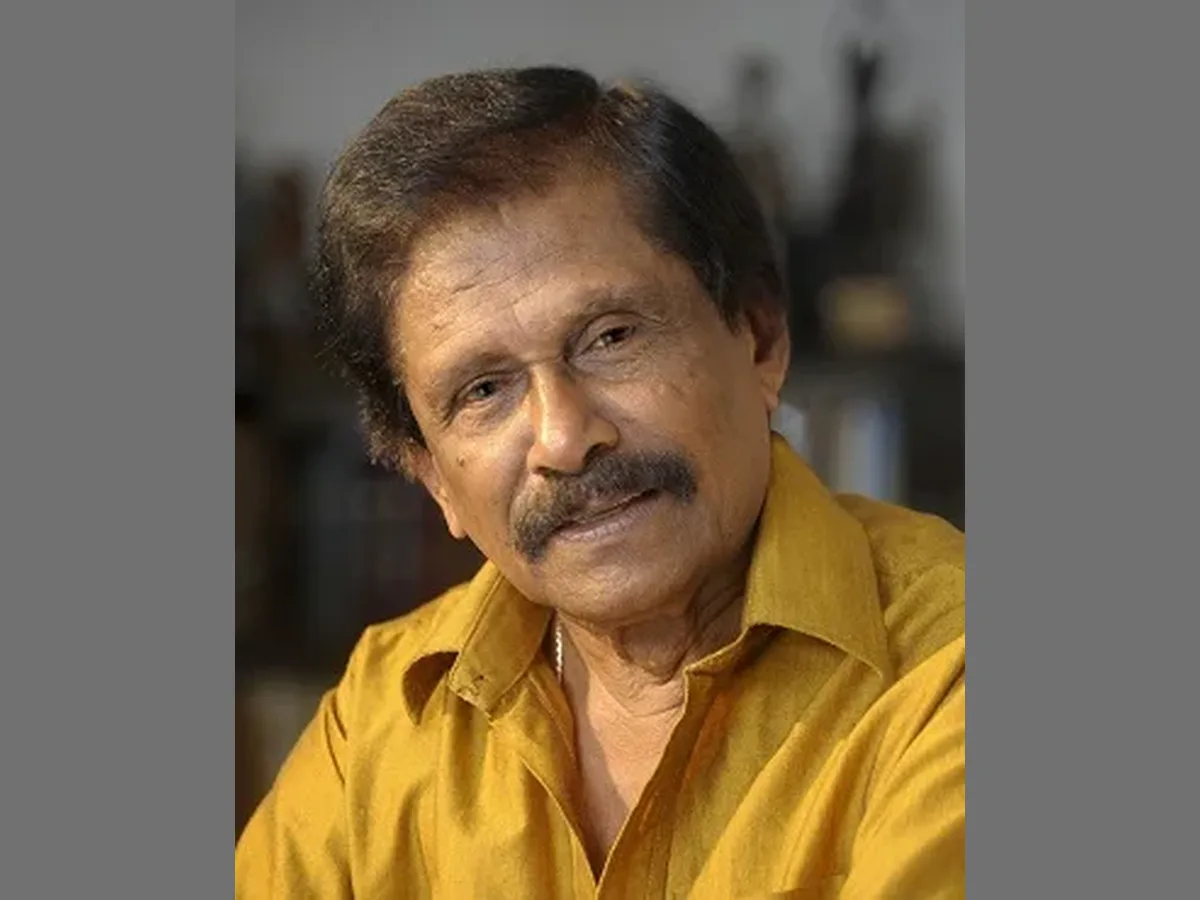
Ask him where the songs came from and he does not name a teacher or a book. He names a village.
"That truly beautiful village called Walathara, in the Beruwala area, where I grew up from the time I learned to speak, was a mother that nourished my creative gift. To put names to it: the Hettigoda paddy field that ringed the village, and the river that ran through it, and the rubber and cinnamon across the water, and the Obawatta forest grove — those were the delightful academy of my life in art."
He wrote that in 1999, as the preface to Malin Malata (මලින් මලට, "from flower to flower"), the first published collection of his lyrics. And then, in the same preface, he made the place do the work a lyric does:
"The fish that talked lived in this little stream that was a river to us in those days. The trees that laughed were in the Obawatta thicket. When the iramala was in flower overhead I saw lotus patterns at the foot of the domba tree. The wonder of this wooded hollow, where my mother took me by the hand to gather welihathu and idalolu — today I put it out of my mind, and at once a fine ache rises behind my eyes."
Palatuwa, Walathara, and a rubber tree root
Kumaradasa Saputhanthri was born on 4 July 1944 in Palatuwa, near Matara, and grew up at Walathara near Beruwala on the south-west coast. He was schooled at Walathara Vidyalaya and afterwards at the Jethawana pirivena at Kiribathgoda — a monastic school, which matters, because the curriculum shaped the writer.
"In our schooldays the subjects we spent most time with were literature, language and Buddhism," he told Sarasaviya in 2015. "I still remember sitting on a rubber tree root in the school garden at Walathara, learning by heart the verses our teacher gave us out of the Lo Weda Sangarawa and the Budugunalankaraya." Later came the Saddharmaratnavaliya, the Amavatura, the Butsarana — the great works of classical Sinhala prose. "Those old books threw a great light forward onto my life in writing."
That inheritance is audible. Even his most straightforwardly romantic lyrics are built out of classical Sinhala diction rather than everyday speech, which is why singers of the sarala gee school kept coming back to him.
From poem to song
He began as a poet, and thought he would stay one. His verses appeared in the newspapers; a lyricist's career was only a daydream. "My poems were locked inside the sadaes and nisadaes forms, and perhaps that is why. However many of my poems the papers printed, the first time in my life I really smelt what it is to make something was the day a piece of mine went out on the radio programme Padyawaliya with my name and my village read out after it. That was the day I understood that the thought of writing songs was not a daydream at all."
The transition happened at Sudarshi, the arts institute in Colombo where the young were then colliding with each other. He met the composer Rohana Weerasinghe there. He met Edward Jayakody there too, when Edward was a student at the Institute of Aesthetic Studies and acting in the play Sekkuwa. Sunil Edirisinghe came along in the same stretch of years.
His first radio song was written for Rohana Weerasinghe, and it was also Rohana's first sarala gee programme — අපරාජිකයි මා හද රජ දහනම Aparajikai Ma Hada Raja Dahanama, sung and composed by Rohana himself. It is not a love song at all. It is a son addressing his dead mother:
My heart's royal throne has been in anarchy, mother, from the day you left me... The seven-week-old prince you carried to the door has come back to your kingdom, holding out his firstborn gift — and all your unlucky son has brought you, mother, is a memory.
Sinhala Wikipedia dates his career from 1975; the 2015 Sarasaviya interview was tied to a fortieth anniversary, which agrees.
Two voices
Because he was close to Sunil Edirisinghe and Edward Jayakody, and because both of them made regular sarala gee programmes, he ended up writing one or two songs for almost every programme either of them recorded. "That is why they became closer to me than any other singer," he said. "I understood what they needed. They understood what I needed."
For Sunil Edirisinghe: නිදුකාණනේ Nidukaanane, an appeal to the Buddha to turn his compassionate gaze on a country burning with anger — the fires of rage that lie in mind after mind, to see how they consume one another; the cobra venom running from lip to lip, to see the wonder of how it kills — and then, three times over, it is the time, it is the island, it is the country. Also හදේ කොතැනක Hade Kothanaka, මිනිසා සුවඳයි මල සේ Minisa Suwandai Mala Se, පාට දේදුනු Pata Dedunu, සන්තාප මාවතේ Santhapa Mawathe and the patriotic රන් මලක් ලෙස Ran Malak Lesa, written for the war dead — not from a mother's womb but from the womb of the earth were you born, brave children of Sri Lanka.
For Edward Jayakody: දොඹ මලින් මලට Domba Malin Malata, in which young bees stagger drunk from domba flower to domba flower and the king of the flowers laughs at them; අකුරු මැකී නෑ Akuru Maki Na — "the letters have not been rubbed out" — which is a grown man opening his first school reader and finding the whole village childhood still legible in it; එපා සඳේ Epa Sande; මාරම්බරී Marambari; කැරකෙන රෝදේ Karakena Rode.
Victor Ratnayake sang and composed ඉරට සඳට Irata Sandata. Bandara Athauda sang රුවන් තාරකා Ruwan Tharaka and කොහේ යන්නෙද Kohe Yanneda. Deepika Priyadarshani Peiris sang පිතු සෙනෙහේ පිදු Pithu Senehe Pidu, about fathers. Lakshman Wijesekara sang ඔබ මට තරුවකි Oba Mata Tharuwaki.
Sinhala Wikipedia credits him with more than five hundred songs. That figure is repeated in the Sinhala press and should be treated as an estimate rather than a count — output totals in this subject are notoriously elastic — but the surviving lyric databases carry enough of his work to make it plausible.
Ran Malak, and the trouble with being a lyricist
On 8 May 2015, at the Youth Theatre in Maharagama, a concert called රන් මලක් Ran Malak marked forty years of his writing. Sunil Edirisinghe, Edward Jayakody and Deepika Priyadarshani Peiris sang; Rohana Weerasinghe had composed every song on the programme, and Rodney Warnakula performed a scene in the middle of it. The artists had organised it themselves, without being asked. Saputhanthri's own account of why is unusually direct: they had "recognised a personal need of mine, and came forward to do this concert voluntarily — as a tribute to me, and as a help to me."
He was out of work at the time. Asked what it is like to be a professional lyricist in a country like Sri Lanka, he answered that in India a writer with his output would not need a job at all, and that in Sri Lanka the state had reached the point of removing people like him from employment rather than supporting them. His other complaint is one that runs through the whole trade: broadcasters play the songs and do not read out the names. "Even when they give the song a slot, they don't mention the names of the people who made it."
There is a coda to that. "My friends, though — when they go abroad to perform, they say my name with respect. For a lyricist, that recognition really matters."
He is known in the trade simply as Sapu ayya, elder brother Sapu.