
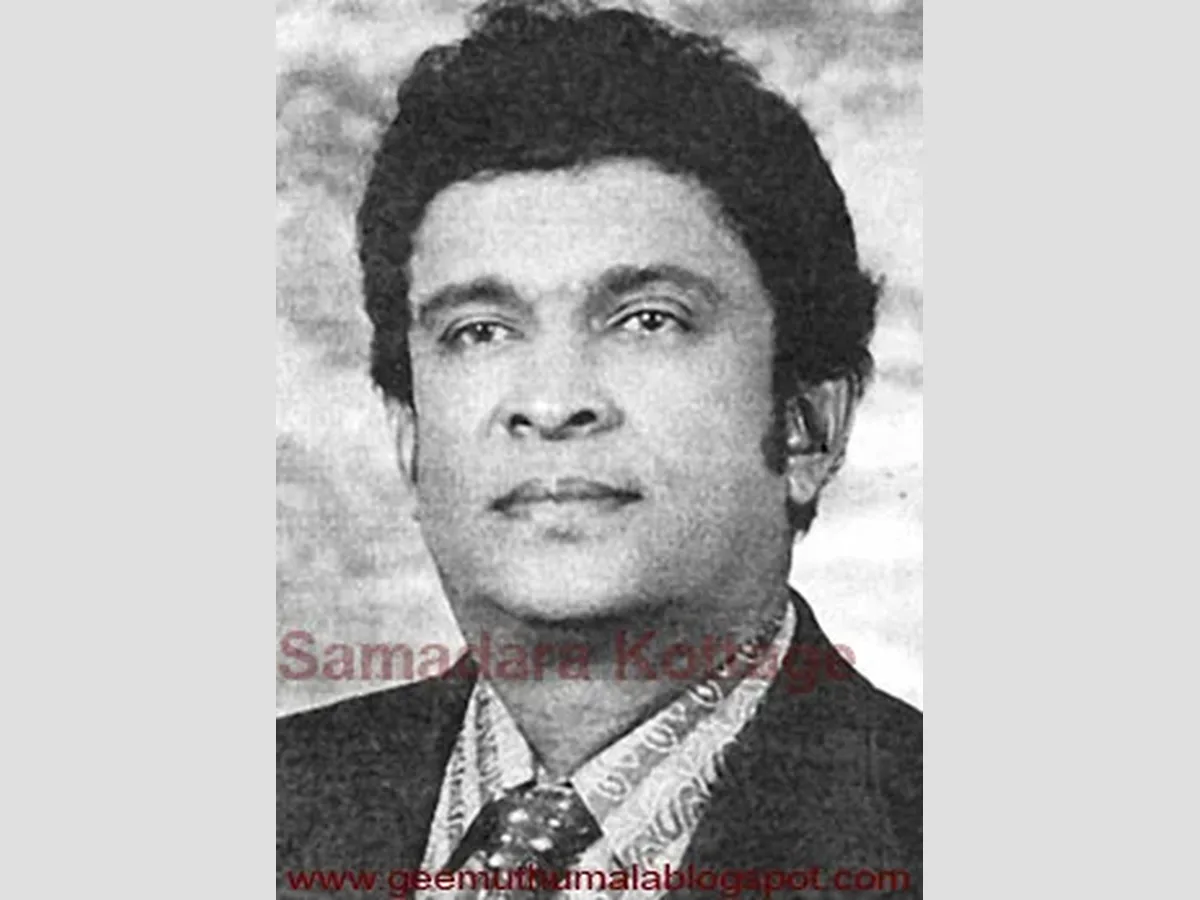
On 20 March 2017, a woman arrived at the library of the University of Sri Jayewardenepura carrying a dead man's books. She brought two bookcases as well, and handed over the whole collection. The woman was Samadara Kottage, a well-known announcer on the Sri Lanka Broadcasting Corporation. The books had belonged to her husband, K. D. K. Dharmawardena, who had died seventeen years earlier, and the university's notice describes him in three words that between them cover a whole life: musician, lyric writer, famous announcer.
That library notice is one of the very few published documents about him. He wrote some of the most durable Sinhala songs of the late twentieth century, and there is no biography of him, no memoir, no long feature. What survives is a shelf of books, a signature, some dates that do not quite agree with one another, and about thirty songs the country still sings.
What is known
He was born on 13 June 1944 in Kandy and educated at Dharmaraja College there. He worked as a radio broadcaster — a programme announcer — for the SLBC, and he wrote lyrics. He married Samadara Kottage, who worked in the same building. He died on 6 November 2000, in Dubai.
Both the English and Sinhala Wikipedia articles carry the same infobox, and it contradicts itself: the birth date is given as 13 June 1944 while the death template computes his age from 6 November 1944. The June date is the one repeated in the running text of both, and is used here. Nothing else about his early life — how he got into broadcasting, when he wrote his first song, what he did in Dubai — has been recorded anywhere this article could find.
Three songs, and a career in one line
The three lyrics that carry his name are all of a kind. කුමරියක පා සළඹ සැලුනා Kumariyaka Paa Salamba Saluna — "a princess, her anklets ringing" — was sung by W. D. Amaradeva to a melody by Victor Rathnayake. කොහේ සිට ඔබ පෙමිනියාදෝ Kohe Sita Oba Peminiyado, "from where did you come to me", is one of Victor Rathnayake's own signature performances. හඳන පාන නල Handana Pana Nala went to Sunil Edirisinghe.
Those three names — Amaradeva, Victor Rathnayake, Sunil Edirisinghe — are the centre of the Sinhala art-song tradition, and a lyricist who wrote for all three was not a marginal figure. He also wrote නීල බිඟු කැල Neela Bingu Kala and සිප එන සමනල Sipa Ena Samanala for Victor Rathnayake, and වෙන්වෙන්නවදෝ ලං වූයේ Wenwennawado Lanwuye to a Sarath Dassanayake tune.
The other half of the catalogue
Here is the thing nobody says about him. Look at the songs credited to Dharmawardena in Sinhala lyric databases, including this site's own catalogue, and the single name that recurs most is not Amaradeva's. It is Milton Mallawarachchi's.
ඝන අඳුරේ රළ පතරේ Gana Andure Rala Pathare, රන් මසු නැහැ කියා Ran Masu Na Kiya, මලින් මලේ රොන් ගන්නා Malen Male Ron Ganna and කෙසේ කියන්නද Kese Kiyannada — all with music by Clarence Wijewardena. ඔබේ උපන් දිනේ අදයි Obe Upan Dine Adayi and ඉවුරු තලා Iwuru Thala, arranged by the guitarist Patrick Denipitiya. හද පතුලේ Hada Pathule, අමා රන් හැඟුම් පිරී Ama Ran Hagum Piri and අතීතයේ පවා Atheethaye Pawa, to melodies by Stanley Peiris. He wrote උමයන්ගනියෝ Umayanganiyo for H. R. Jothipala, දවසින් දවසට Dawasin Dawasata for Edward Jayakody, and පෙම්බර කුල කුමරුනි Pembara Kula Kumaruni for Chandralekha Perera.
In other words, this SLBC announcer was writing the country's high art song in one hand and, in the other, a substantial share of the biggest romantic pop records of the 1970s and 1980s — the guitar-and-organ sound that the Sinhala classical establishment of the day looked down on. Very few writers of his generation worked both sides. Attributions in lyric databases are not the same thing as a published credit and some of these may not survive checking against record sleeves, but the pattern is too consistent to be an accident of data entry.
Why the record is so thin
Broadcasters tend to disappear from the history of the music they made possible. A lyricist who is also an announcer is credited twice over on air and almost never in print: the song goes out under the singer's name, the programme goes out under the station's, and the man in the middle leaves nothing that can be catalogued. His English Wikipedia entry has carried notability and citation warnings since 2017 — for someone who wrote a Victor Rathnayake standard.
The books his widow gave away in 2017 are, for now, the most concrete memorial he has. If anyone ever writes his life properly, that collection at Sri Jayewardenepura is where it will have to start.