
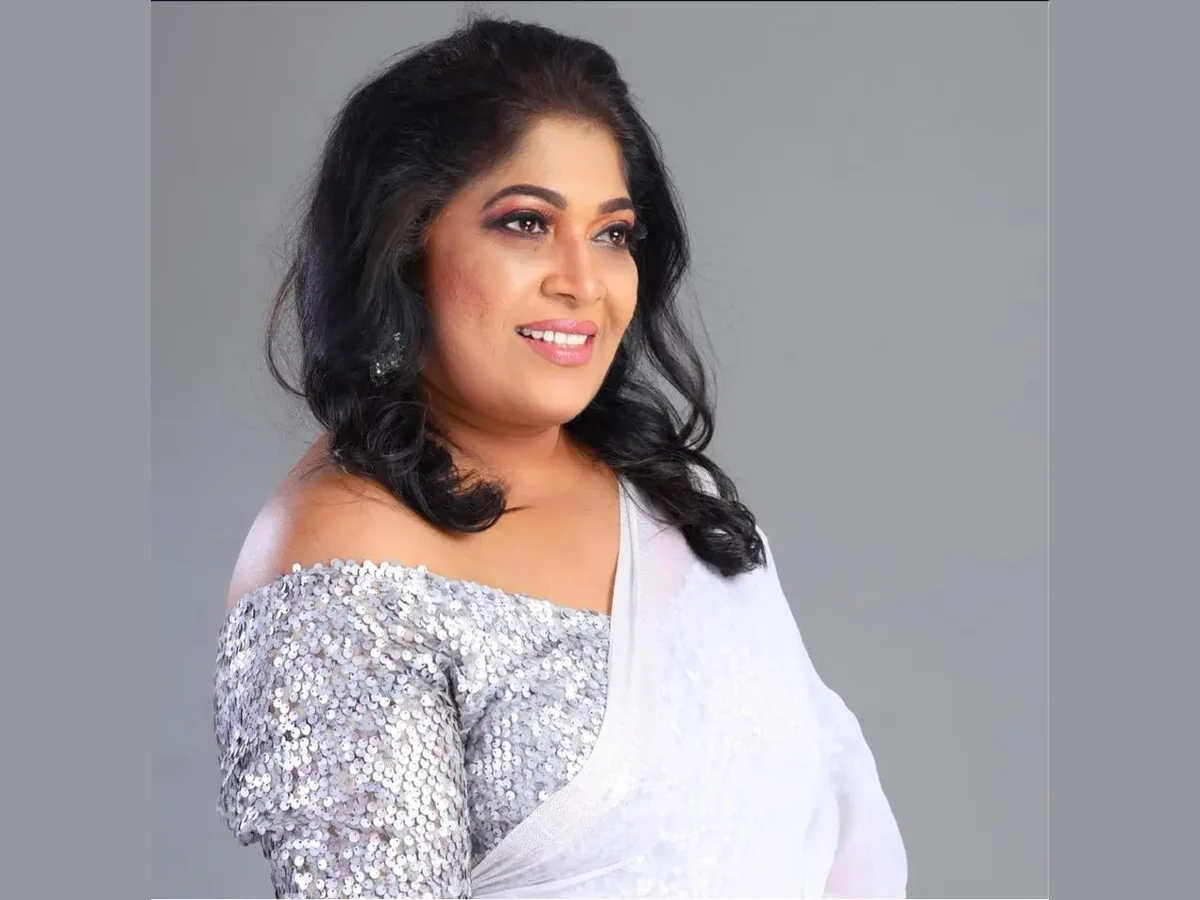
The application was not hers. Her father, without telling her, put his daughter's name forward to the National Youth Services Council, which in the early 1980s was quietly becoming the biggest talent pipeline in Sri Lankan music. She was called for an interview, and passed it. Not long afterwards she was singing on the television service that Japan had given Ceylon as a gift, which at that point was still broadcasting test transmissions to a country that mostly did not own a set.
That is how Chandralekha Perera arrived: through a state youth scheme, at the exact moment when television, the cassette and a new kind of light pop song all landed on the island at once.
Belwood
Suramya Rathnakumari Chandralekha Perera was born on 1 December 1961 and grew up around Polgahawela, in the North Western Province, and went to school at St. Bernadette's College there. She sang at home, then at inter-school competitions, then — while still studying — for a Kurunegala band called Spring Time.
Her formal training came at the Belwood Art Institute, where the singer and teacher Shirley Waijayantha was music instructor, and where the Youth Services Council's singing group was assembled. Waijayantha later named her among the pupils from that room who reached the top of the Sinhala music field, alongside Chandrasena Hettiarachchi and Somasiri Medagedara. It is worth noting how many careers of the 1980s trace back to that one institute and that one state council.
Rekha, and the duet years
The film director and producer D. B. Nihalsinghe noticed her while reporting on the Youth Services Council and cast her in his television series Rekha, which made her famous. English Wikipedia credits her with the best television actress award in 1986 for another Nihalsinghe serial, Nadee Geethaya, and a best playback singer award the same year for the film Yali Hamuwennai, and says she was signed by Lever Brothers for Lux; those claims carry no citation and could not be confirmed against a contemporary report, so they are recorded here as reported rather than as established.
What is not in doubt is the shape of her catalogue, because the recordings survive. She was, above all, a duet singer. With the actor and singer Vijaya Kumaratunga she recorded සැරයටියෙන් අපි යනෙන තුරා Sarayatiyen Api Yanena Thura, ඈත එහා Aetha Ehaa, පුංචි පැලත් Punchi Palath and පෙරමඟ සුභ නිමිත්ත වී Peramaga Suba Nimiththa Vee — a partnership cut short when Kumaratunga was assassinated in 1988.
With Rookantha Gunathilake, whom she had met in 1976 when he played keyboards for Spring Time and married in 1989, she made the run of songs that most listeners still associate with her name: තරුමල් වගේ Tharu Mal Wage, සීතල සිතුවිලි උණුසුම් සුසුමින් Seethala Sithuwili Unusum Susumin, මනලෝලී මනමාලියේ Manaloli Manamaliye, දේදුණු පාටයි මුහුණ ඔබේ Dedunu Patai Muhuna Obe, සඳ පිණි දියේ Sanda Pini Diye and මට මුළු ලොවම ඔබයි Mata Mulu Lowama Obay. She also sang with H. R. Jothipala, Keerthi Pasquel, T. M. Jayaratne, Dayan Witharana and Priya Suriyasena.
Her own songs are still the ones Sinhala listeners name first: ඔබ දෙපා දොවා බැතියෙන් Oba Depa Dowa Bathiyen, කිරි අම්මාවරු Kiri Ammawaru, මගේ දින පොතේහි Mage Dinapothehi, දැල්වූ පහන් දැල්වී තිබේවා Dalwu Pahan Dalwee Thibewa.
Mattegoda
By the end of the 1990s the couple were drawing crowds to United National Party platforms with those same hits, in a country where the war had made political performance dangerous.
They were warned once. A friend inside the government's circle tipped Rookantha off, and the family left their house at Mattegoda in minutes — the meal still laid on the table, the piano lid still open on a song he had been playing for his two-year-old daughter. "If we had not left our home on that day, we would have been dead," he told the Sunday Times years later.
The second time there was no warning. About ten men with pistols forced their way into the house on 26 January. Chandralekha, Rookantha, their two children and Chandralekha's mother were inside. The attackers held pistols to the couple's heads, forced loaded pistols into their mouths, cut off their hair and doused them with petrol, and told them they would be killed if they appeared on anti-government platforms again. Cash, jewellery and the family jeep were taken.
Sources disagree about the year. The World Socialist Web Site, reporting in June 2000, places the attack on 26 January 2000, in a sequence that begins with assaults on artists campaigning for the UNP in December 1999 and the firebombing of the actress Anoja Weerasinghe's home. The Sunday Times, reporting the verdict in 2013, places it on 26 January 2001, following an earlier attempt in December 2000 during the campaign for the October 2000 general election. Both accounts agree on the date within the year and on every detail of the attack itself; they cannot both be right about which January it was, and no third source resolves it.
Artists Against Violence
The attack did not happen in isolation, and the response was collective. Shortly afterwards a group of prominent artists founded Artists Against Violence to defend their democratic and artistic rights. Its inaugural statement refused the official line that the assaults were robberies or private quarrels: "We stress that we do not take these attacks as the work of mere robbery or a personal vendetta."
Rookantha had written the music for Trojan Kaanthawo, Dharmasiri Bandaranayake's Sinhala staging of Euripides' The Trojan Women as an anti-war play; when Bandaranayake publicly condemned the attack on the couple, he began receiving death threats himself. The singer Gunadasa Kapuge, who supported the governing party, put the principle bluntly at the time: just as it was his own right to support the People's Alliance, it was Rookantha's to support the UNP, and depriving people of that was wrong.
The verdict, and after
On 1 August 2013 — more than twelve years after the attack — Panadura High Court judge Kusala Sarojini Weerawardena sentenced ten former members of the Presidential Security Division, who had served the unit under President Chandrika Bandaranaike Kumaratunga, to four and a half years each.
At a press conference soon after the ruling the couple said they would forgive the men, and both wrote to President Mahinda Rajapaksa saying they had no objection to a pardon, on the grounds that those convicted had been carrying out orders. The pardon was reported in April 2014. Rookantha said they respected the ruling but believed the people who gave the orders — from politics, from the security establishment and from the cinema world — had never been named or charged.
The family moved to the United States and has continued to visit and perform in Sri Lanka. Chandralekha Perera's recordings remain in constant rotation on Sinhala radio: three decades of duets, and a case in the law reports that is one of the very few times an attack on Sri Lankan artists ended in a conviction.